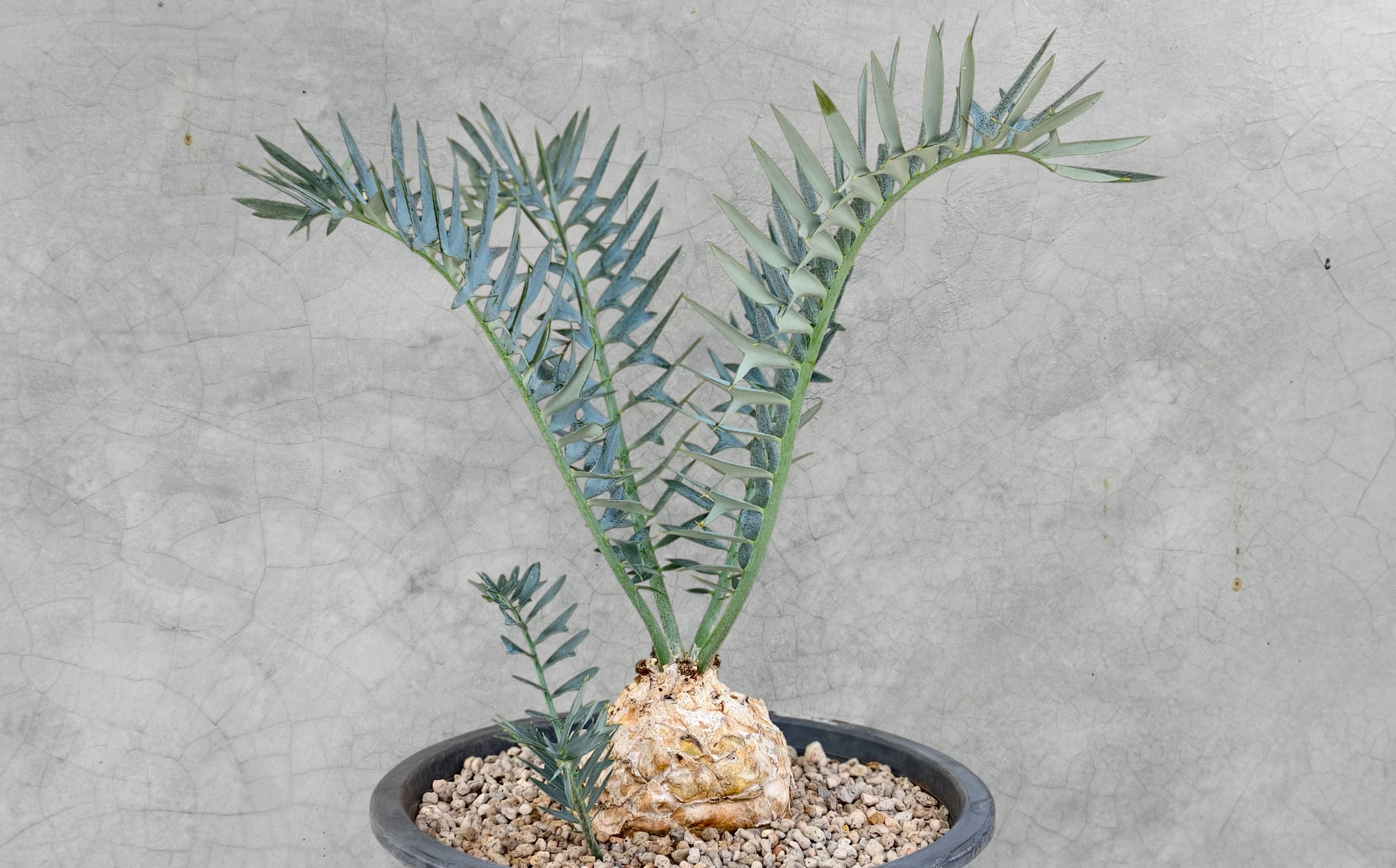

Pachypodium Gracilis: The King of Caudiciforms, A Natural Art Piece for Every Collector
Pachypodium Gracilis, scientifically known as Pachypodium rosulatum subsp. gracilius, is one of the most highly sought-after and valuable species of Caudiciform plants among succulent collectors worldwide. With its unique, swollen, bottle- or elephant-foot-like shape, it is truly celebrated as a “living piece of natural art” that possesses an undeniable charm. This article will introduce you to its distinct features, botanical facts, and essential care tips to help you enhance the value of your collection.


The Charm of the Caudex:
Why Pachypodium Gracilis is Highly Coveted
What sets Pachypodium Gracilis apart from other plants is its distinctive caudex. Its caudex is grayish-white, has a bark-like texture, and is characteristically short, fat, and swollen like a bottle or a ball. This unique form is a natural mechanism for water storage, enabling it to survive in arid environments.
• Extremely Slow Growth: Gracilis is a notoriously slow-growing species, with its caudex expanding only about 1/8 to 1/4 inch per year on average. This slow growth is precisely why large, mature, and old specimens command such high prices and are intensely desired in the collector’s market.
• Bright Yellow Flowers: When the plant reaches maturity, it produces striking bright yellow flowers that contrast beautifully with its gray trunk, making it even more impressive.
Botanical Information: Origin and Special Characteristics
Pachypodium Gracilis is endemic to Madagascar, specifically found in the Isalo mountains at altitudes between 300 and 1,000 meters above sea level. It thrives on sandstone escarpments, cliffs, and rocks, which attests to its hardiness and minimal care requirements.
| Botanical Feature | Detail |
| Scientific Name | Pachypodium rosulatum subsp. gracilius |
| Family | Apocynaceae (The same family as Adenium and Plumeria) |
| Origin | Isalo Mountains, Madagascar |
| Key Characteristics | Short, swollen, bottle-shaped caudex, paired spines, bright yellow flowers |
| Maximum Height | Approximately 60 cm (in cultivation) |
How to Care for Pachypodium Gracilis for a Beautiful and Strong Caudex
Caring for Pachypodium Gracilis is not overly complicated, but it requires an understanding of its nature as a succulent from a dry habitat. Providing the right environment will ensure its caudex develops beautifully and maintains its high value.
- Light: This is the most critical factor. Gracilis requires full sun throughout the day to maintain a compact and strong caudex shape. Insufficient light will cause the stem to stretch (etiolate) and lose its desirable form.
- Soil: The soil must be extremely well-draining. Use a specialized cactus or caudiciform mix with a high proportion of inorganic materials like volcanic rock, coarse grit, or coarse sand to prevent water retention and root rot.
- Watering: Follow the principle of “water only when the soil is completely dry.” During the growing season (typically summer), you can water regularly. However, during the dormancy period (winter or when leaves start to drop), watering must be drastically reduced or stopped entirely to prevent rot.
- Temperature: It prefers warm climates. Avoid prolonged exposure to temperatures below 10 degrees Celsius.
The Value of Collecting and Investing in Pachypodium Gracilis
Pachypodium Gracilis is not just an ornamental plant; it is an investment in living art. Due to its extremely slow growth rate, specimens with large, beautiful caudex forms require decades of cultivation.
• Rarity: Plants that are wild-collected or old, beautifully formed seed-grown specimens command very high prices.
• Marketing: Using keywords such as Pachypodium Gracilis price, rare caudiciforms, and succulent investment in your product presentation will help interested buyers easily find your items and emphasize the plant’s inherent value.
Conclusion: Pachypodium Gracilis is the ultimate caudiciform that combines natural beauty, rarity, and collector value in a single plant. Owning a Gracilis is more than just growing a plant—it is possessing a piece of art that evolves with time.
Don’t miss this opportunity! Browse our collection of Pachypodium Gracilis and other rare cycads today to elevate your garden to a new level of sophistication.
Talk about : Price, How to Buy?, Where to Buy?