
Introduction
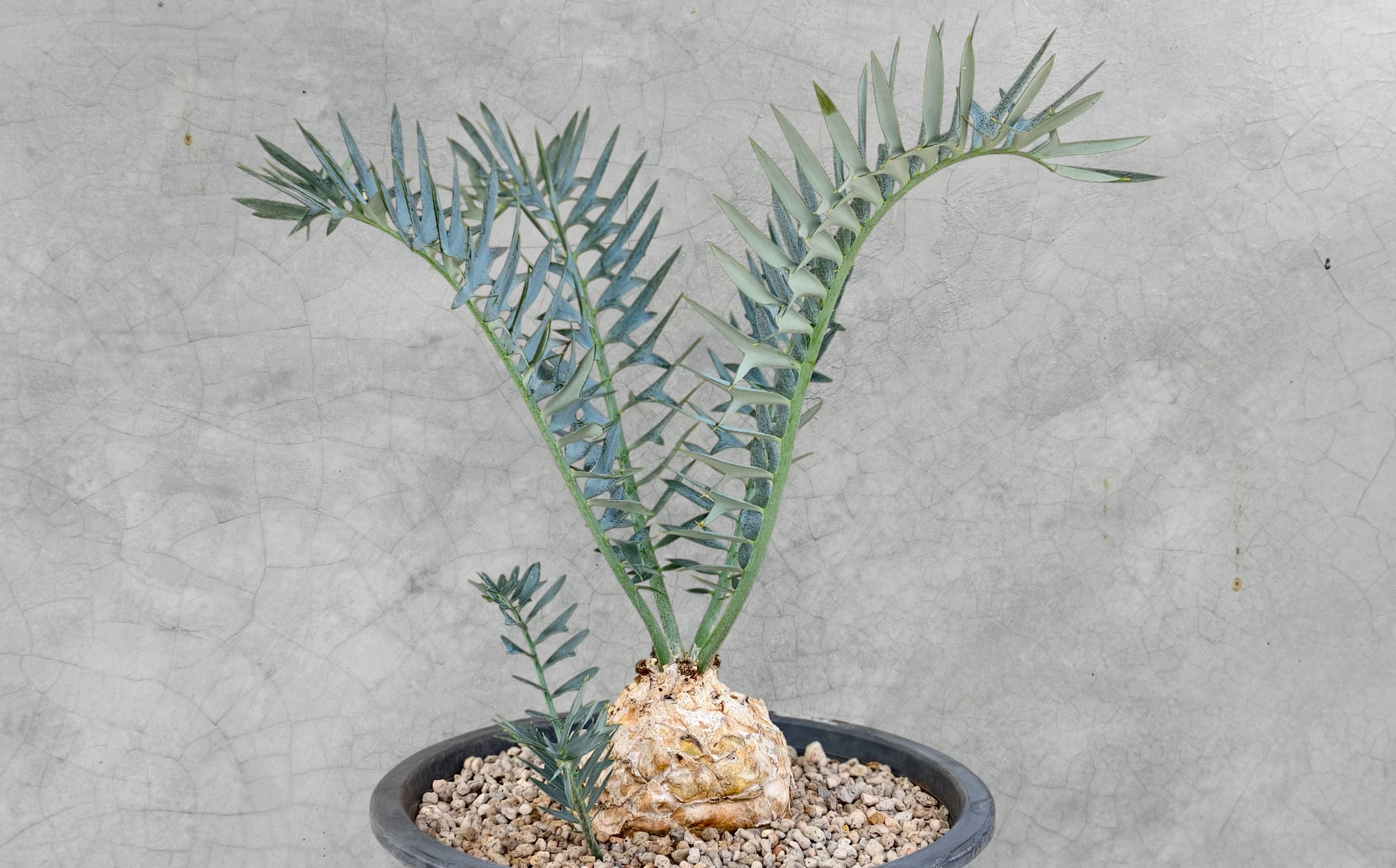
The Encephalartos Horridus, commonly known as the Eastern Cape Blue Cycad, is a species that commands immediate attention. Revered globally as the “King of Blue Cycads,” this prehistoric plant is a cornerstone of any serious botanical collection. Its striking, heavily armed foliage and intense glaucous-blue coloration make it an architectural masterpiece in the garden or as a prestigious potted specimen. We are proud to present a truly exceptional example of this endangered species: Specimen ENH013.

The Unrivaled Blue: Visual Analysis of ENH013
Specimen ENH013 is a prime example of the Encephalartos Horridus at its finest, exhibiting all the characteristics that make this species so highly sought after.
1. Exceptional Color and Form
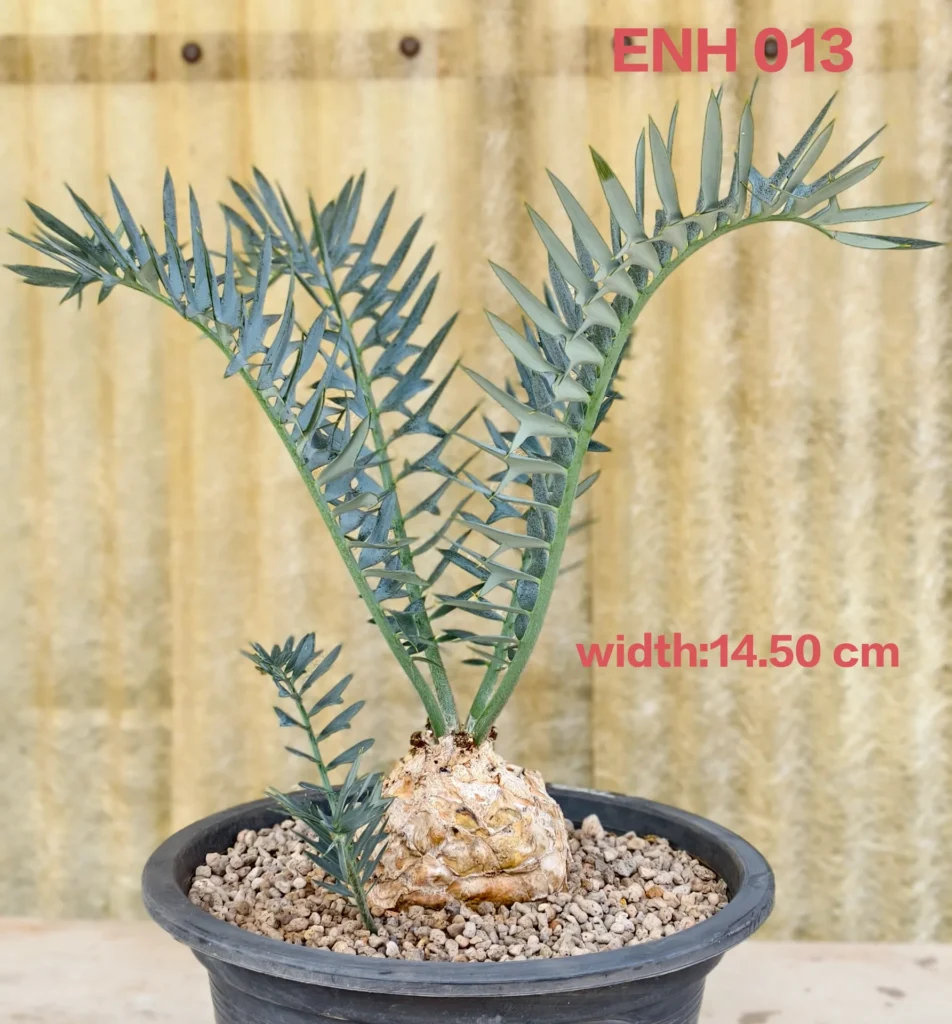
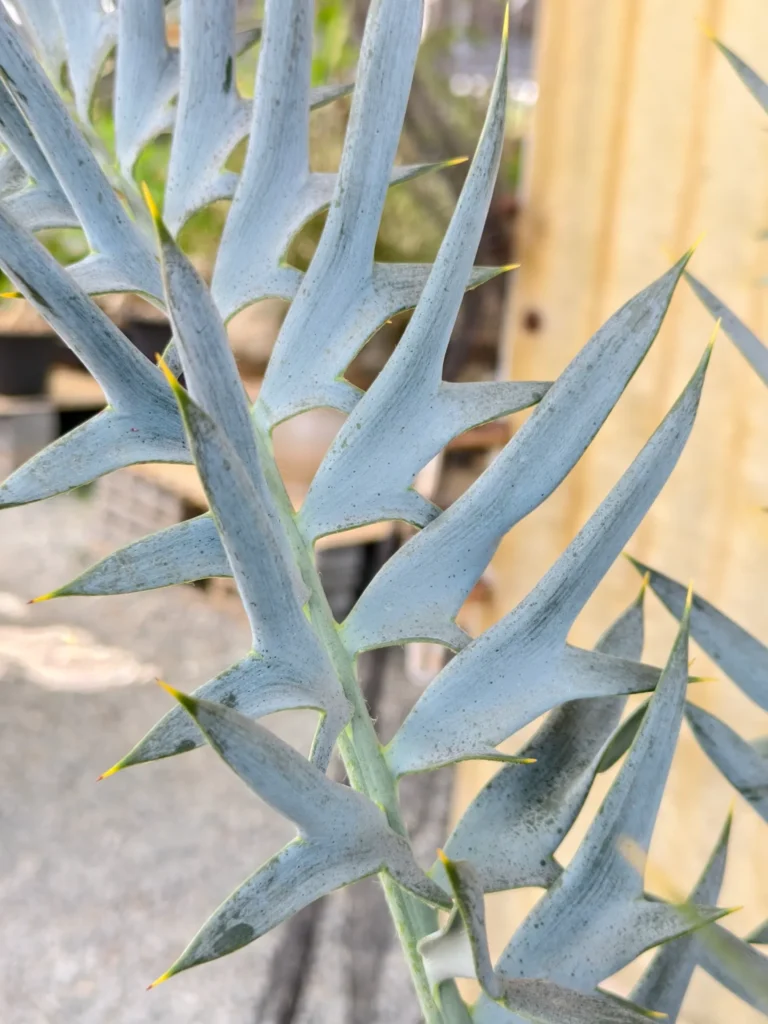
The foliage of ENH013 displays an intense silvery-blue hue, a result of a thick, waxy coating (bloom) that is highly prized. This vibrant coloration is a clear indicator of optimal health and proper cultivation under full sun. The leaves are characteristically rigid and beautifully curled, with sharply lobed leaflets that give the plant its specific epithet, horridus (meaning bristly or dreadful). This formidable, yet elegant, structure provides a dramatic, ancient aesthetic that is unmatched.
2. Substantial Size and High Vitality
This specimen boasts a robust, well-formed caudex with a measured width of 14.50 cm. A caudex of this size represents years of patient, careful cultivation, making it a substantial and mature asset. Furthermore, ENH013 exhibits high vitality with the presence of a healthy, emerging pup (sucker) at its base. This “double value” feature not only confirms the plant’s excellent health but also offers the collector the potential for future propagation and increased value.
Rarity and Provenance: A Living Investment
The Encephalartos Horridus is a species of significant botanical importance and rarity.
Rarity and Conservation Status
Native exclusively to the Eastern Cape of South Africa, the Encephalartos Horridus is classified as Endangered on the Red List of South African plants . Its natural populations have been severely impacted by over-collection, making legally and ethically sourced cultivated specimens like ENH013 invaluable. Owning this plant is not just a purchase; it is a contribution to the preservation of a species on the brink.
Investment Value
Cycads, particularly rare and slow-growing species like E. horridus, are often viewed as living investments. Their value is directly correlated with the size of the caudex, typically measured per centimeter of diameter. Given its substantial 14.50 cm caudex and the presence of a healthy pup, Specimen ENH013 represents a significant and appreciating asset. Its slow growth ensures that its value will only continue to climb over time, making it a wise acquisition for the serious collector.
Selling Points: Why ENH013 is a Must-Have
Specimen ENH013 is not merely a plant for sale; it is a statement piece with unique selling advantages:
| Feature | Description | Collector Value |
| Caudex Size | Substantial 14.50 cm diameter. | Immediate architectural impact and high intrinsic value. |
| Foliage Color | Intense, silvery-blue glaucous coating. | Ranks among the finest blue specimens available. |
| High Vitality | Presence of a healthy, emerging pup. | Confirms excellent health and offers future propagation potential. |
| Form | Symmetrical, rigid, and beautifully curled leaves. | Perfect specimen quality, ideal for display and exhibition. |
| Rarity | Endangered species from the Eastern Cape. | Status symbol and a tangible investment in botanical heritage. |
Conclusion
For the collector seeking a centerpiece that combines ancient history, breathtaking beauty, and significant investment potential, Encephalartos Horridus Specimen ENH013 is an unparalleled opportunity. Its exceptional blue color, robust 14.50 cm caudex, and confirmed vitality with an emerging pup make it a truly one-of-a-kind offering. Secure this magnificent, living fossil today and elevate your collection to a new level of prestige.
Talk about : Price, How to Buy?, Where to Buy?