
SOLD OUT
Pachypodium Gracilis (PG010): A Living Sculpture for the Discerning Collector
Discover the exceptional beauty of Pachypodium gracilius, a rare and captivating succulent endemic to the majestic landscapes of Madagascar. We are proud to present specimen PG010, a masterfully grown plant that embodies the unique charm and sculptural elegance of its species. This is not merely a plant, but a piece of natural art, perfect for elevating any distinguished collection.
Specimen Details: PG010
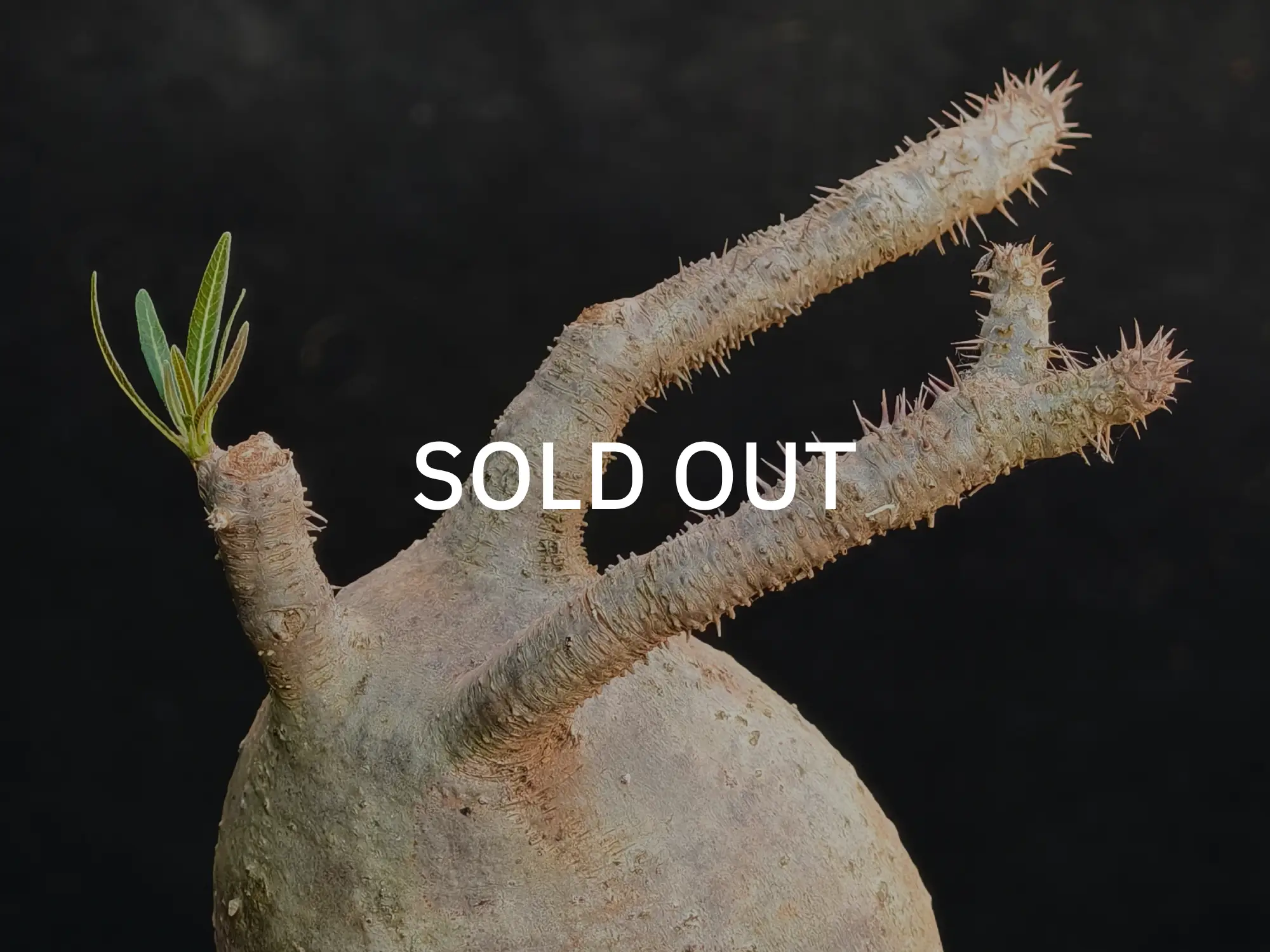
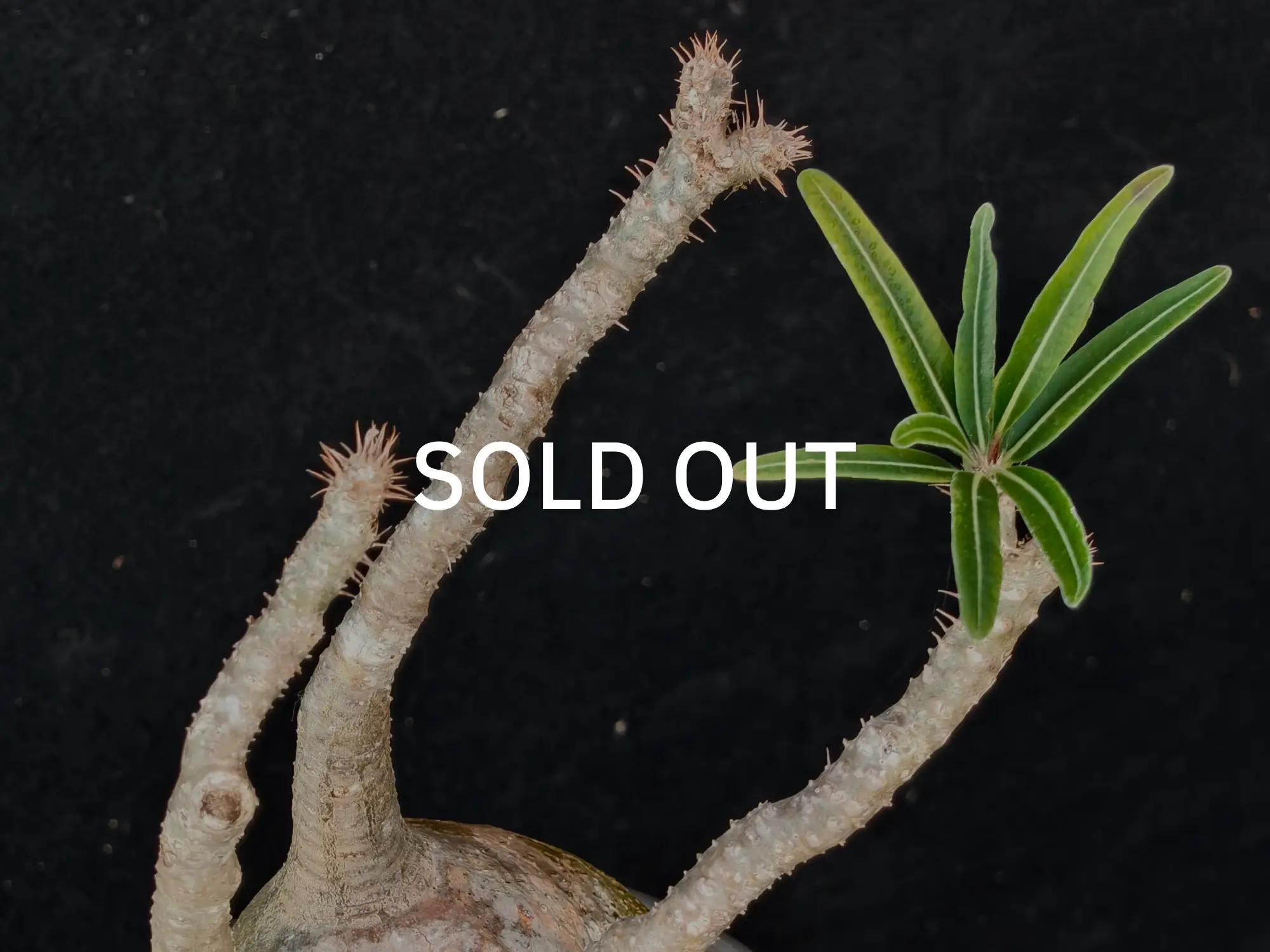
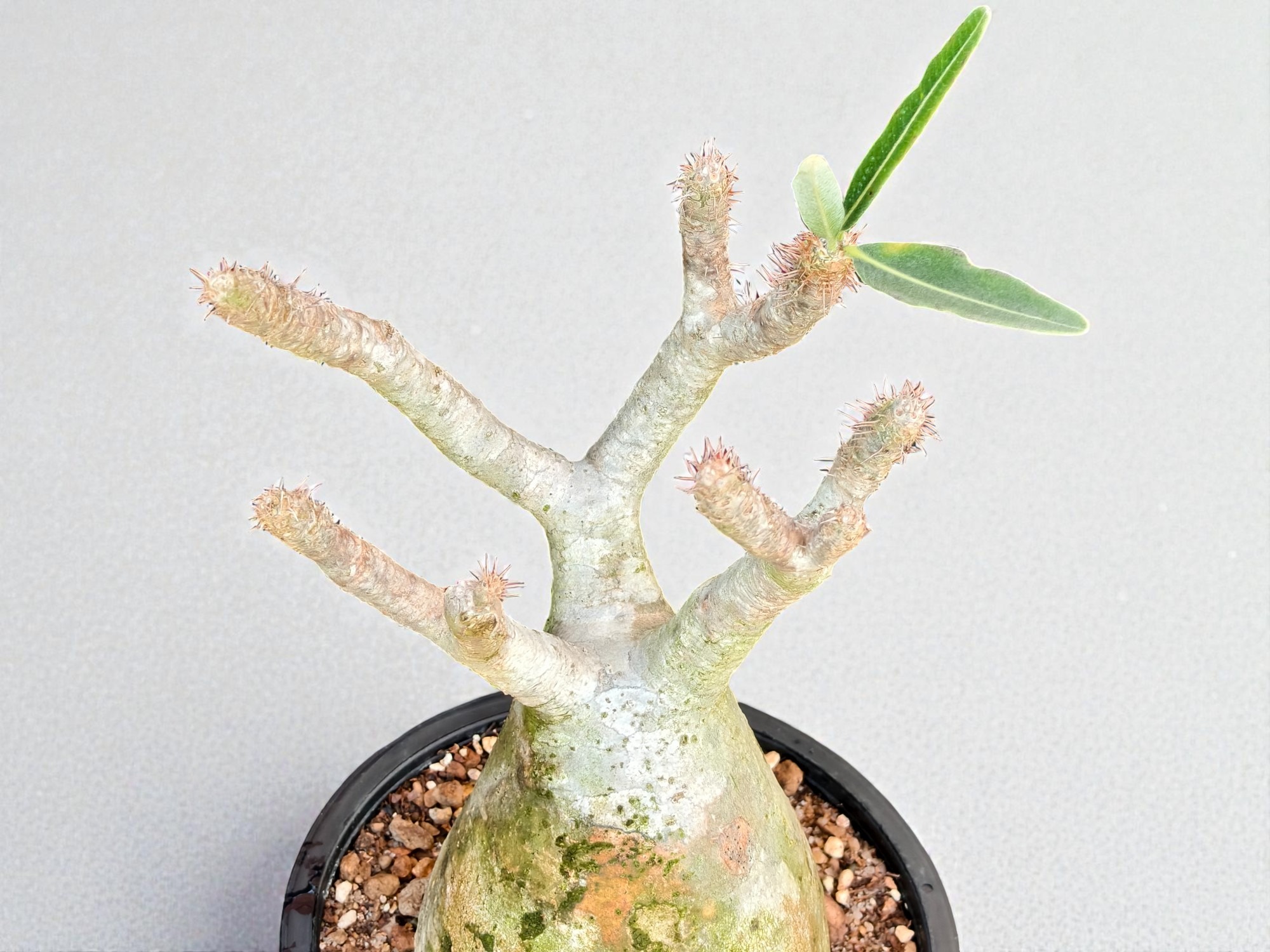
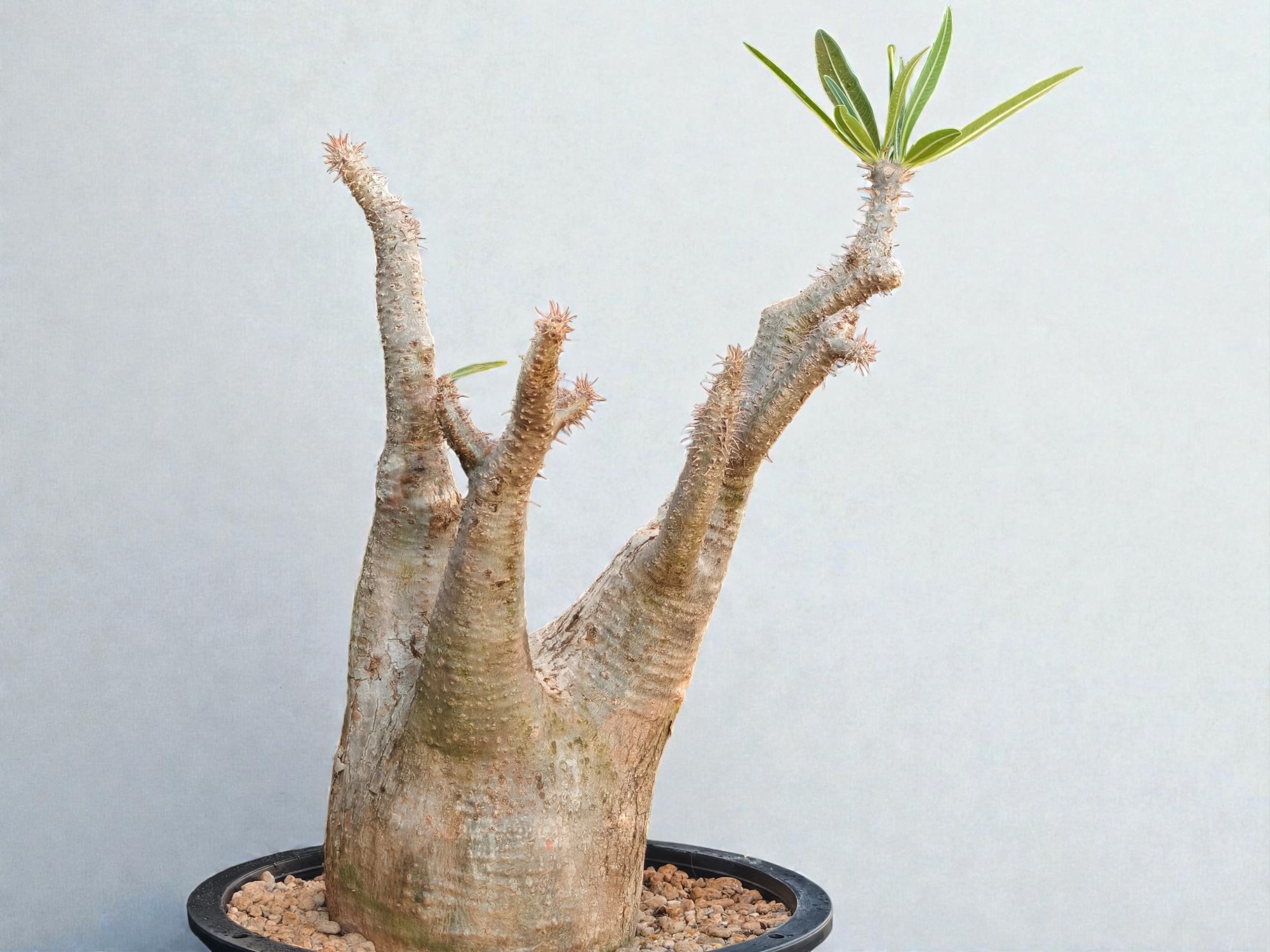
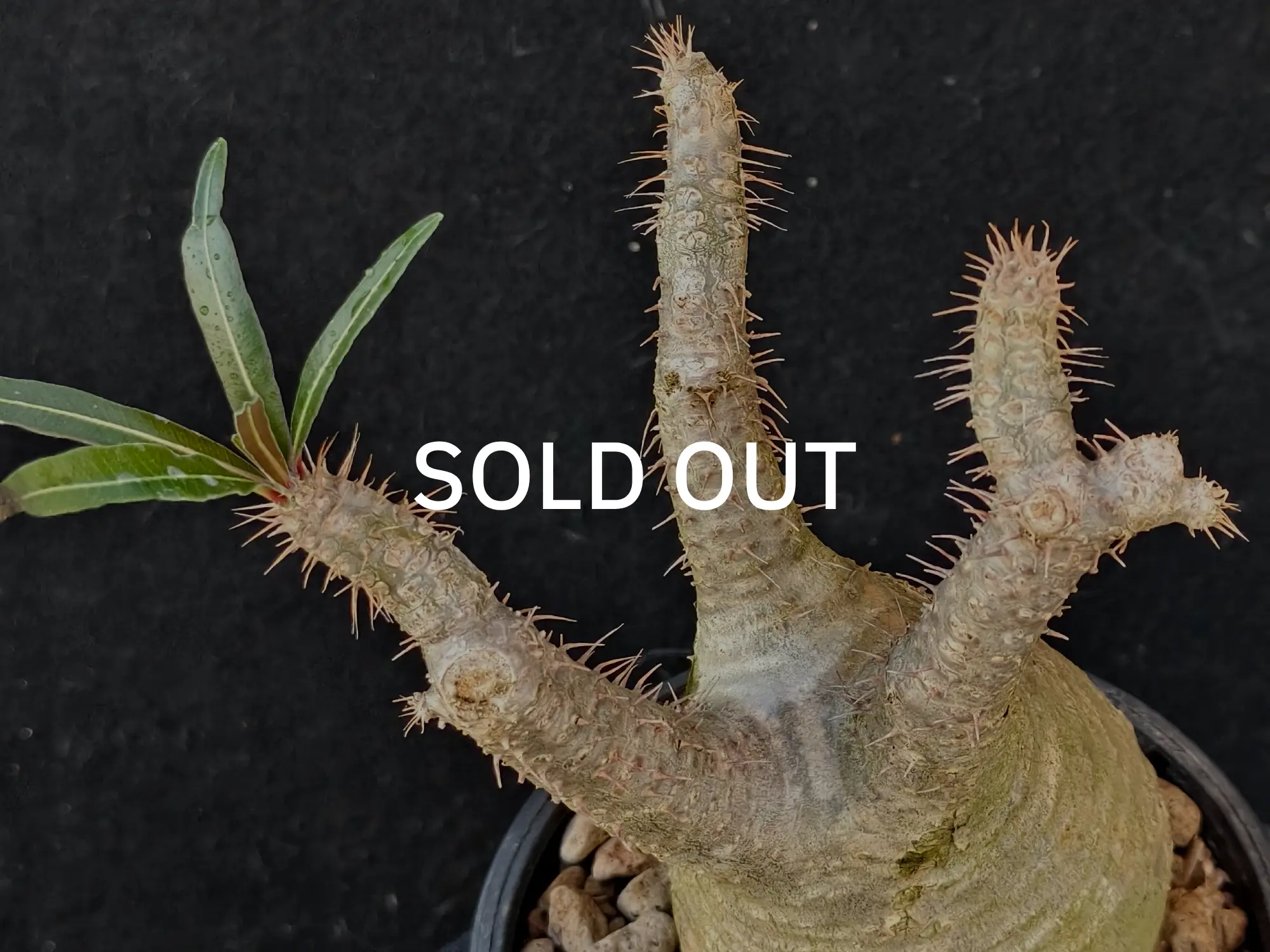
This particular specimen, identified as PG010, is a prime example of a healthy and well-developed Pachypodium gracilius. With a robust caudex measuring 7.60 cm in width, it displays the classic bottle-like or balloon-shaped trunk that makes this species so sought-after. Its multi-branched structure, featuring three primary ascending stems, creates a dynamic and visually interesting silhouette. The branches are adorned with the characteristic paired conical spines, and one is crowned with a tuft of vibrant green leaves, signaling its excellent health and readiness for a new growing season.
The textured, weathered-looking bark on its swollen trunk tells a story of patient growth, giving it the appearance of an ancient bonsai. This specimen is established in a pot with a well-draining, rocky substrate, ensuring its root system remains healthy and free from excess moisture.
The Allure of the ‘Elephant’s Foot’
Pachypodium gracilius, often called the ‘Elephant’s Foot Plant’, is celebrated among succulent enthusiasts for its distinctive appearance and rarity. Native to the Isalo mountains of Madagascar, it thrives in a habitat of sandstone cliffs and rocky outcrops. This has conditioned the plant to be incredibly resilient and to develop its signature swollen trunk, or caudex, as a water storage organ to survive long periods of drought.
Its unique form, combined with its slow-growing nature, makes each Pachypodium gracilius a long-term companion that evolves in beauty over the years. During its active season, it can produce stunning, bright yellow flowers on long stalks, adding another layer of ornamental value to this already spectacular plant.
Key Characteristics
| Feature | Description |
| Scientific Name | Pachypodium gracilius (syn. Pachypodium rosulatum subs. gracilius) |
| Common Name | Elephant’s Foot Plant |
| Origin | Isalo Mountains, Madagascar |
| Caudex | Pronounced, bottle-shaped, swollen trunk for water storage. |
| Branches | Slender, tapering, and covered in sharp, paired spines. |
| Leaves | Lance-shaped, green leaves that are deciduous during winter dormancy. |
| Flowers | Bright, trumpet-shaped yellow flowers that appear on long peduncles. |
| Rarity | Considered a rare and highly desirable collector’s item. |
Care and Cultivation
Owning a Pachypodium gracilius is a rewarding experience. It is a relatively low-maintenance plant, provided its fundamental needs are met. It is one of the most attractive species in its genus and can be grown indoors or outdoors in suitable climates.
Light: This species thrives in full sun to light shade. Ample light is crucial for maintaining a compact shape and promoting flowering. A plant lacking light will show weak, elongated growth.
Watering: Water sparingly during the summer growing season, allowing the soil to dry out between waterings. It is critical to cease watering almost entirely from November to March when the plant enters its winter dormancy and sheds its leaves. Overwatering, especially in cool weather, is the most common cause of rot.
Soil: A well-draining cactus or succulent mix is essential. Incorporating extra pumice or gravel will enhance drainage and prevent waterlogging.
Temperature: Pachypodium gracilius is sensitive to cold. It should be protected from frost and kept in temperatures above 13-15°C (55-59°F) during its winter rest.
Specimen PG010 is an exceptional opportunity to acquire a premium-quality Pachypodium gracilius. Its well-defined shape, significant size, and excellent health make it a standout addition for both novice and experienced collectors. Add this living sculpture to your collection today and enjoy a piece of Madagascar’s unique botanical heritage.
Talk about : Price, How to Buy?, Where to Buy?