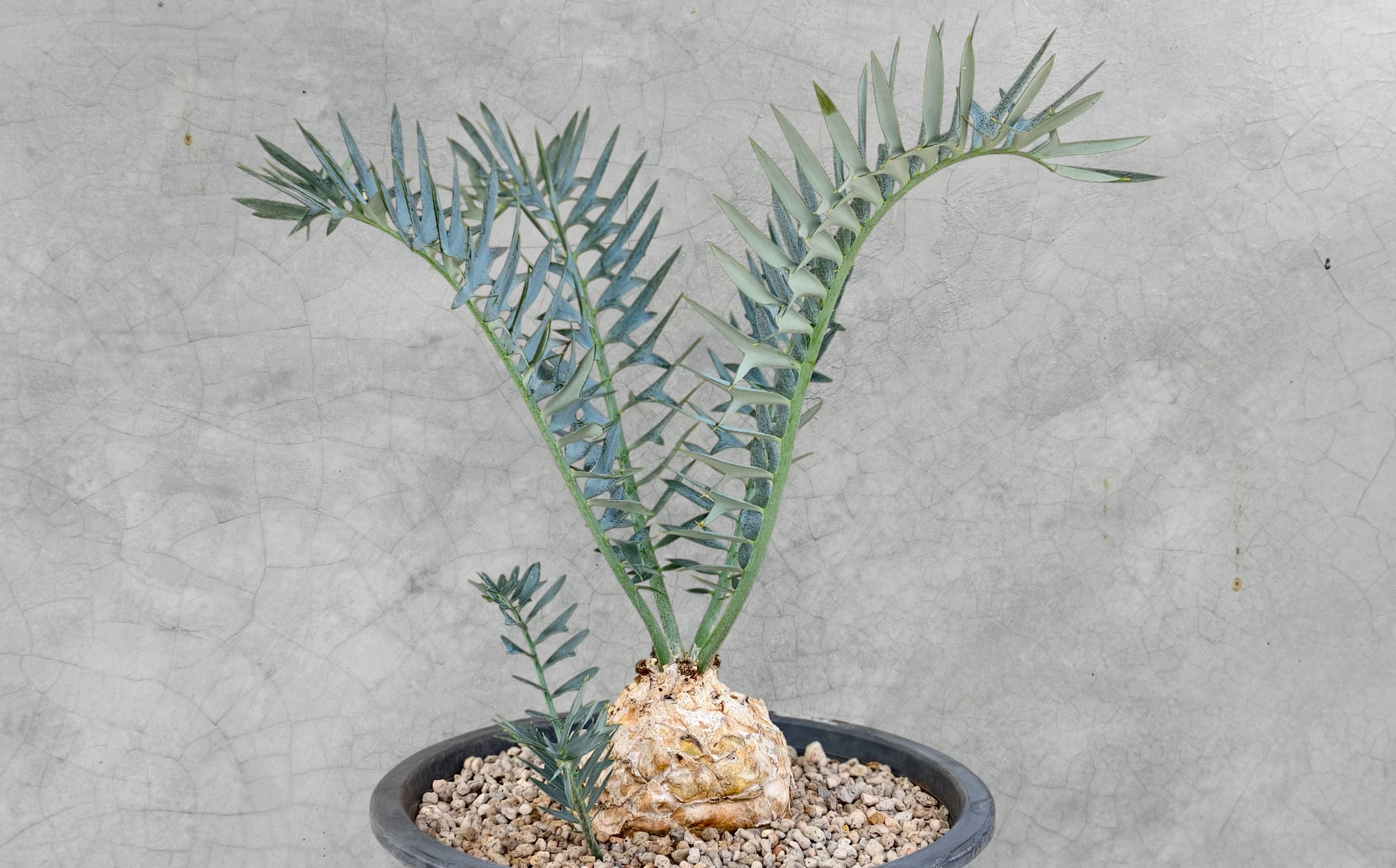

Pachypodium Gracilis: The Complete Care Guide for Rare Caudiciform Collectors
Pachypodium Gracilis is not merely an ornamental plant; it is a rare caudiciform that demands an understanding of its life cycle and specific environmental needs to ensure its beautiful and highly valuable caudex remains healthy for decades. Caring for Gracilis is an art that requires precision and attention to detail. This article serves as an in-depth guide to help you understand its habits, select the right Pachypodium Gracilis soil mix, and master the correct maintenance techniques based on botanical principles.


1. Habits and Life Cycle: The Core of Proper Care
Success in cultivating Gracilis hinges on understanding its Dormancy Cycle, which is its natural survival mechanism in its native Madagascar habitat.
| Period | Habit | Appropriate Care |
| Growing Season | New leaves emerge and flowering occurs (typically summer). High water usage for energy production. | Water regularly when the soil is completely dry. Apply fertilizer. |
| Dormancy Season | Leaves begin to drop or have fully dropped. Growth slows down or stops completely. | Drastically reduce or stop watering entirely to prevent caudex rot. |
Tip: In tropical climates like Thailand, dormancy may not be as pronounced as in temperate zones. However, when temperatures consistently drop or sunlight decreases (e.g., during winter), observe leaf drop and immediately adjust the watering schedule. This is the most crucial aspect of Pachypodium Gracilis winter care.
2. Optimal Environment: Light and Temperature
Gracilis is a plant that requires intense sunlight to maintain the compact and beautiful form of its caudex.
• Light: It requires abundant, direct sunlight (Full Sun) throughout the day. If grown in shade or with insufficient light, the stem will stretch (etiolate) and lose its desirable form, significantly reducing its value.
• Temperature: It prefers warm temperatures, with the optimal range being between 15°C and 20°C during the growing season. The main concern is prolonged exposure to temperatures below 10°C, which can cause damage to the caudex.
3. Growing Medium and Equipment: Emphasizing Drainage and Aeration
The most critical factor in planting Pachypodium Gracilis is excellent drainage and aeration to mimic its native environment on sandstone rocks.
Growing Medium (Substrate)
The best soil formula for Gracilis should emphasize a high proportion of inorganic components (more than 70-80%) to ensure no water retention.
| Component | Approximate Ratio | Function |
| Pumice | 40% | Increases porosity and aids drainage |
| Grit/Coarse Sand | 20% | Adds weight and helps anchor the roots |
| Vermiculite/Perlite | 10% | Retains slight moisture and increases soil aeration |
| Organic Matter (e.g., Peat Moss/Fine Coco Coir) | 30% | Provides nutrients and helps bind the mix |
Caution: Some collectors opt for a 100% inorganic mix to gain complete control over watering.
Essential Equipment
• Pots: Choose pots with large, numerous drainage holes (e.g., terracotta pots or plastic pots with side holes) to ensure the fastest possible drainage.
• Moisture Meter: A useful supplementary tool for checking the moisture level deep within the caudex, especially during seasonal transitions, to prevent overwatering.
4. Maintenance and Fertilization
Since Gracilis is a slow-growing plant, it does not require much fertilizer. However, appropriate fertilization will stimulate root and leaf growth during the growing season.
• Fertilizer Type: Use a slow-release, balanced formula fertilizer, such as Osmocote 13-13-13.
• Frequency: Apply a small amount around the edge of the pot only 2-3 times per year during the growing season (summer).
• Caution: Never fertilize during dormancy, as the plant cannot absorb nutrients, and this may lead to root damage.
Conclusion: Caring for Pachypodium Gracilis is an investment in knowledge and patience. By providing sufficient sunlight, an extremely well-draining medium, and strictly managing water according to its life cycle, you can successfully maintain and increase the value of this rare caudiciform.
Explore our selection of high-quality equipment and growing media specifically designed for caudiciforms and succulents to make your Gracilis care routine simple and highly effective.
Talk about : Price, How to Buy?, Where to Buy?