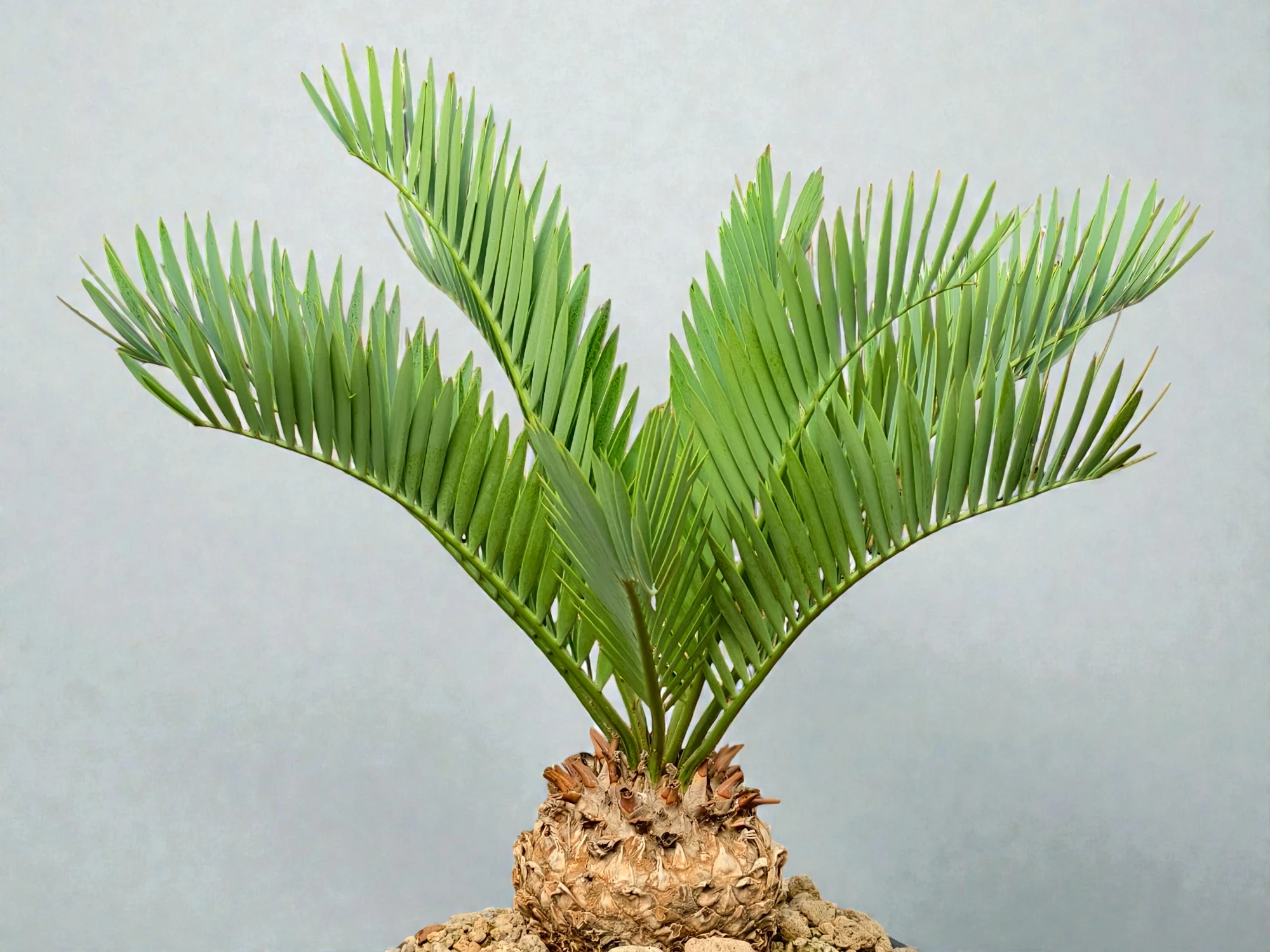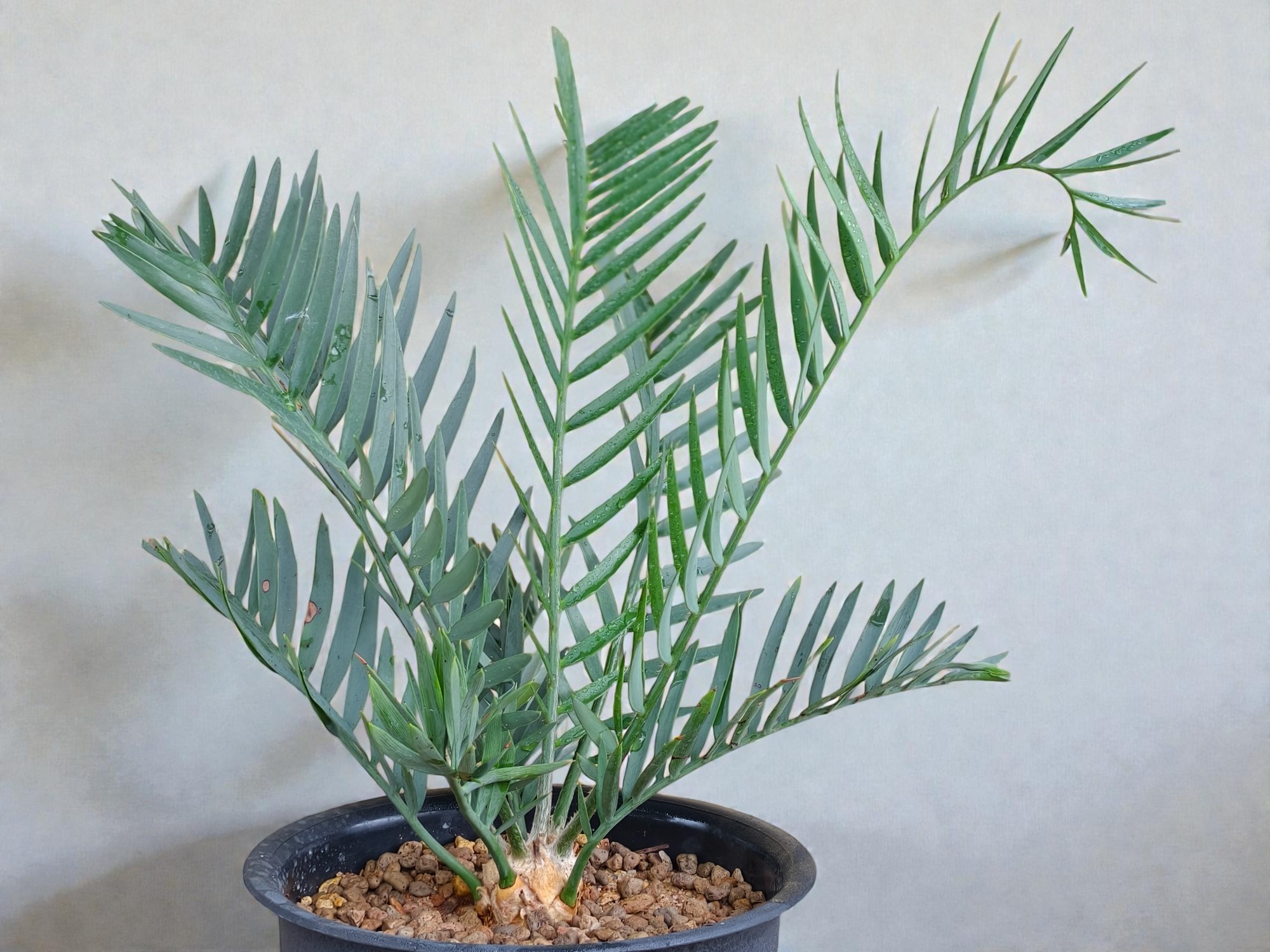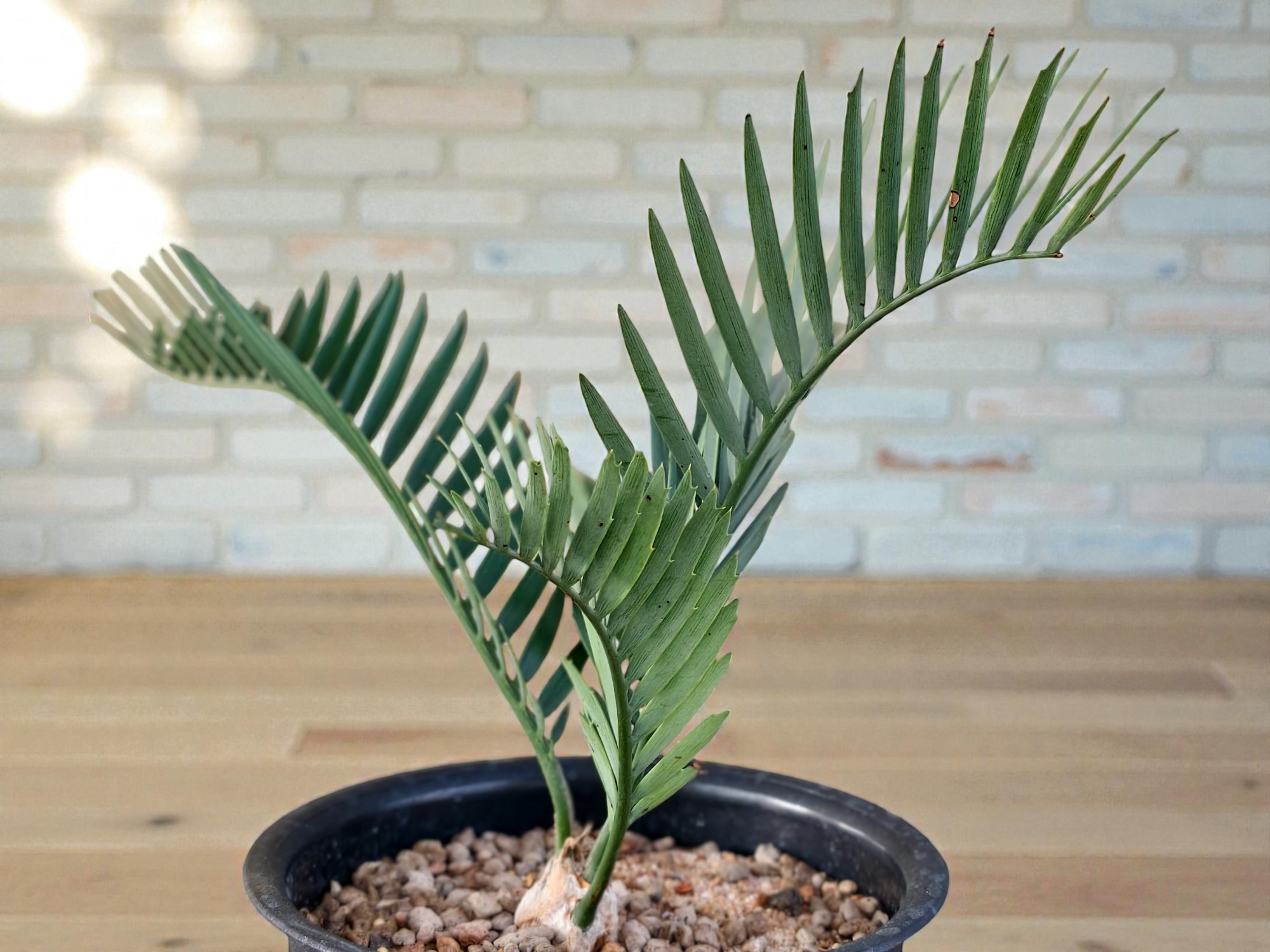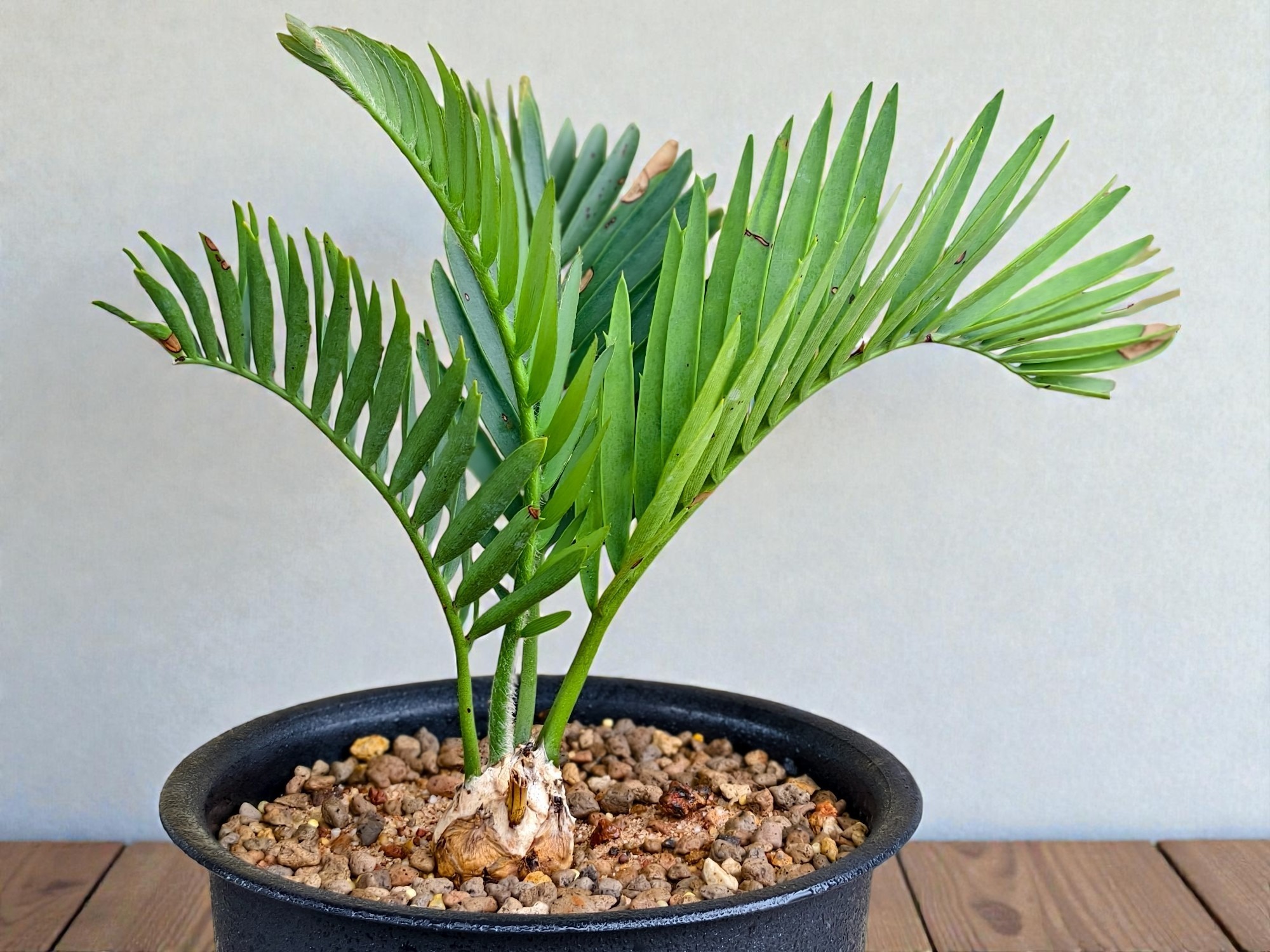
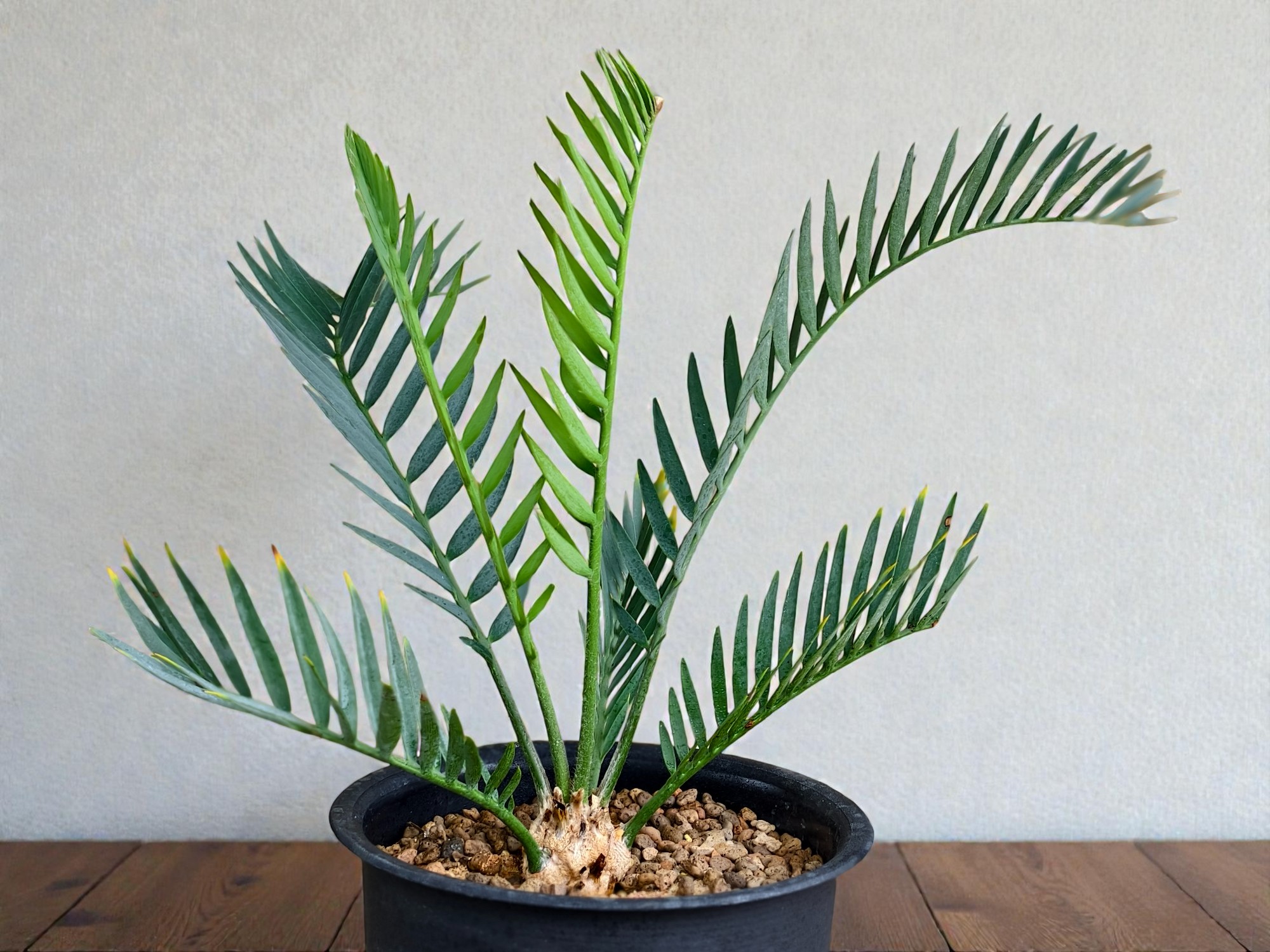
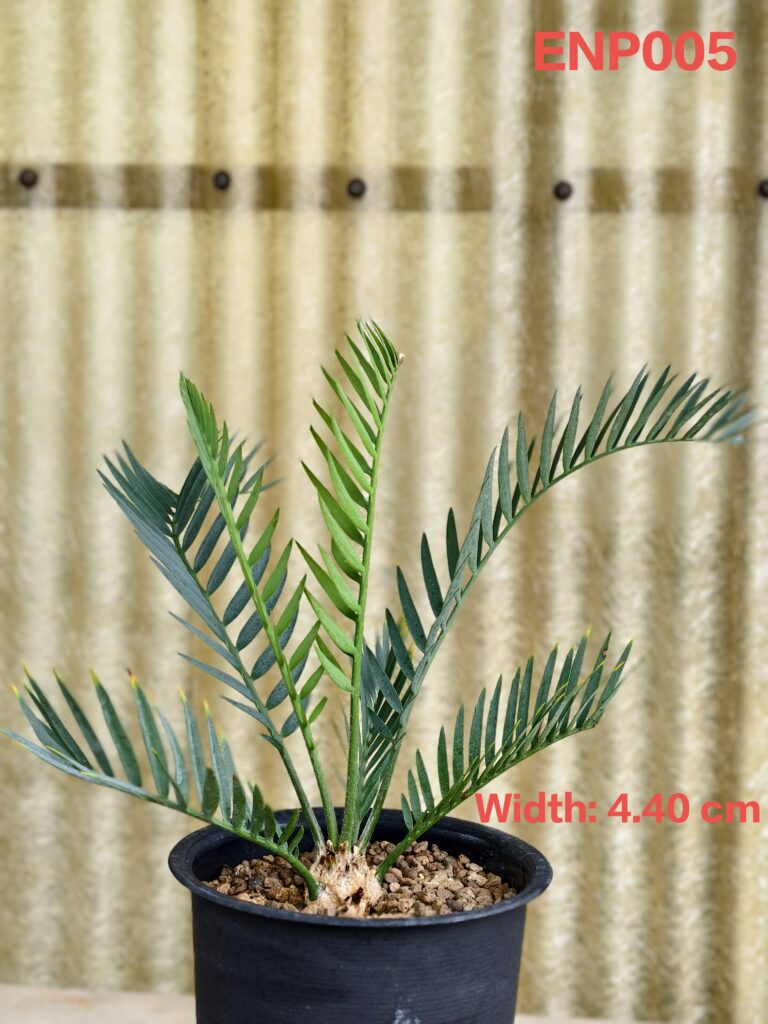
Encephalartos Princeps: The Rare Blue Prince Cycad (ENP005)
The Encephalartos princeps, commonly known as the Kei Cycad or Prince’s Cycad, is one of the most highly prized and visually stunning species within the ancient cycad family. Revered by collectors for its striking blue-green foliage and historical significance, this plant is a true living fossil. Native to the Eastern Cape Province of South Africa, the species is listed as Endangered on the IUCN Red List, making legally cultivated specimens like this one an essential and valuable acquisition for any serious collector.
This specific specimen, identified as ENP005, is a robust young plant, offering a rare opportunity to acquire an established cycad with a promising future.
Distinctive Characteristics and Visual Appeal
Encephalartos princeps is celebrated for its unique aesthetic, which combines prehistoric hardiness with a vibrant, modern color palette.
Specimen ENP005 Details:
| Feature | Description | Commercial Value |
| Caudex Width | 4.40 cm | A young, established seedling size, representing a perfect entry point for collectors. Its small size makes it ideal for shipping and early-stage cultivation. |
| Foliage Color | Mature fronds display the characteristic keeled, blue-green color, highly sought after in the cycad world. New growth is a fresh, lighter green. | The stunning blue hue is a major selling point, providing exceptional contrast and visual appeal in any garden or collection. |
| Growth Habit | A sturdy, compact juvenile plant with multiple healthy fronds emerging from a small, visible caudex. | Indicates excellent health and vigorous growth potential, ready to be nurtured into a large, mature specimen. |
| Rarity Status | Endangered (IUCN Red List). | This status elevates the plant from a simple garden specimen to a valuable, collectible conservation piece. |
The Collector’s Appeal: Why This Cycad is a Premium Investment
The value of Encephalartos princeps extends far beyond its beauty, rooted in its rarity, longevity, and status as a protected species.
• A Living Fossil: Cycads are one of the oldest plant lineages on Earth, often referred to as “living fossils.” Owning an E. princeps connects the collector to millions of years of botanical history.
• Exceptional Rarity: Due to their slow growth rate and habitat loss, all Encephalartos species are endangered. Acquiring a legally propagated specimen is a responsible and highly valued investment.
• The Blue Cycad: The intense, glaucous blue coloration of the mature leaves is a hallmark of this species, making it a standout among the green foliage of most other plants. This color is maintained best when grown in full sun.
• Hardiness and Longevity: Adapted to arid, rocky conditions, this cycad is remarkably drought-resistant and frost-hardy, making it a resilient and long-lived addition to the landscape. Mature plants can live for centuries.
Cultivation and Care
Encephalartos princeps is a slow-growing but rewarding plant to cultivate.
• Light: Prefers full sun to maintain its best blue color and compact form. It is highly tolerant of heat.
• Soil: Requires extremely well-draining, gritty soil. As a lithophytic plant (rock-dwelling), it cannot tolerate standing water.
• Watering: Water moderately, allowing the soil to dry out completely between watering sessions. It is drought-resistant but benefits from regular watering during the growing season.
• Temperature: It is known to be frost-hardy, but protection from extreme, prolonged cold is advisable, especially for young plants.
This 4.40 cm wide specimen (ENP005) is a fantastic opportunity to begin or expand a collection with a highly sought-after, blue-foliaged cycad.
Talk about : Price, How to Buy?, Where to Buy?