Encephalartos Princeps: The Majestic Prince’s Cycad for Discerning Collectors
The Encephalartos princeps, commonly known as the Prince’s Cycad or Kei Cycad, is a highly prized and majestic species within the ancient family of cycads. Native to the rugged, rocky outcrops of the Eastern Cape Province in South Africa, this cycad is a symbol of resilience and timeless beauty. Its striking appearance and relative hardiness make it a sought-after addition for serious collectors and landscape designers looking for a statement plant with significant botanical value.
Unique Characteristics: A Blue-Green Masterpiece
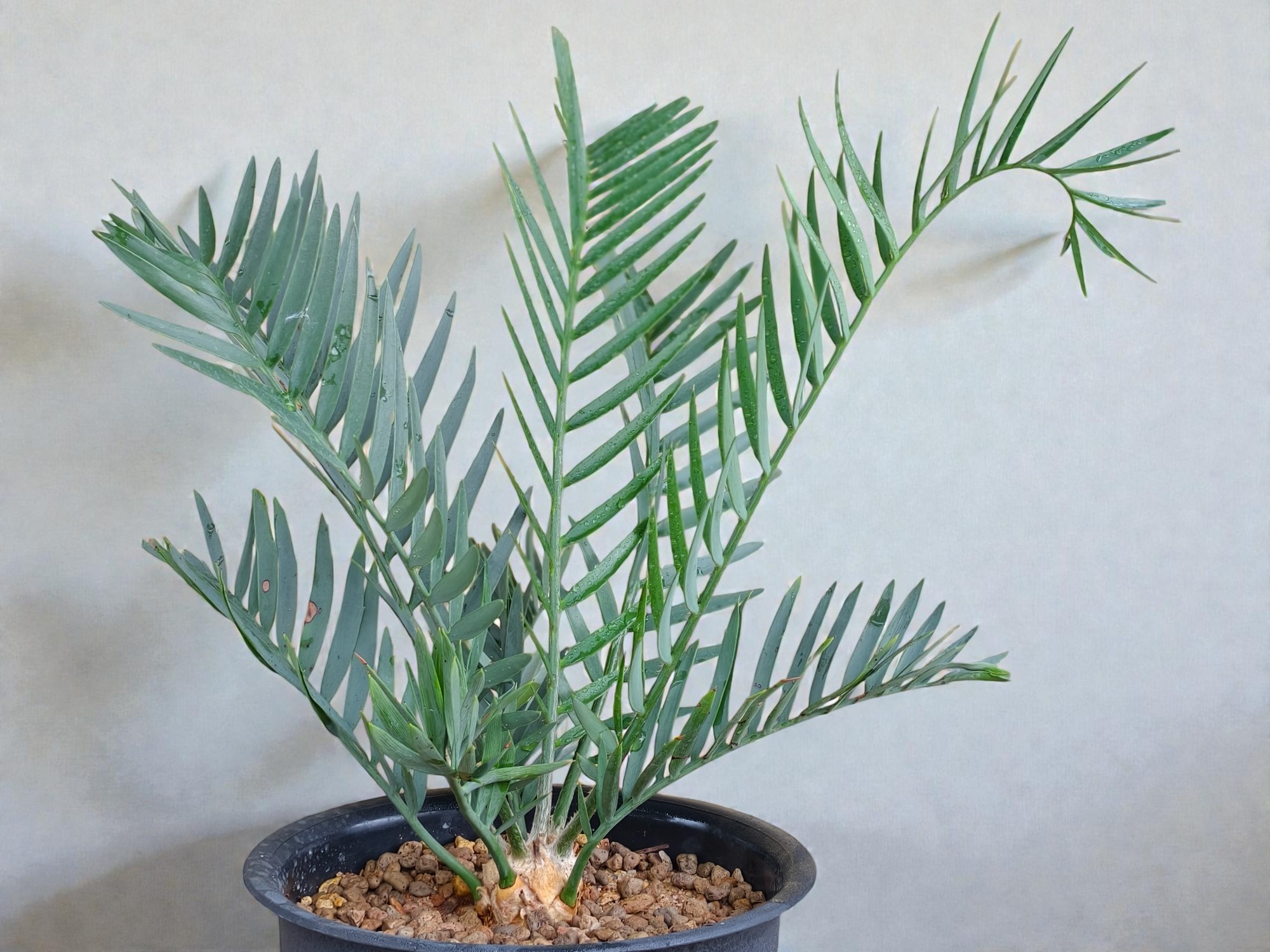
The Encephalartos princeps is celebrated for its stunning foliage and robust structure. It is one of the more desirable “blue cycads” from South Africa, offering a unique color palette that sets it apart from other species.
| Feature | Description | Value Proposition |
| Foliage Color | Silvery-green to distinct bluish-green. | Provides a rare, cool-toned contrast in a garden or collection. |
| Growth Habit | Medium-sized cycad, producing numerous suckers from the main stem. | Excellent for creating a multi-headed specimen over time, increasing visual impact and value. |
| Rarity & Status | Classified as Near Threatened (NT) by the IUCN. | High investment value due to conservation status and limited availability. |
| Hardiness | Extremely drought-tolerant and can withstand heavy frosts. | Ideal for xeriscaping and collectors in diverse climates, offering low-maintenance elegance. |
Cultivation and Care: Thriving in the Sun
Reflecting its native habitat on exposed, rocky terrain, the Encephalartos princeps is a remarkably tough and adaptable cycad, provided its basic needs are met.
• Light: Requires full sun to maintain its desirable bluish-green color and compact growth. Insufficient light will result in greener, weaker growth.
• Soil and Drainage: Excellent drainage is paramount. It thrives in rocky, well-aerated soil and is highly intolerant of wet feet, which can lead to caudex rot. It tolerates a wide range of soil types, including sandy or rocky mixes.
• Watering: Being drought-tolerant, it should be watered deeply but infrequently, allowing the soil to dry out completely between waterings. This mimics its arid, lithophytic origins.
• Temperature: Highly cold-tolerant, with reports of surviving temperatures into the upper teens (Fahrenheit).
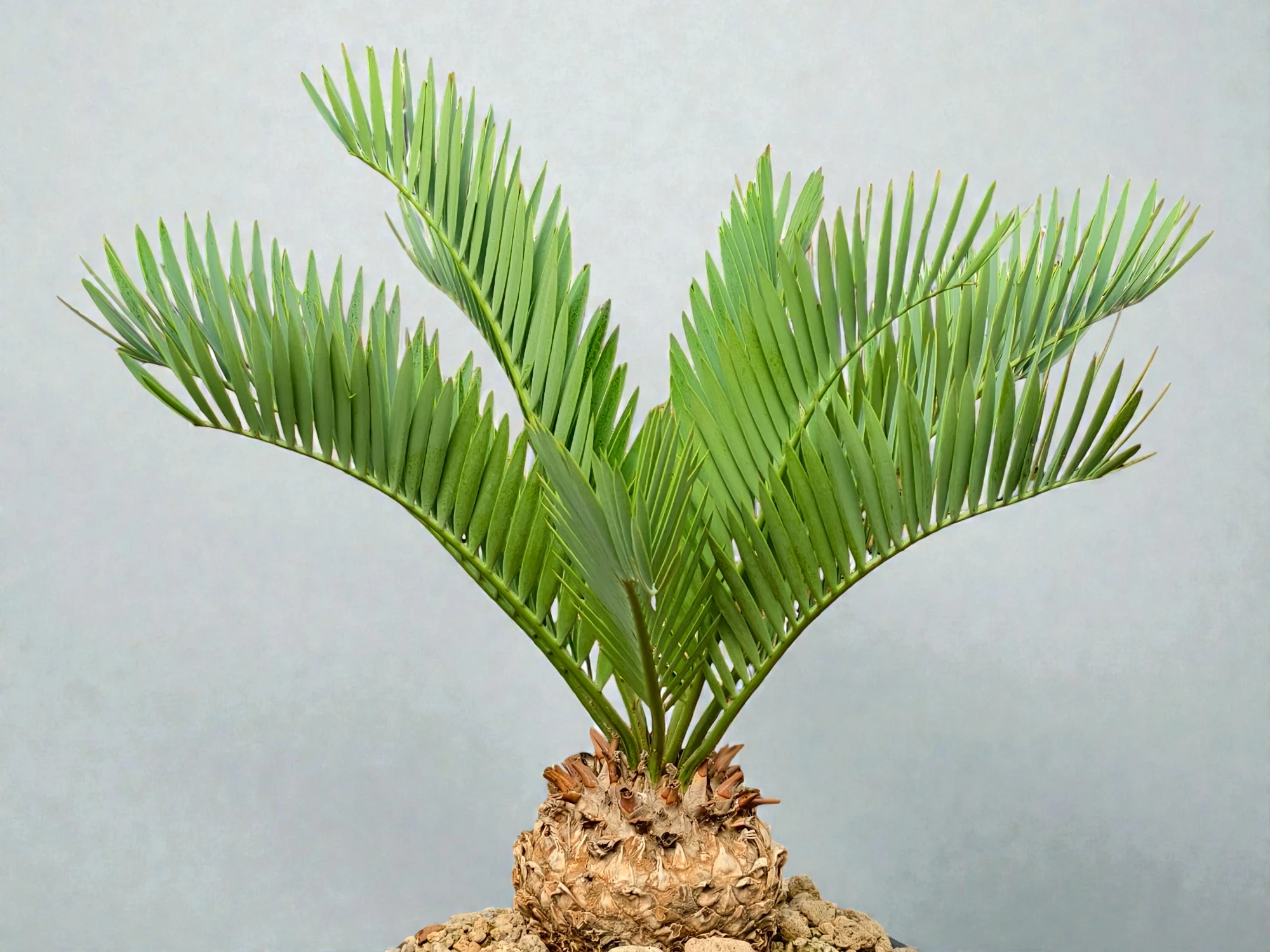
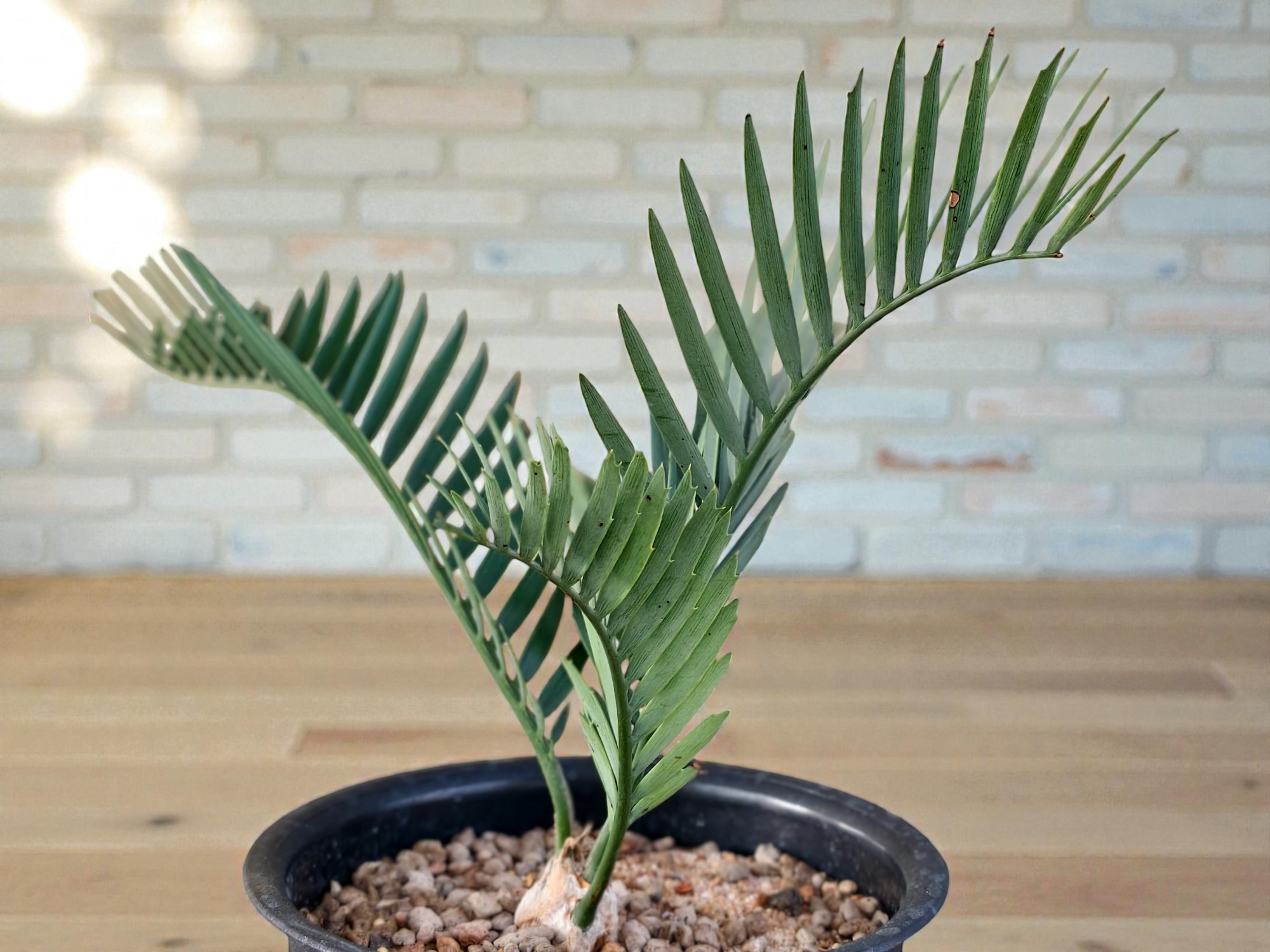
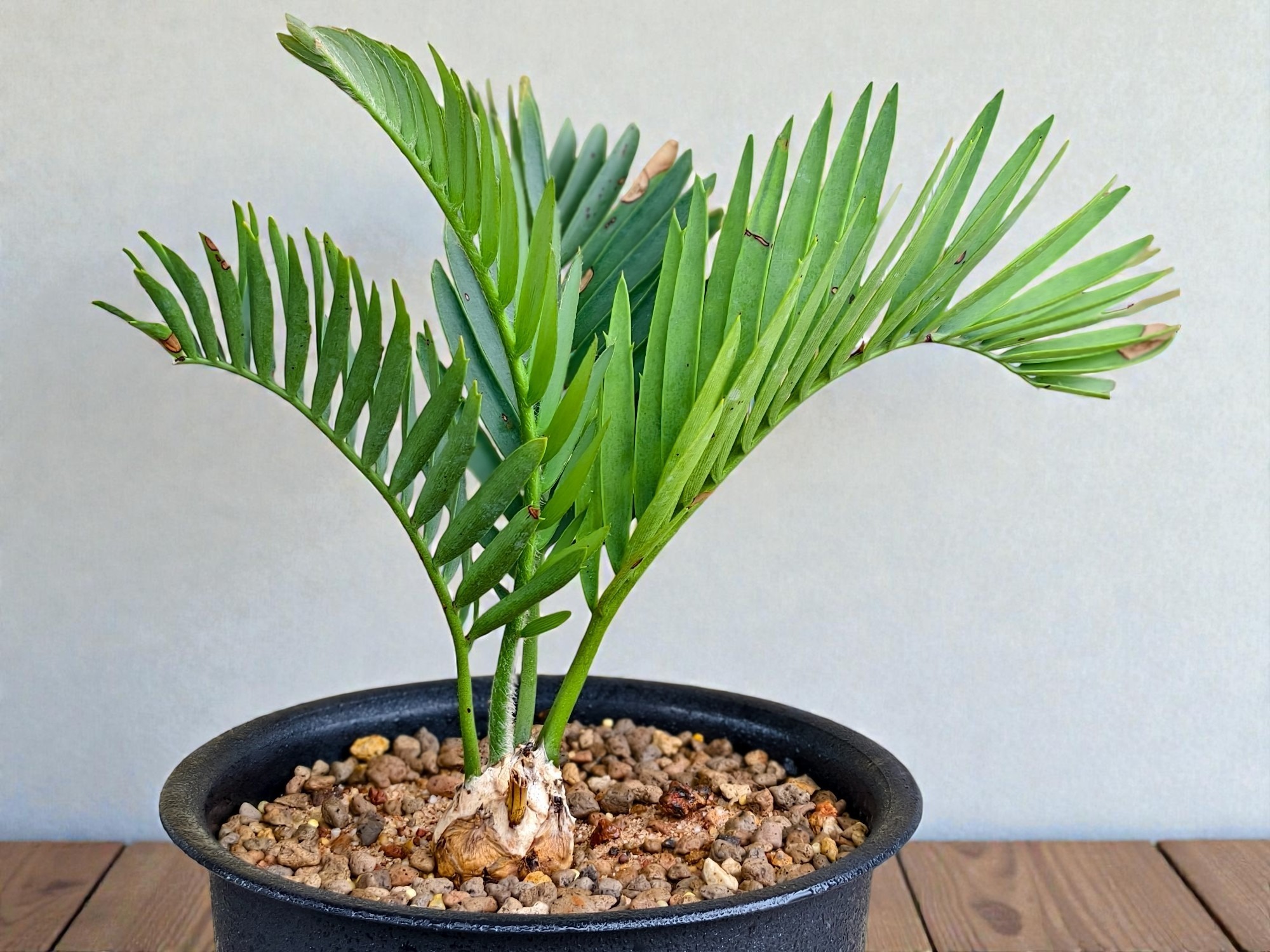
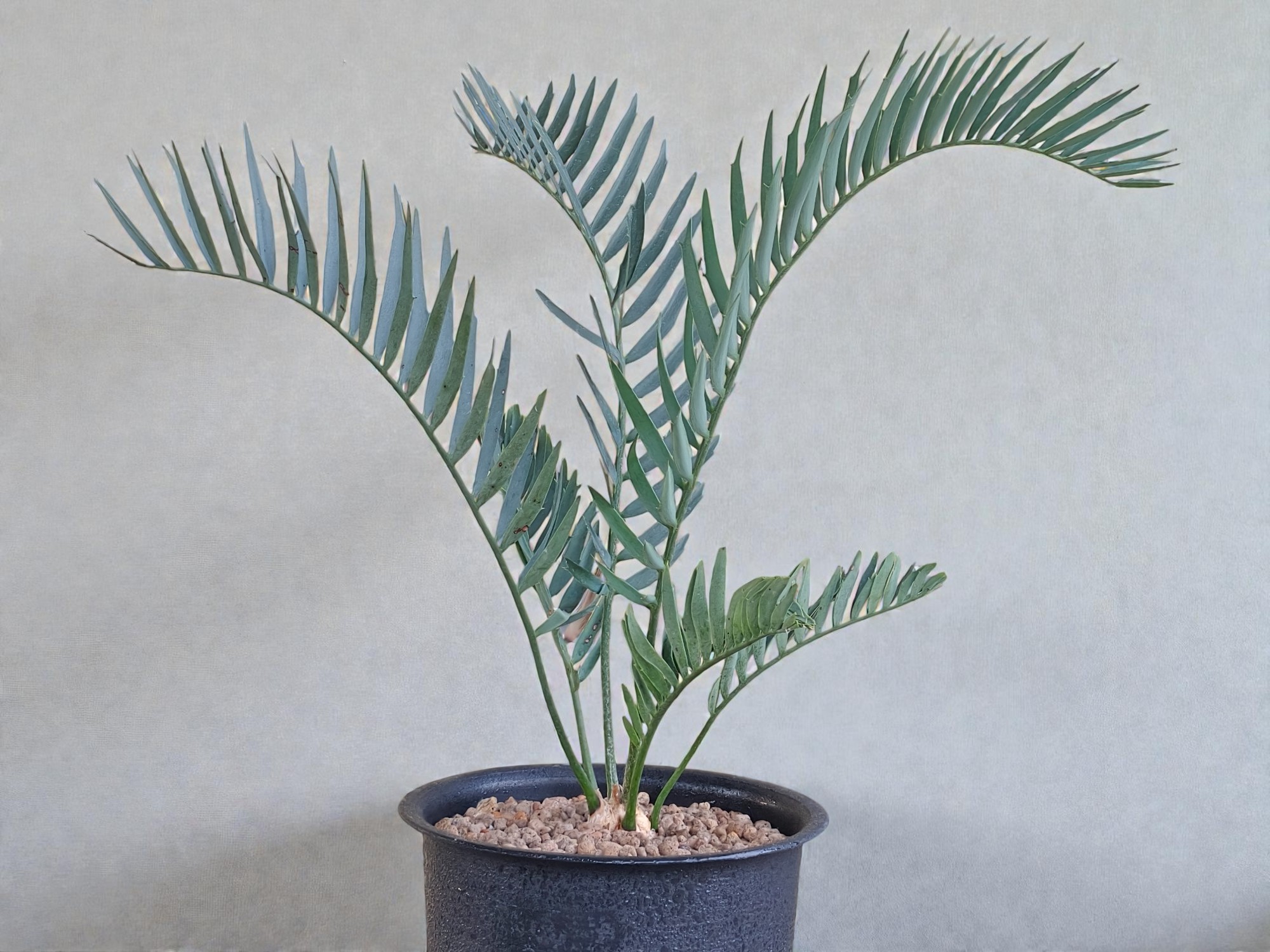
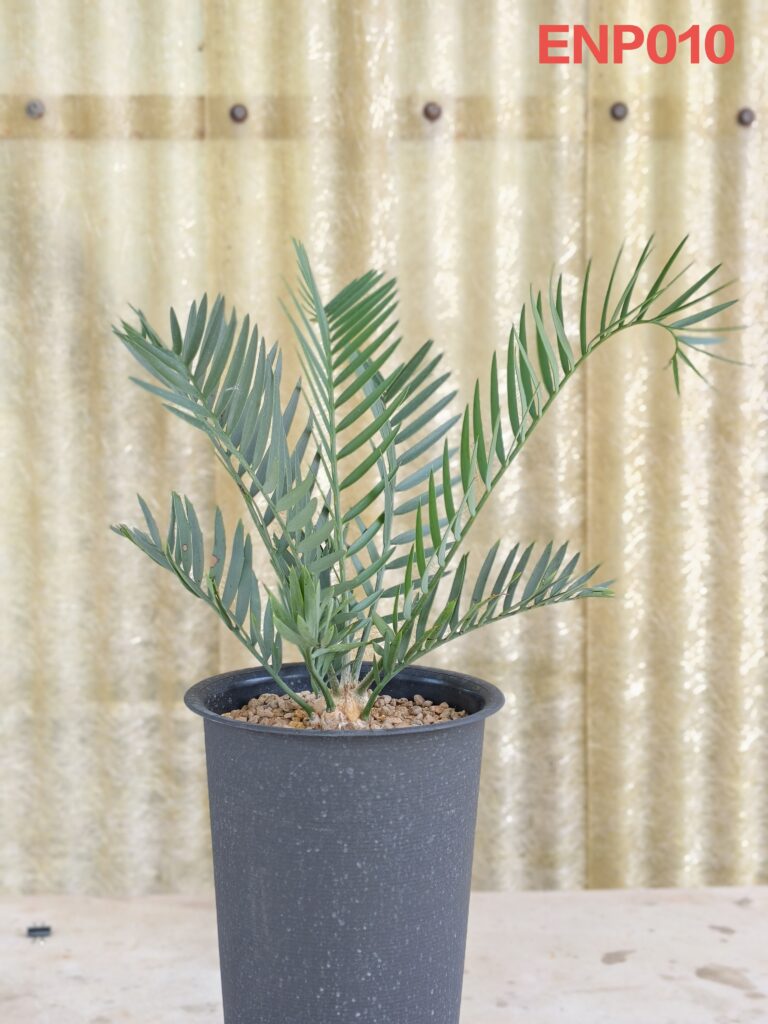
Description of the Plant in the Image (ENP010)
The specimen in the attached image, labeled ENP010, is a beautiful and well-established young Encephalartos princeps. The plant displays a notable bluish-green hue on its fronds, a highly desirable characteristic that is best maintained under strong light. The fronds are upright and robust, indicating excellent health. The plant is potted in a tall, dark container with a top dressing of light-colored, porous gravel, suggesting a deep, well-draining substrate which is crucial for this species. The visible caudex is firm and healthy, though its exact width is not provided in the image. This specimen is an excellent example of the Prince’s Cycad, perfect for a collector seeking a plant that is already beginning to exhibit the species’ signature blue coloration and is well-prepared for continued growth.
Talk about : Price, How to Buy?, Where to Buy?