Encephalartos Princeps: The Majestic Prince’s Cycad for Discerning Collectors
The Encephalartos princeps, commonly known as the Prince’s Cycad or Kei Cycad, is a highly prized and majestic species within the ancient family of cycads. Native to the rugged, rocky outcrops of the Eastern Cape Province in South Africa, this cycad is a symbol of resilience and timeless beauty. Its striking appearance and relative hardiness make it a sought-after addition for serious collectors and landscape designers looking for a statement plant with significant botanical value.
Unique Characteristics: A Blue-Green Masterpiece
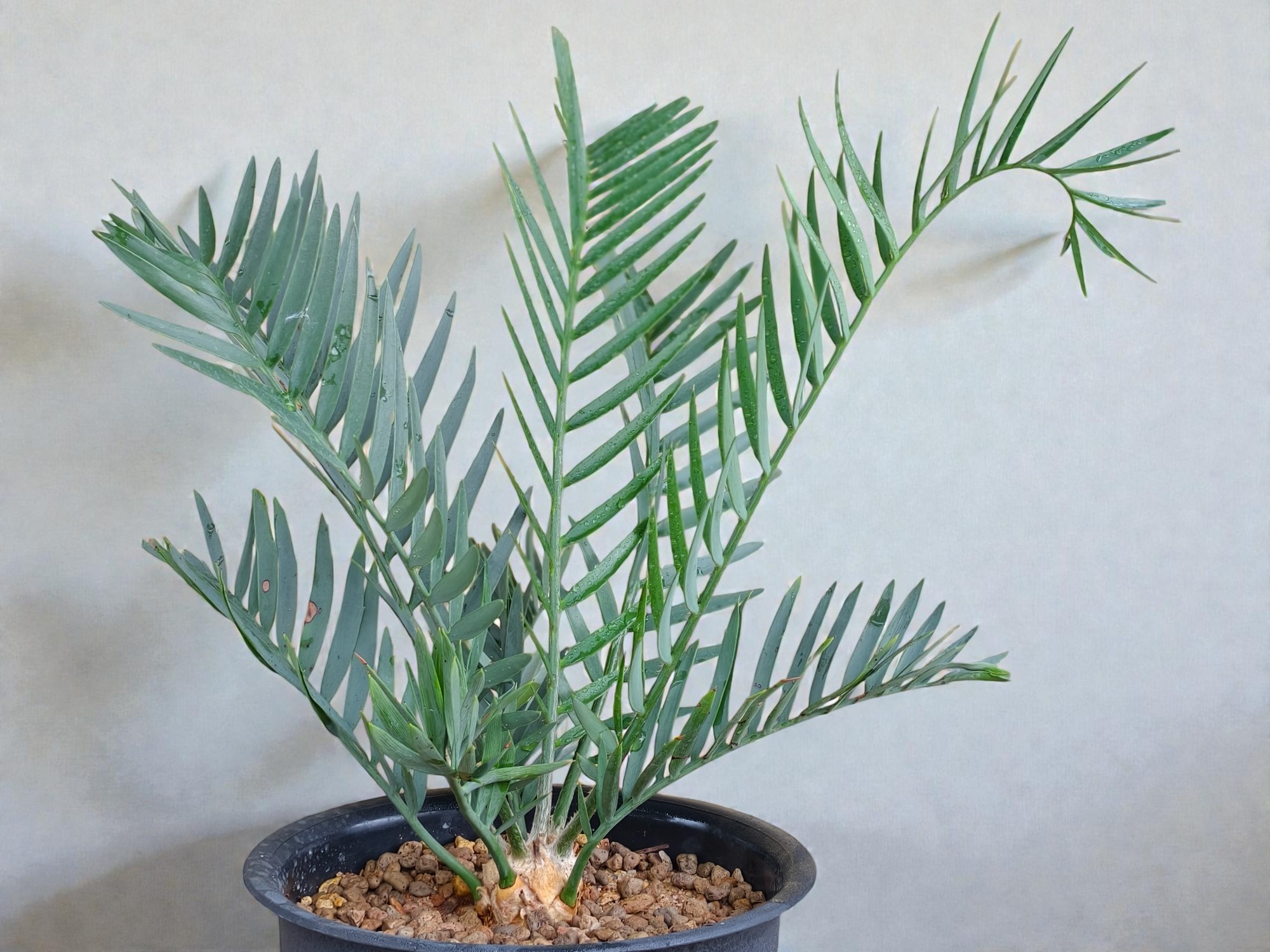
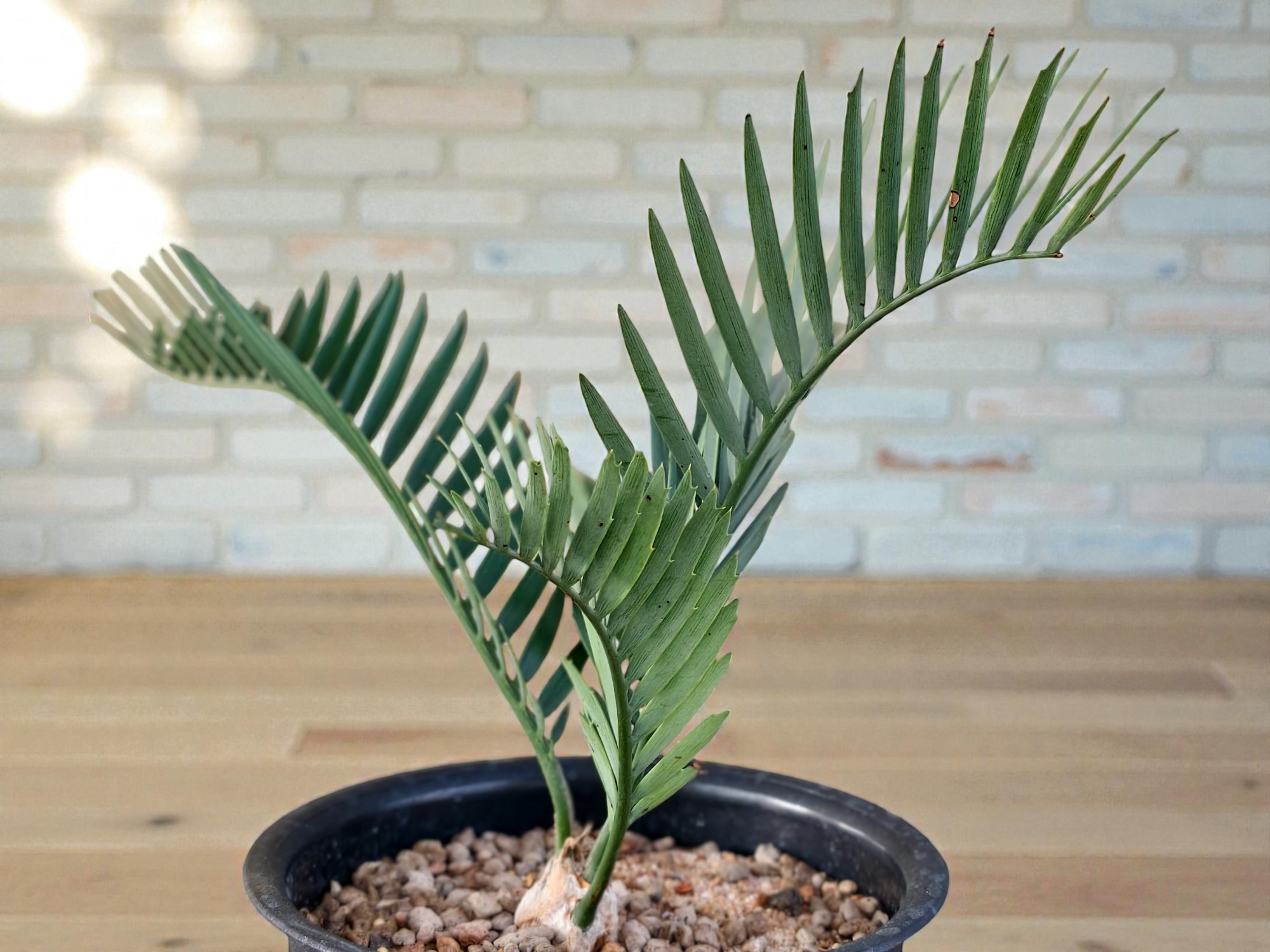
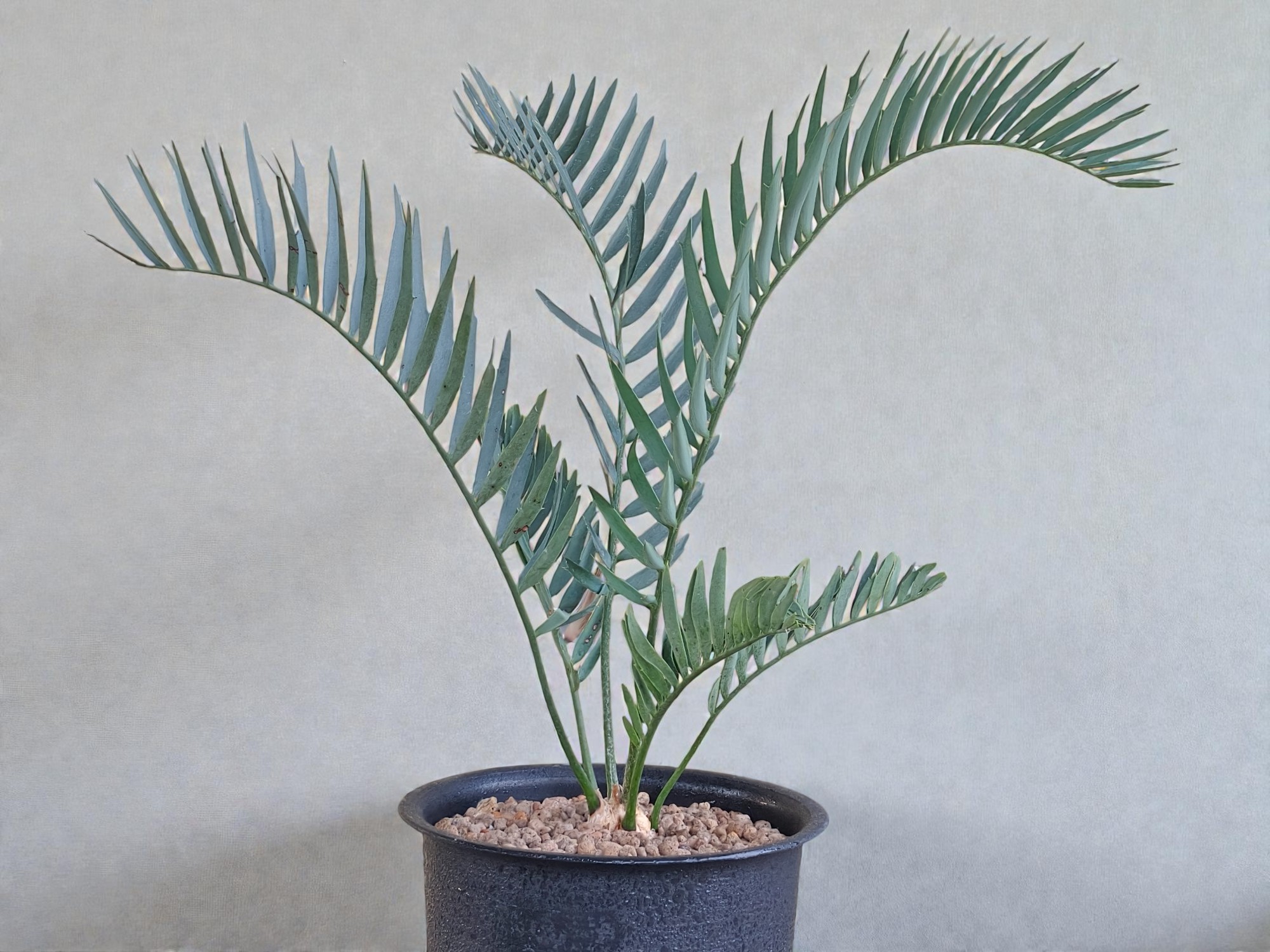
The Encephalartos princeps is celebrated for its stunning foliage and robust structure. It is one of the more desirable “blue cycads” from South Africa, offering a unique color palette that sets it apart from other species.
| Feature | Description | Value Proposition |
| Foliage Color | Silvery-green to distinct bluish-green. | Provides a rare, cool-toned contrast in a garden or collection. |
| Growth Habit | Medium-sized cycad, producing numerous suckers from the main stem. | Excellent for creating a multi-headed specimen over time, increasing visual impact and value. |
| Rarity & Status | Classified as Near Threatened (NT) by the IUCN. | High investment value due to conservation status and limited availability. |
| Hardiness | Extremely drought-tolerant and can withstand heavy frosts. | Ideal for xeriscaping and collectors in diverse climates, offering low-maintenance elegance. |
Cultivation and Care: Thriving in the Sun
Reflecting its native habitat on exposed, rocky terrain, the Encephalartos princeps is a remarkably tough and adaptable cycad, provided its basic needs are met.
• Light: Requires full sun to maintain its desirable bluish-green color and compact growth. Insufficient light will result in greener, weaker growth.
• Soil and Drainage: Excellent drainage is paramount. It thrives in rocky, well-aerated soil and is highly intolerant of wet feet, which can lead to caudex rot. It tolerates a wide range of soil types, including sandy or rocky mixes.
• Watering: Being drought-tolerant, it should be watered deeply but infrequently, allowing the soil to dry out completely between waterings. This mimics its arid, lithophytic origins.
• Temperature: Highly cold-tolerant, with reports of surviving temperatures into the upper teens (Fahrenheit).
Description of the Plant in the Image (ENP008)
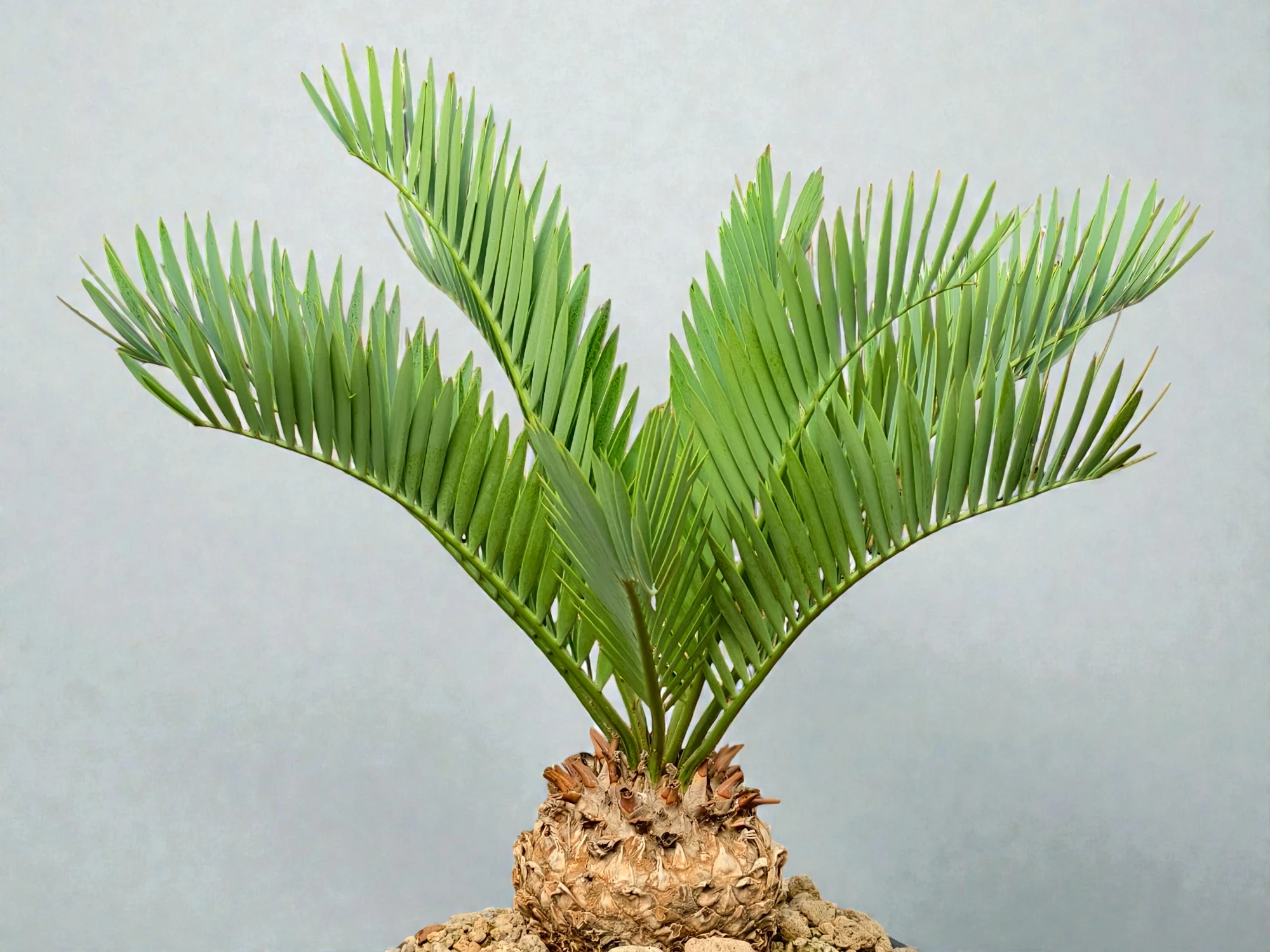
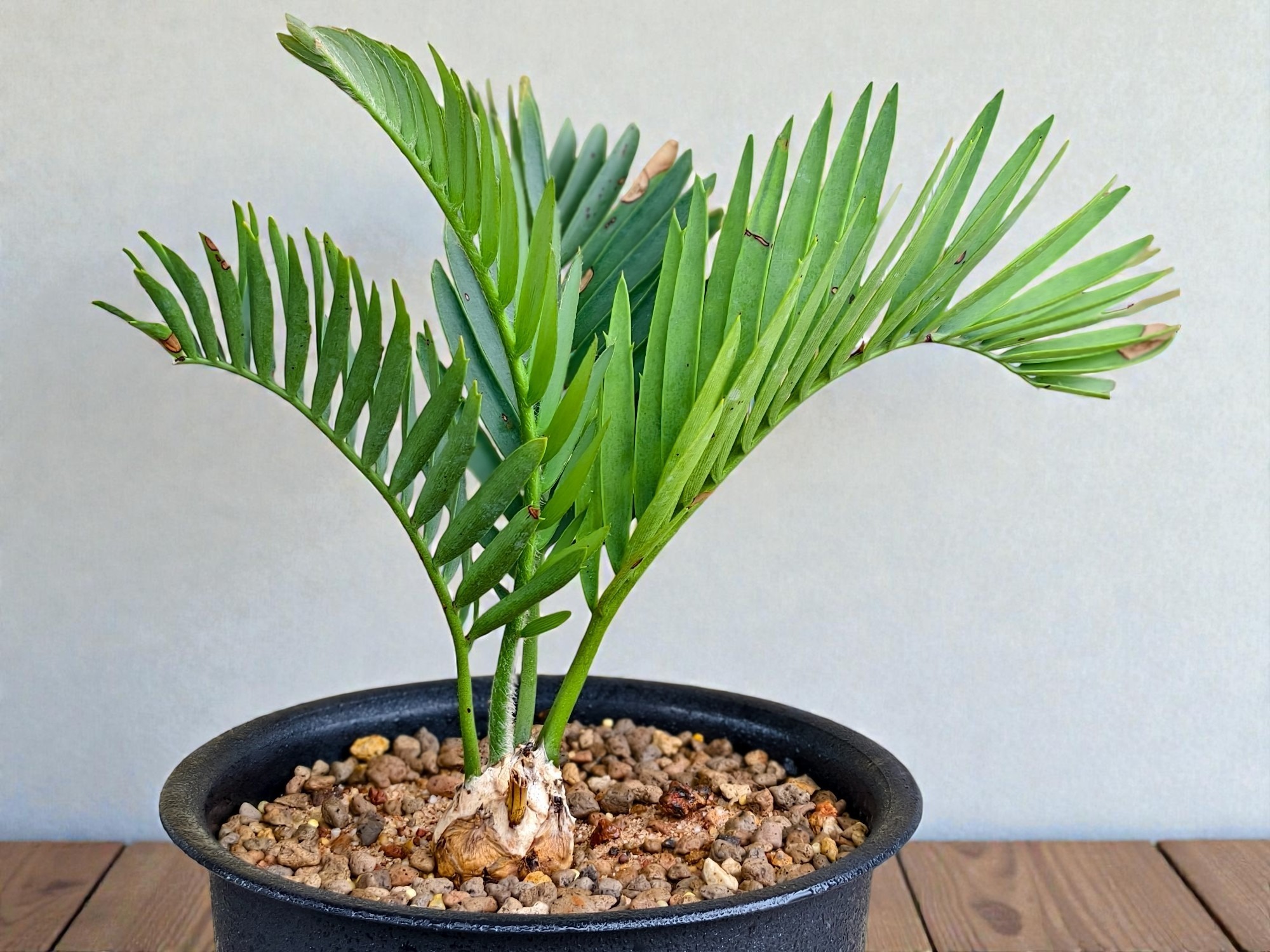
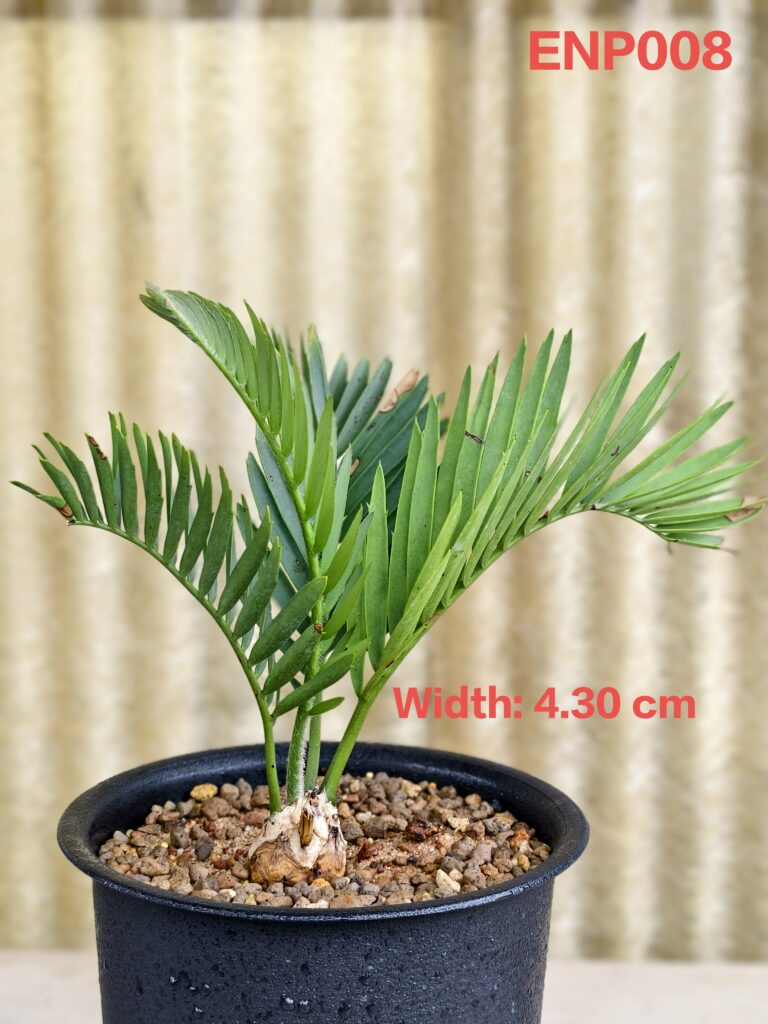
The specimen in the attached image, labeled ENP008, is a vibrant and robust young Encephalartos princeps. It features a healthy, exposed caudex with a measured width of 4.30 cm, a significant size for a juvenile plant, indicating a strong foundation. The fronds are a fresh, deep green, suggesting recent, vigorous growth and excellent health. The plant is potted in a high-drainage medium, visible as a top dressing of mixed gravel, which is crucial for the well-being of this cycad. This specimen is an ideal choice for collectors looking for a healthy, established plant with a measurable caudex and the promise of developing the characteristic blue-green color as it matures in full sun.
Talk about : Price, How to Buy?, Where to Buy?