
Pachypodium Gracilis (PG005): A Living Sculpture from Madagascar
An Exceptional Specimen for the Discerning Collector
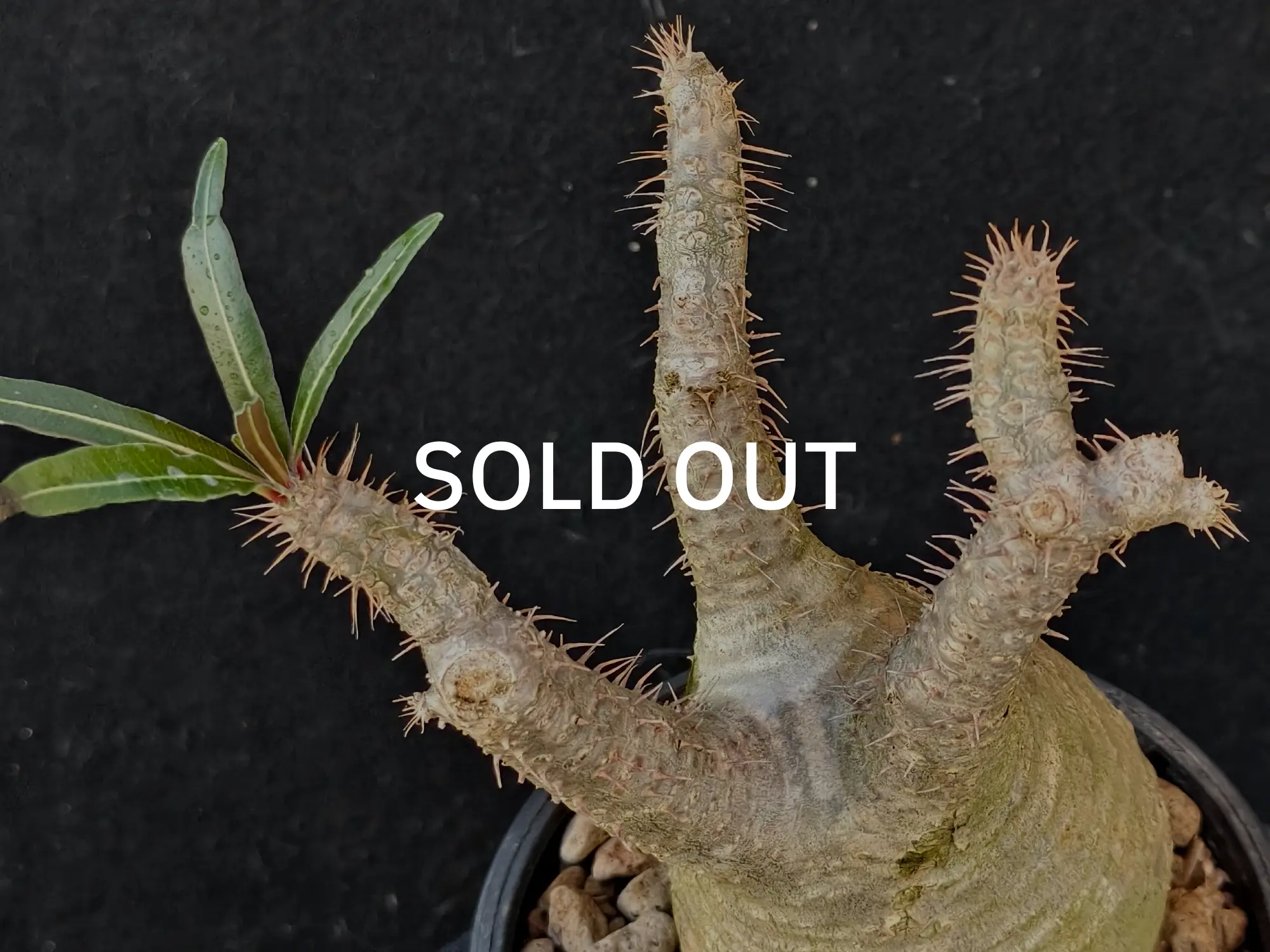
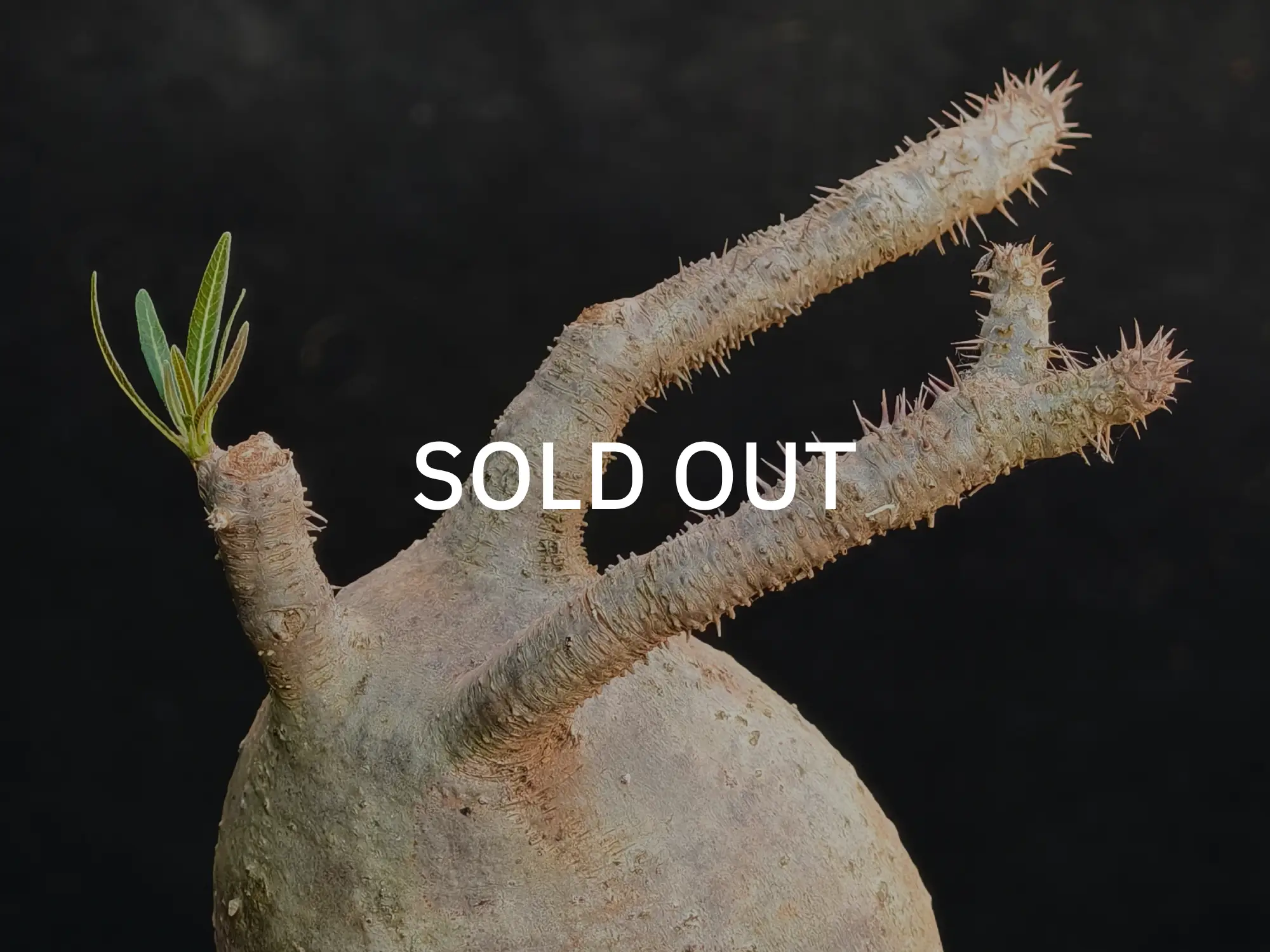
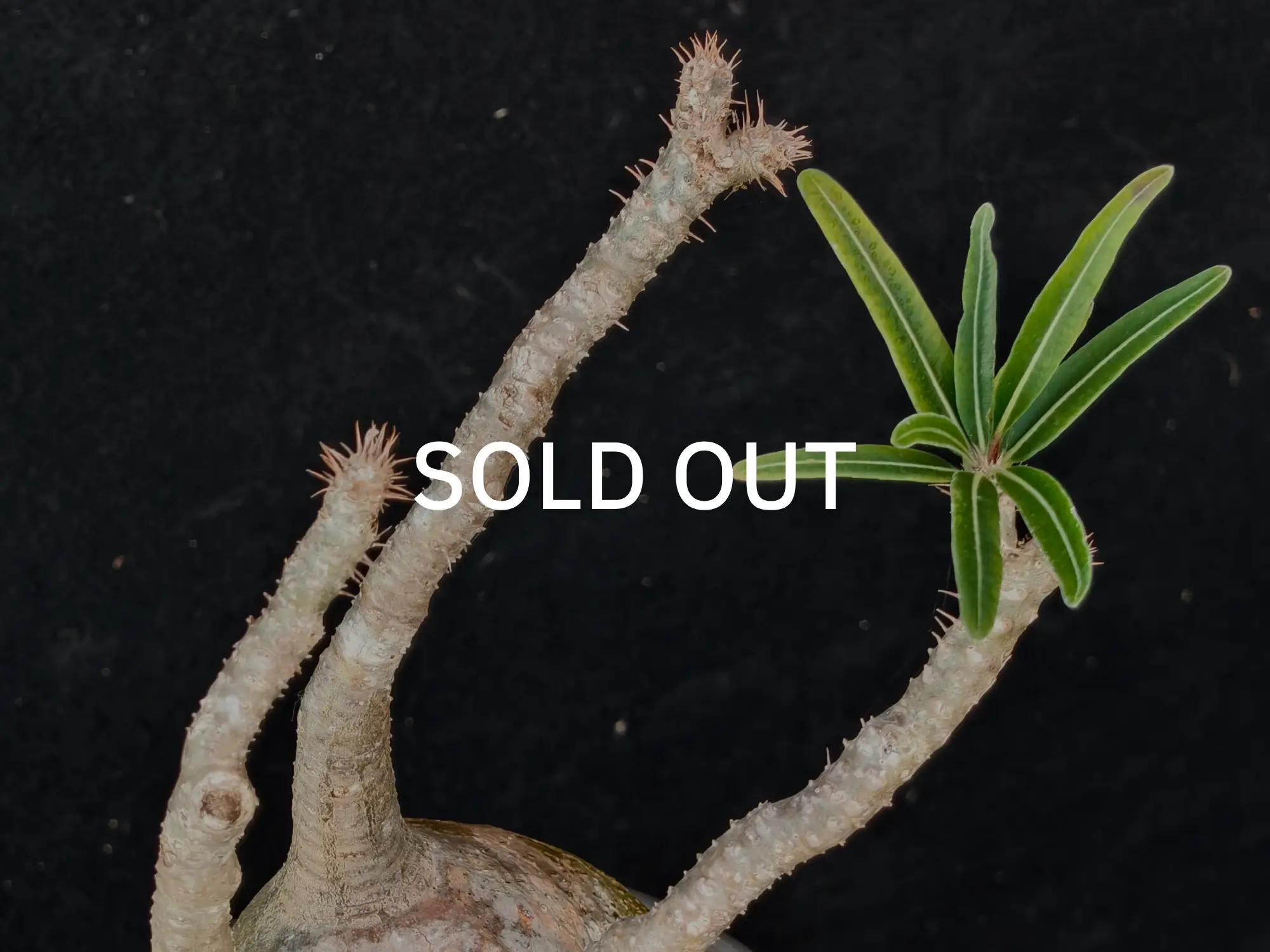
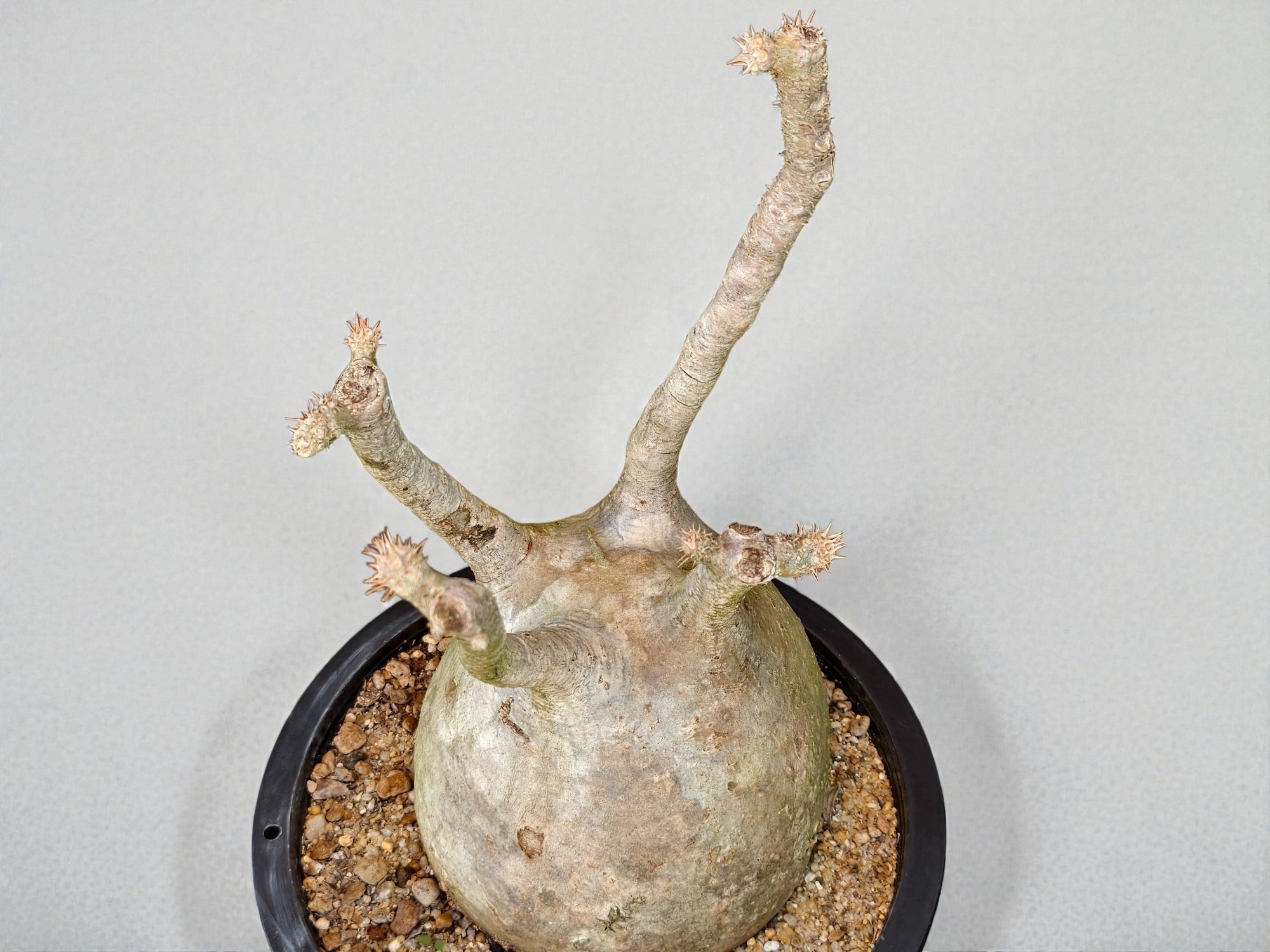
We are proud to present specimen PG005, a magnificent example of Pachypodium gracilius, a species highly coveted by succulent and caudex enthusiasts worldwide. Native to the dramatic sandstone escarpments of Madagascar, this plant is a testament to nature’s artistry, and this particular specimen represents the pinnacle of the species’ unique beauty. With its impressive size and perfectly formed structure, PG005 is not merely a plant, but a living sculpture that will be the centerpiece of any distinguished collection.
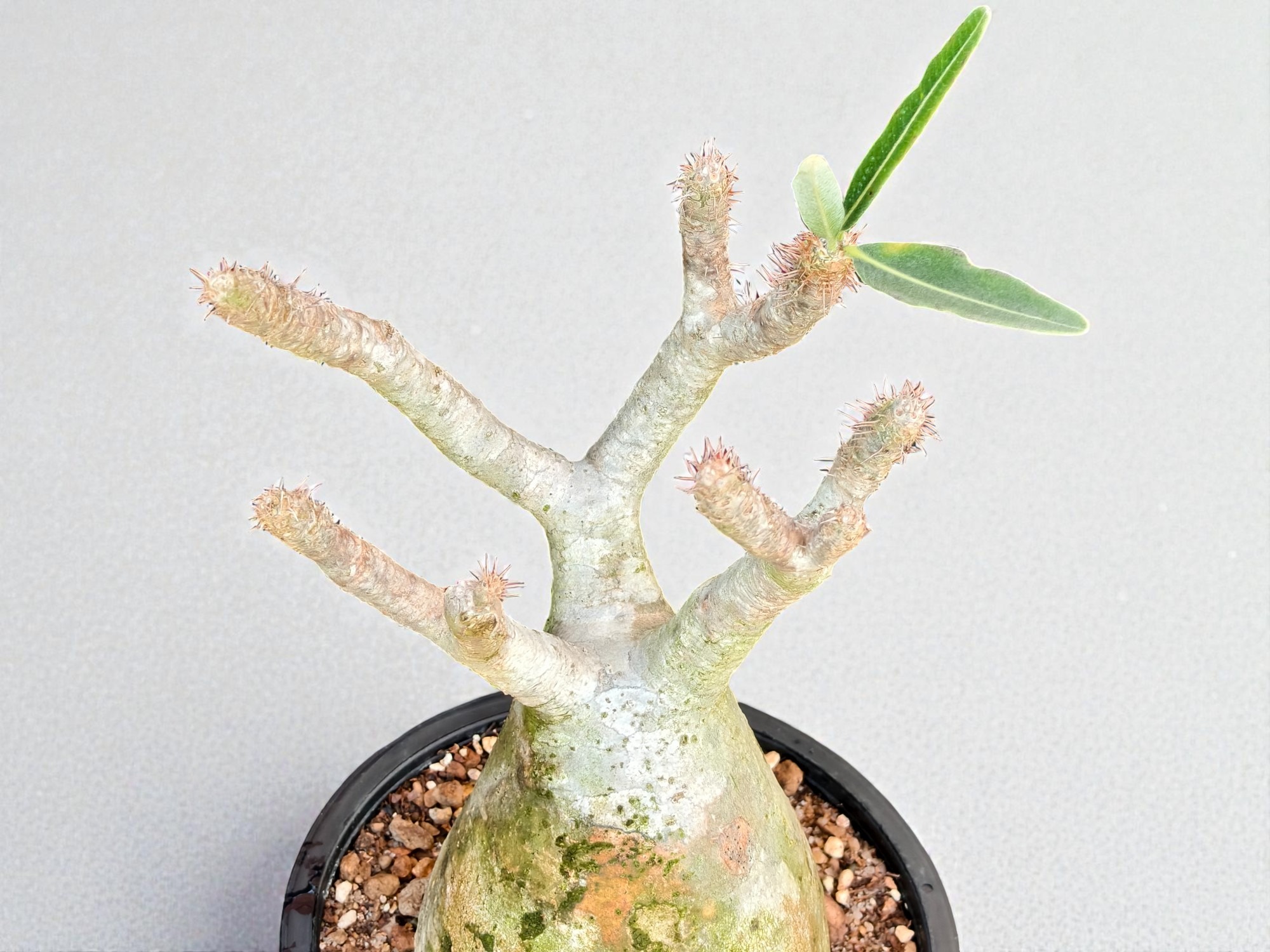
The most striking feature of this specimen is its substantial and perfectly formed caudex, which measures an impressive 12.20 cm in width. This swollen trunk, characteristic of the Pachypodium genus, boasts a classic, smooth, balloon-like shape that indicates maturity and robust health. The surface displays a beautiful, natural patina in shades of pale beige and tan, a sign of its age and authentic character. From this powerful base emerge four distinct and gracefully curved branches, creating a balanced and aesthetically pleasing asymmetrical form reminiscent of a natural bonsai.
Each branch tapers elegantly and shows signs of healthy, active growth at its fuzzy, lanate tips, promising a vibrant display of foliage in the coming season. The entire specimen is in a dormant state, as is typical for the species, but it is primed and ready to flourish under the right care. Its sculptural quality and museum-grade appearance make it an unparalleled acquisition for both seasoned collectors and those looking to begin their journey with a truly exceptional plant.
Specimen and Species Details
To provide a comprehensive overview, the table below outlines the key characteristics of this specific specimen alongside the general details for the Pachypodium gracilius species.
| Feature | Specimen PG005 Details | General Species Information (Pachypodium gracilius) |
| Specimen Code | PG005 | – |
| Caudex Width | 12.20 cm | Up to 40 cm in mature plants |
| Caudex Shape | Classic bulbous, balloon-like | Short, fat, pachycaule trunk |
| Branches | Four, slender and gracefully curved | Narrow, tapering, ascending branches |
| Current State | Dormant, healthy, with active growth tips | Deciduous in winter, loses leaves |
| Origin | – | Endemic to Isalo mountains, Madagascar |
| Flowers | – | Bright yellow, appearing on long peduncles |
| Spines | Short, paired conical spines | Thinner and fewer than other P. rosulatum varieties |
Why Choose Specimen PG005?
This is a rare opportunity to acquire a Pachypodium gracilius of this caliber. Its substantial 12.20 cm caudex signifies a level of maturity that takes many years to achieve. The flawless, sculptural form with four well-proportioned branches provides a natural elegance that requires no pruning or training to appreciate. The plant appears in excellent health, with no visible damage, and its authentic, weathered patina adds to its character and value. It is a textbook example of the species, ready to thrive and become a legacy plant in your collection.
Care and Cultivation
Pachypodium gracilius is a rewarding plant to cultivate. It thrives in a well-draining cactus or succulent mix and prefers full sun to light shade. As a caudiciform plant, it stores water in its trunk and requires careful watering. Water sparingly during the summer growing season and ensure the soil does not become waterlogged. During its winter dormancy (typically November to March), watering should be withheld completely. This species is sensitive to cold and must be protected from frost, with a recommended minimum winter temperature of around 4°C (39°F). With its amazing regenerative properties and natural bonsai-like habit, it is a low-maintenance species that offers immense visual reward.
Please handle with care, as this plant has spines.
This exceptional Pachypodium gracilius is a collector’s dream. Its combination of size, perfect form, and robust health makes it a valuable and timeless addition to any home or greenhouse.
Talk about : Price, How to Buy?, Where to Buy?