

Pachypodium Gracilius (PG003): The Gnarled Character of the Wild
Presenting specimen PG003, a truly unique and character-rich example of Pachypodium gracilius. This plant is a collector’s dream for those who appreciate the rugged, naturalistic aesthetic of a specimen that appears to have been shaped by the elements. Originating from the rocky, arid landscapes of Madagascar, Pachypodium gracilius is celebrated for its distinctive caudex and sculptural form. PG003 embodies the resilience and wild beauty of its species, making it a captivating addition to any collection.
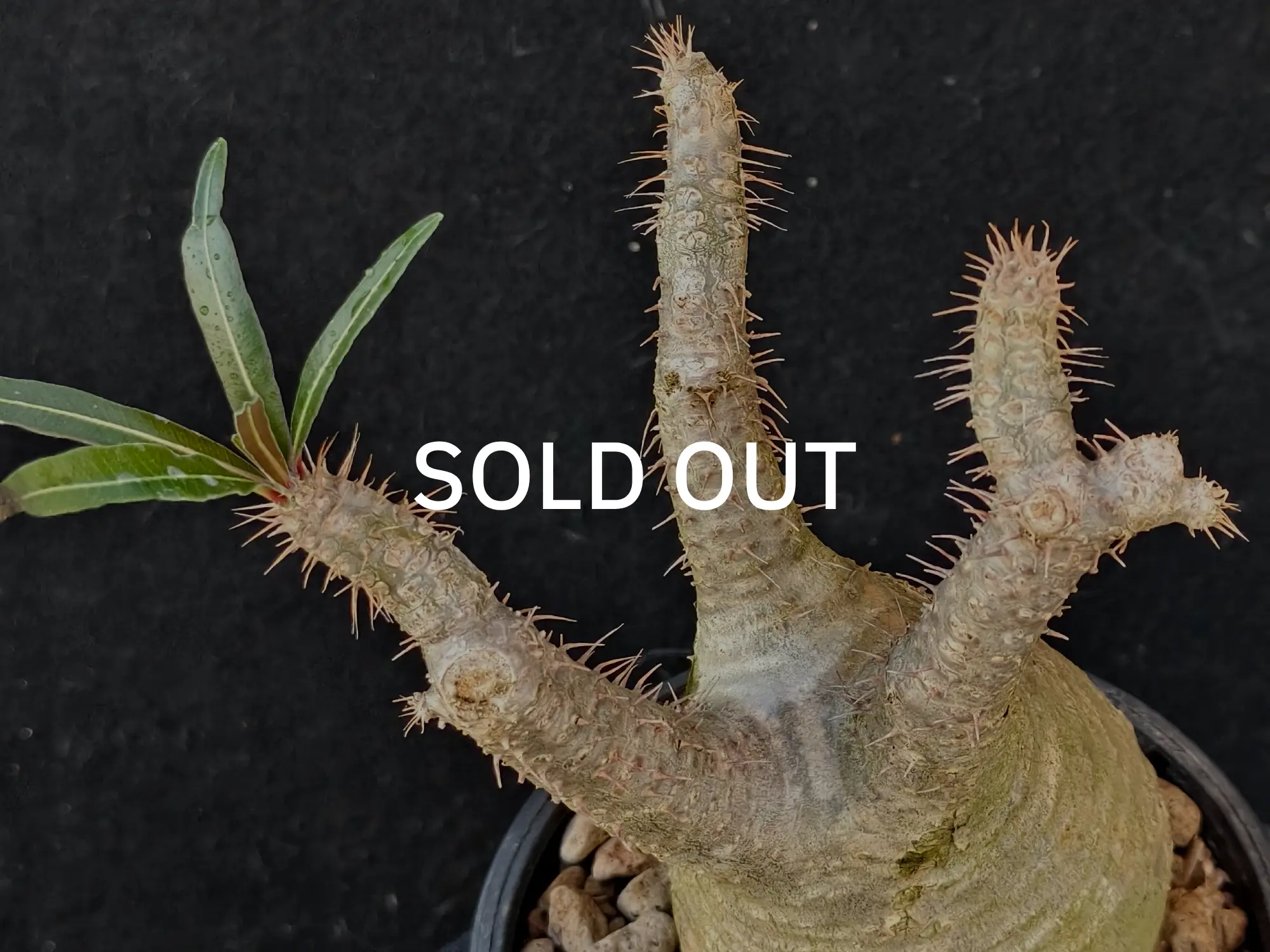
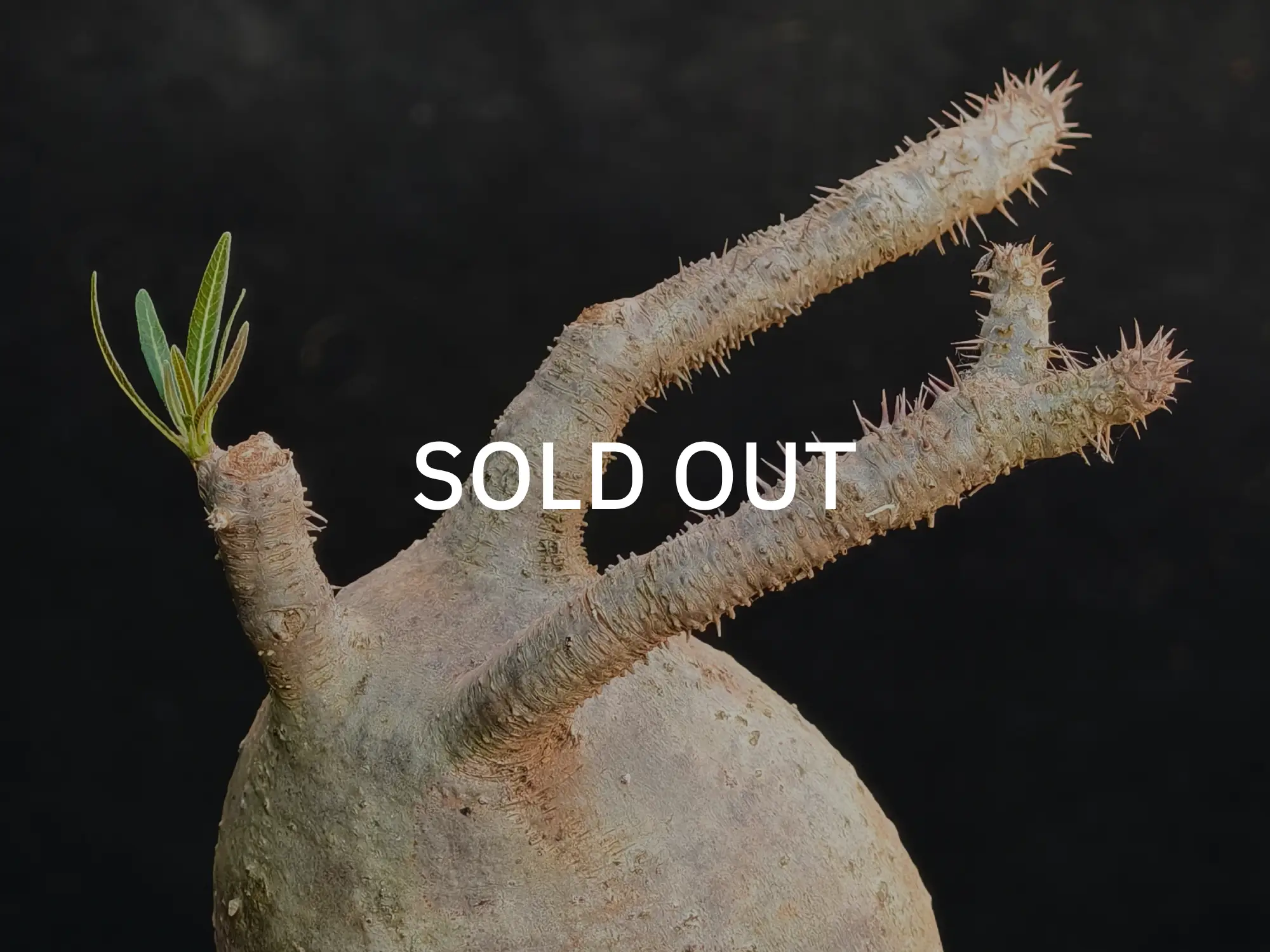
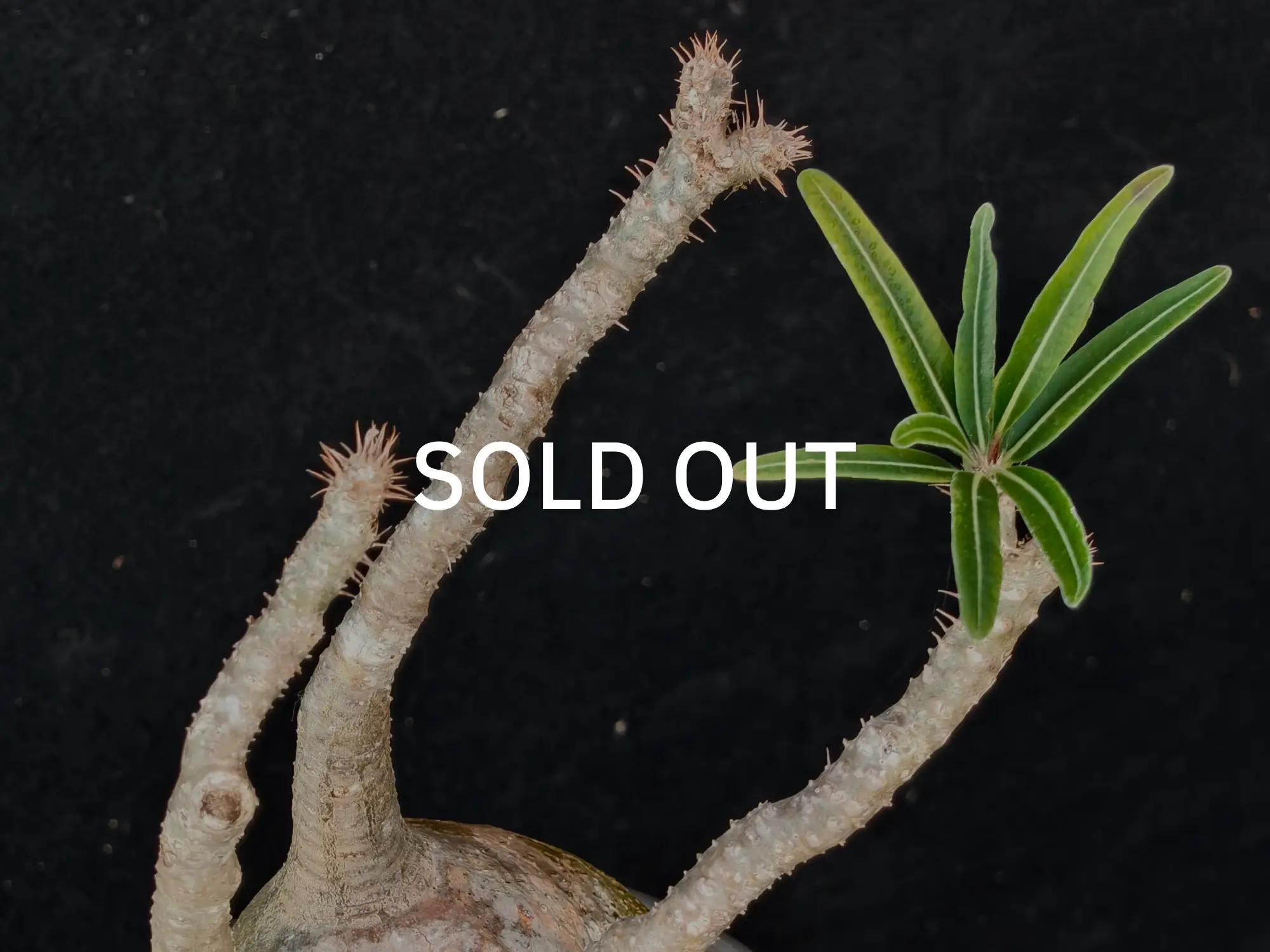
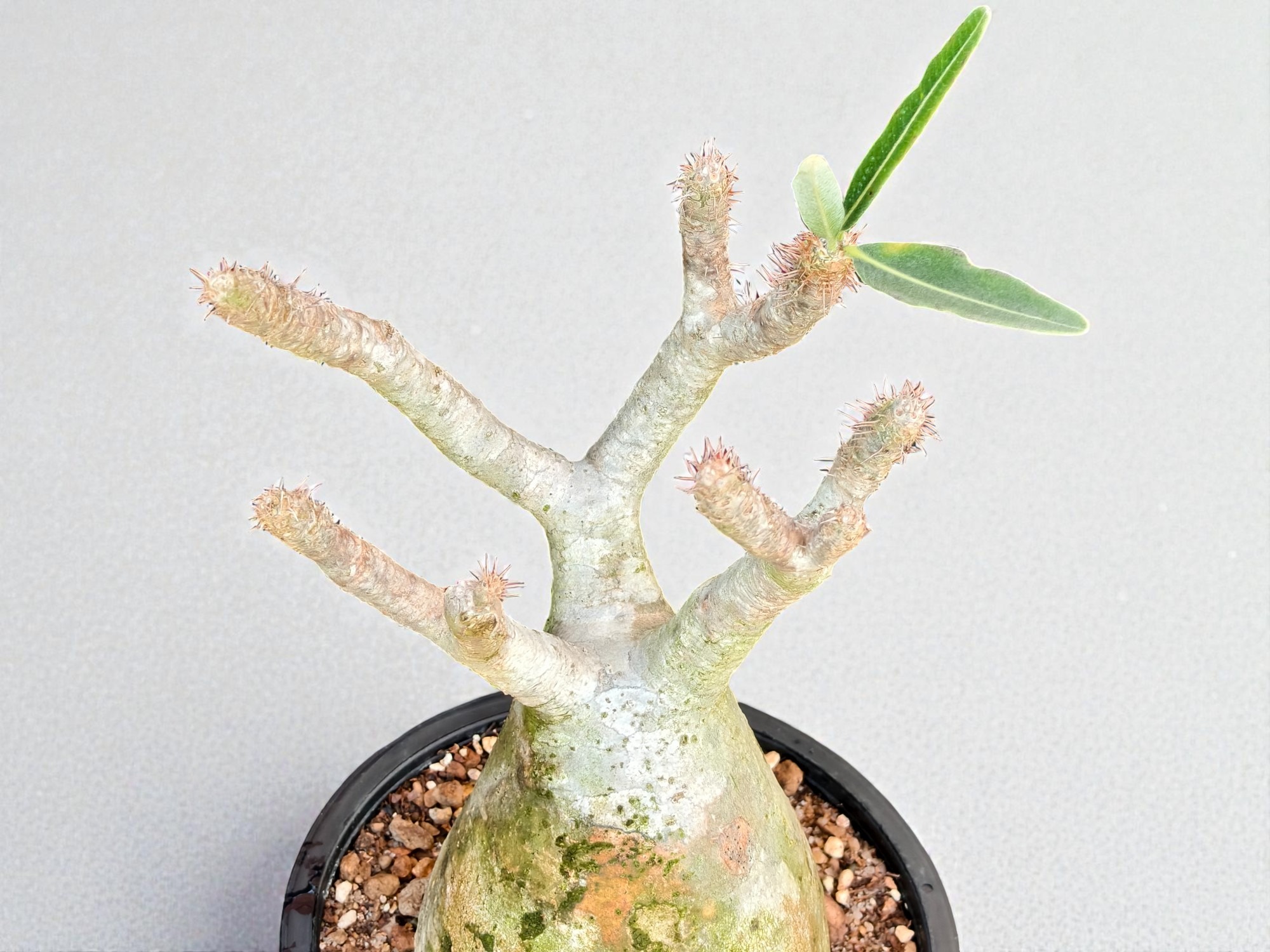
The primary appeal of PG003 lies in its gnarled, irregular caudex, which measures a substantial 11.40 cm in width. Unlike the symmetrical forms of younger plants, this specimen displays a broad, squat base with a rough, mottled texture and deep character marks. The low, wide-spreading branches emerge in an asymmetrical pattern, creating a dramatic, naturalistic silhouette highly sought after by enthusiasts of bonsai and caudiciforms. This is a plant with a story, its weathered appearance suggesting years of survival and slow, deliberate growth.
Specimen Specifications: PG003
| Attribute | Detail |
| Specimen Code | PG003 |
| Species | Pachypodium gracilius (syn. P. rosulatum subs. gracilius) |
| Caudex Width | 11.40 cm |
| Form | Rugged, asymmetrical, naturalistic bonsai |
| Origin | Madagascar |
| Condition | Healthy, mature, currently in dormancy |
The Essence of a Madagascar Icon
Pachypodium gracilius, often called the “Elephant’s Foot Plant,” is a member of the Apocynaceae family and stands out as one of the most attractive species in its genus 1. It is a pachycaule, or thick-stemmed plant, renowned for its disproportionately large trunk relative to its branches. In its active growing season, it produces elliptic to lanceolate leaves and clusters of brilliant yellow, trumpet-shaped flowers on long stalks, creating a stunning contrast against its rugged form.
This species is a testament to nature’s artistry. Its growth habit is slow and deliberate, and the development of such a gnarled, character-filled caudex takes many years. This specimen’s unique texture and asymmetrical branching are highly valued, representing a mature plant that has developed a distinct personality over time.
Cultivation and Care
Owning a Pachypodium gracilius is a rewarding experience. To ensure its continued health, it is essential to replicate its native conditions. The plant requires abundant light and thrives in full sun or light shade 2. A critical aspect of its care is the watering regimen. During the active growing season, it appreciates regular watering, but the soil must be exceptionally well-draining to prevent rot. A cactus or succulent mix amended with extra perlite or pumice is ideal.
The most crucial period is its winter dormancy, which typically runs from November to March. During this time, the plant will shed its leaves and must be kept almost completely dry and protected from frost 1. A cool, dry rest period is essential for its long-term health and for promoting a spectacular bloom in the following season.
Why PG003 is a Collector’s Choice
Specimen PG003 is a magnificent choice for the collector seeking a plant with unparalleled character. Its 11.40 cm caudex provides a substantial presence, while its gnarled texture and low, wide branching pattern give it the appearance of a miniature, ancient tree. This is not a plant of perfect symmetry, but one of profound natural beauty and resilience. It is a unique, one-of-a-kind specimen that will serve as a dramatic focal point in any collection, appealing to those who value age and rugged individuality over pristine form.
Talk about : Price, How to Buy?, Where to Buy?