

Pachypodium Gracilius (PG001): A Masterpiece of Natural Sculpture
For the discerning collector of rare succulents, we are proud to present specimen PG001, a magnificent example of Pachypodium gracilius. Native to the dramatic sandstone escarpments of the Isalo mountains in Madagascar, this species is celebrated for its sculptural quality and unique character. This particular plant is a mature, well-established specimen that embodies the most desirable traits of the species, making it a premier acquisition for any serious collection.
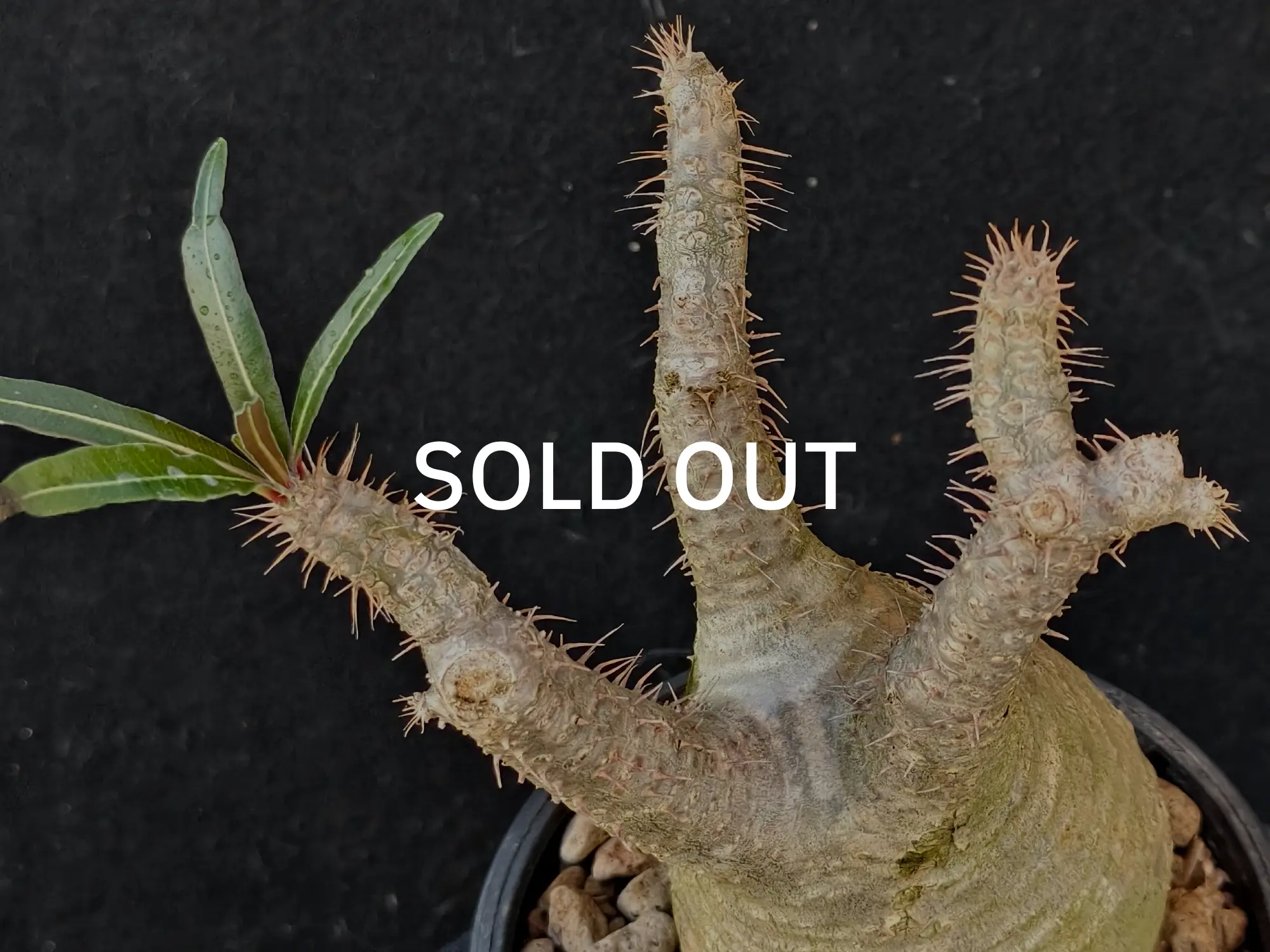
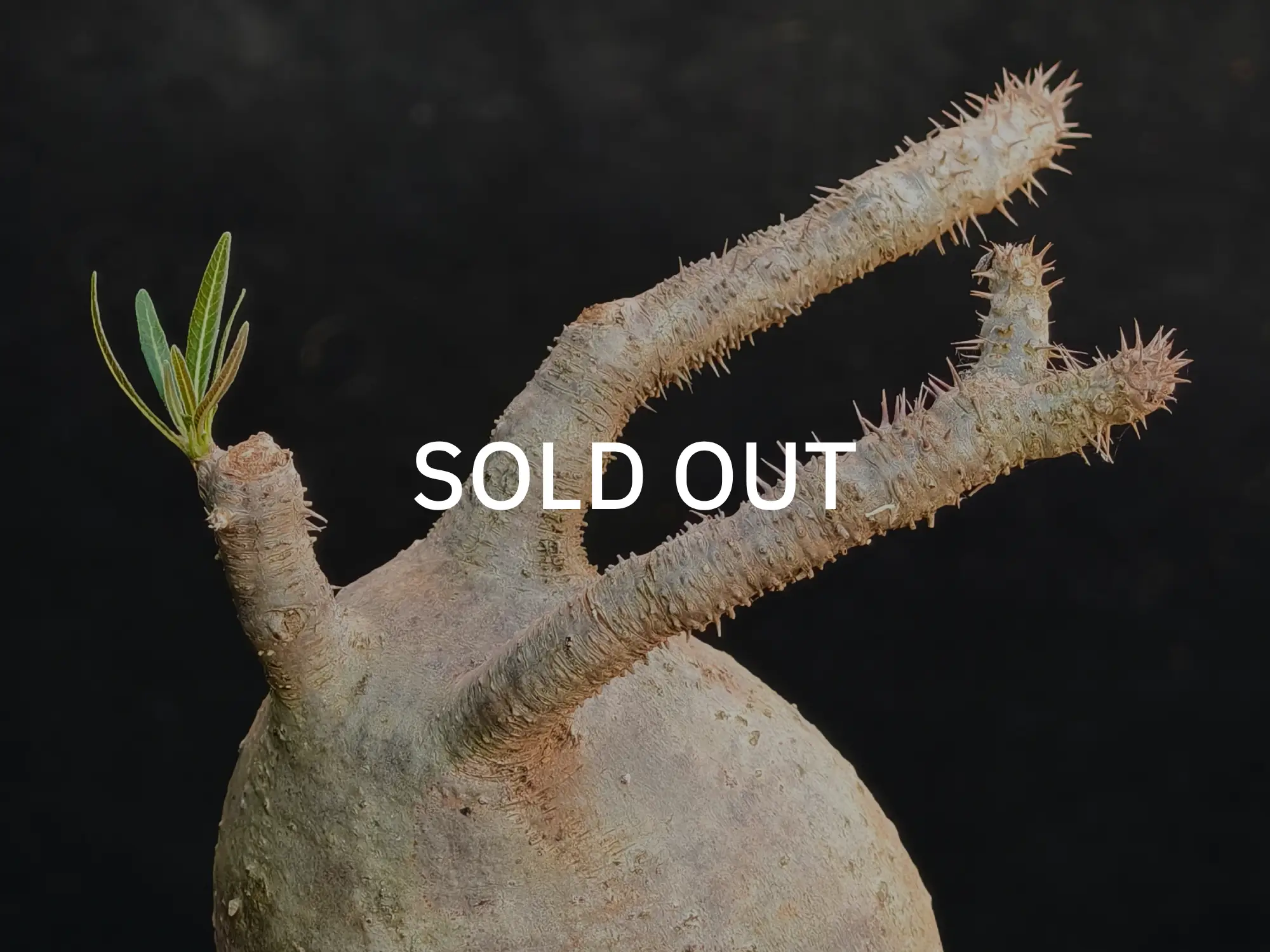
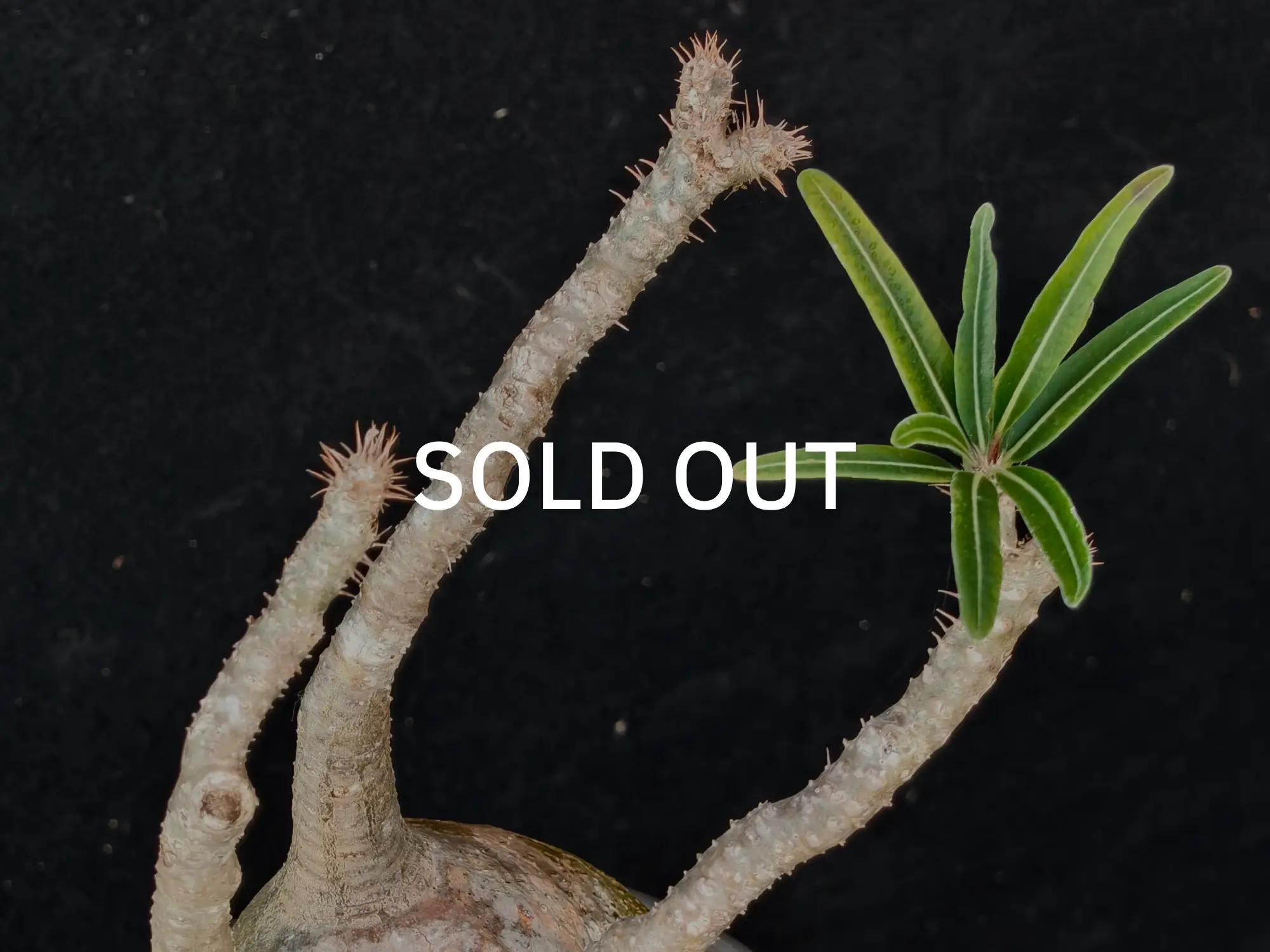
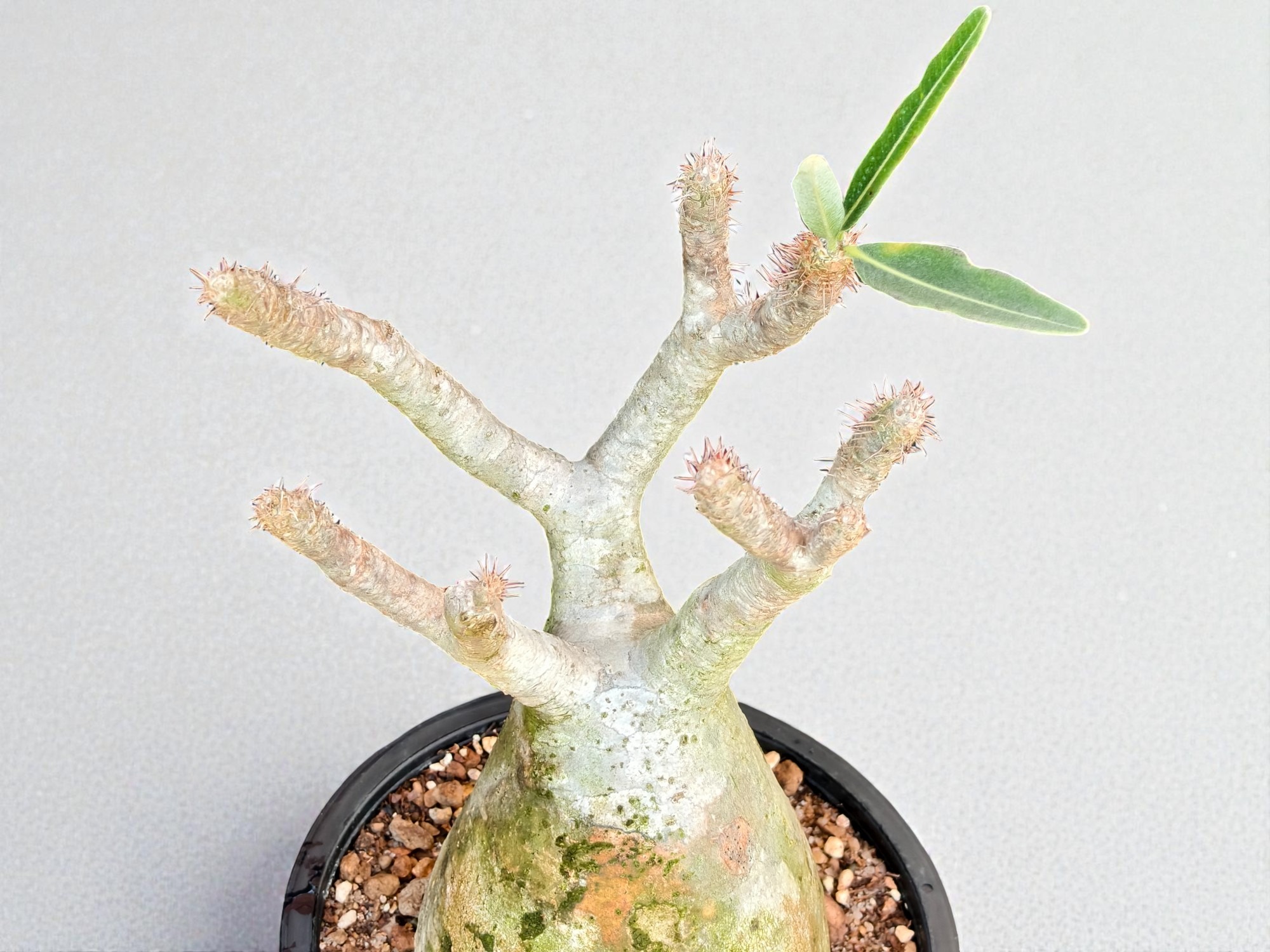
This specimen’s most striking feature is its impressively swollen trunk, or caudex, which measures a substantial 14.50 cm in width. This robust, bottle-shaped base serves as a natural water reservoir, an adaptation to the arid conditions of its homeland. From this powerful foundation rises a complex structure of slender, tapering branches, creating a natural bonsai-like form without the need for artificial pruning. The smooth, pale bark of the caudex shows subtle texturing and weathering, telling the story of its slow and patient growth. Currently in its winter dormancy, the plant displays its pure architectural form, with the promise of delicate leaves and vibrant flowers to come in the growing season.
Specimen Specifications: PG001
| Attribute | Detail |
| Specimen Code | PG001 |
| Species | Pachypodium gracilius (syn. P. rosulatum subs. gracilius) |
| Caudex Width | 14.50 cm |
| Form | Multi-branched, natural bonsai aesthetic |
| Origin | Madagascar |
| Condition | Healthy, mature, currently in dormancy |
The Essence of a Madagascar Icon
Pachypodium gracilius, often called the “Elephant’s Foot Plant,” is a member of the Apocynaceae family and stands out as one of the most attractive species in its genus. It is a pachycaule, or thick-stemmed plant, renowned for its disproportionately large trunk relative to its branches. In its active growing season, it produces elliptic to lanceolate leaves and clusters of brilliant yellow, trumpet-shaped flowers on long stalks, creating a stunning contrast against its rugged form.
This species is a testament to nature’s artistry. Its growth habit is slow and deliberate, and achieving the size and intricate branching of specimen PG001 takes many years of careful cultivation. Its ability to thrive in harsh, rocky environments has endowed it with remarkable resilience and a unique aesthetic that is highly sought after by collectors worldwide.
Cultivation and Care
Owning a Pachypodium gracilius of this caliber is a rewarding experience. To ensure its continued health, it is essential to replicate its native conditions. The plant requires abundant light and thrives in full sun or light shade 2. A critical aspect of its care is the watering regimen. During the active growing season, it appreciates regular watering, but the soil must be exceptionally well-draining to prevent rot. A cactus or succulent mix amended with extra perlite or pumice is ideal.
The most crucial period is its winter dormancy, which typically runs from November to March. During this time, the plant will shed its leaves and must be kept almost completely dry and protected from frost. A cool, dry rest period is essential for its long-term health and for promoting a spectacular bloom in the following season.
Why PG001 is a Collector’s Choice
Specimen PG001 is more than just a plant; it is a living sculpture. Its significant size, well-developed caudex, and aesthetically pleasing branch structure represent years of optimal growth. It is a collector-grade plant that serves as a stunning centerpiece and a conversation piece. For those who appreciate the beauty of rare and exotic flora, this Pachypodium gracilius offers an opportunity to own a piece of Madagascar’s unique botanical heritage.
Talk about : Price, How to Buy?, Where to Buy?