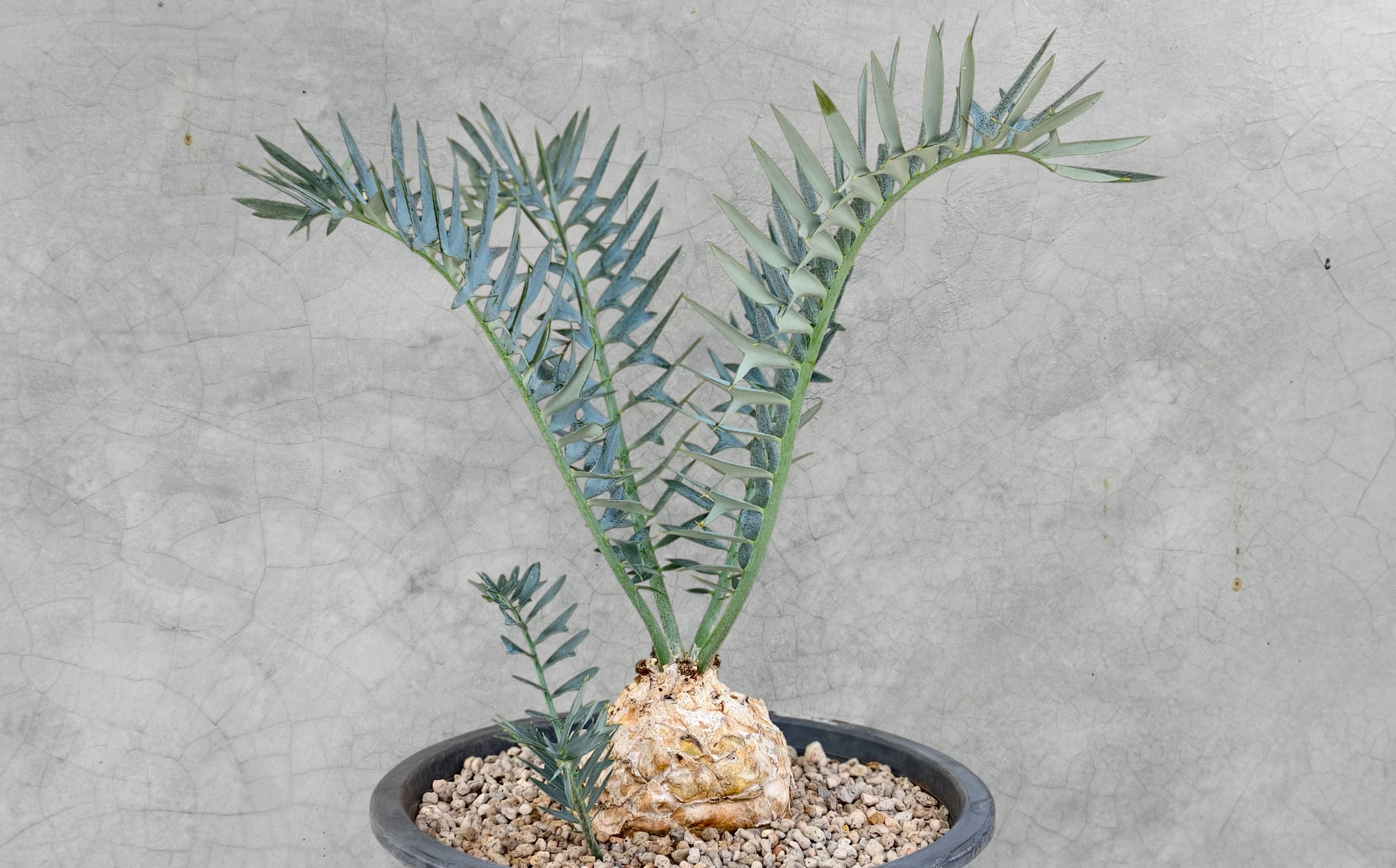
Pachypodium Ambongense: The Rare ‘Lost Pachypodium’ Sculpture from Madagascar
Pachypodium ambongense, also known by the common name “Elephant’s Trunk“, is one of the rarest and most sought-after caudiciform species in the succulent world. With its unique, sculptural form and fascinating discovery story, it has earned the nickname “The Lost Pachypodium“. This article will take you on a deep dive into this jewel from Madagascar, a must-have for serious collectors.

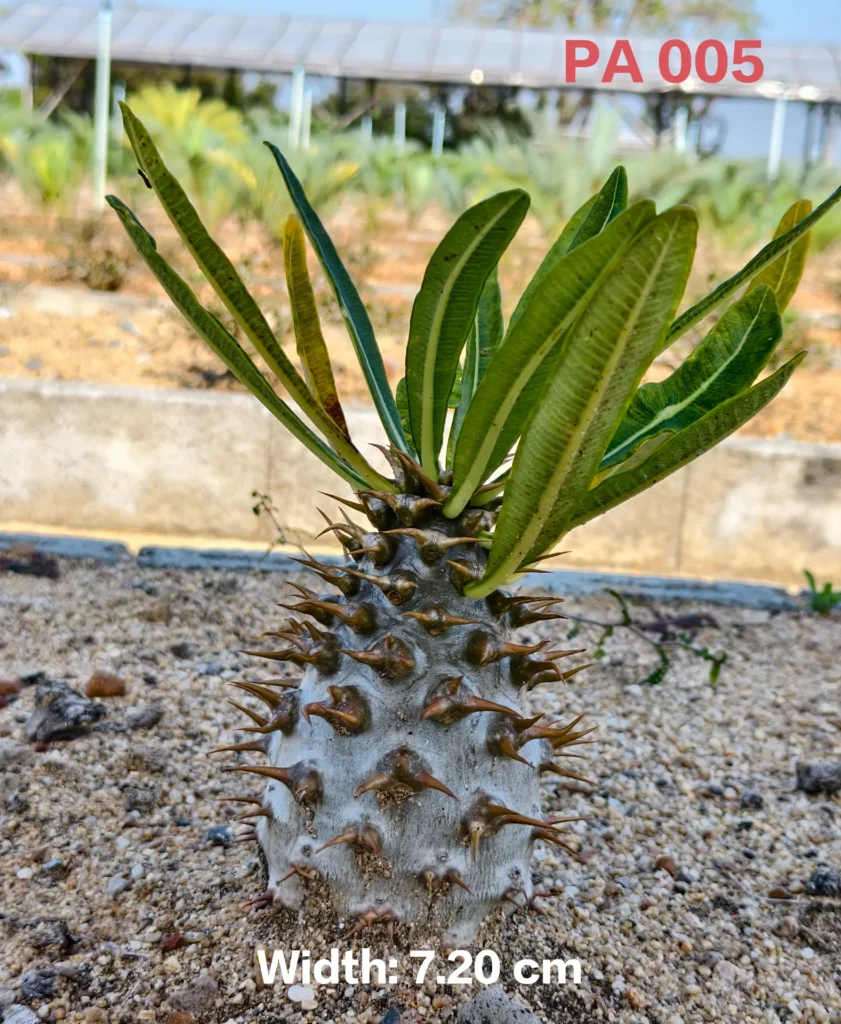
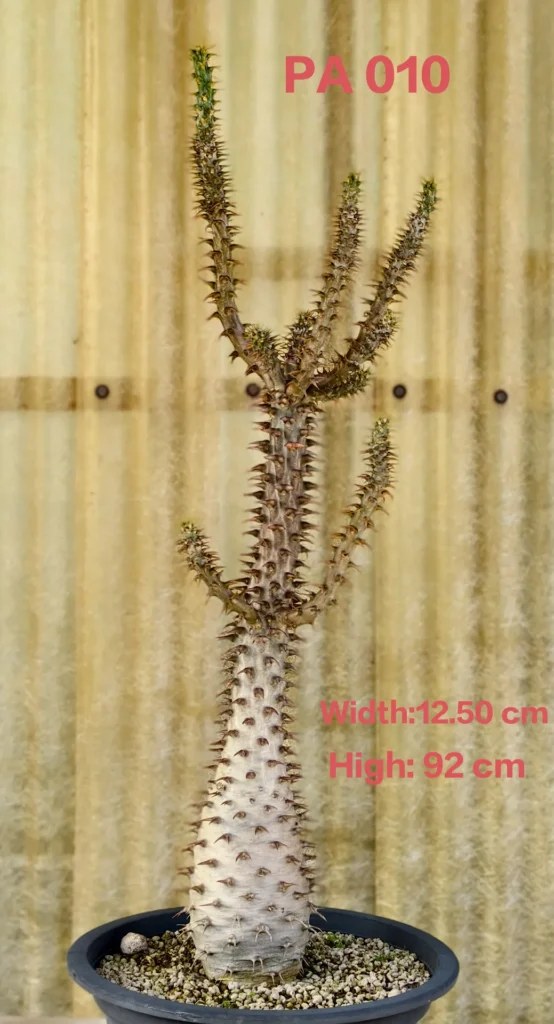
1. Origin and Habitat: The Tsingy Limestone of Madagascar
Pachypodium ambongense is an endemic plant, meaning it is found exclusively in a very localized habitat in western Madagascar. Its native range is highly restricted to the Namoroka Reserve, near the Ambonho (Ambongo) River.
What makes its habitat so remarkable is that it grows directly on the Tsingy limestone—Mesozoic calcareous rock formations characterized by sharp, jagged pinnacles. This environment is open, receives intense full sun, and can reach temperatures up to 40°C (104°F) during the summer. Despite a long dry season of up to seven months, the plant thrives in black organic soil accumulated in the rock crevices, which provides excellent drainage.
2. Botanical Characteristics: A Living Sculpture
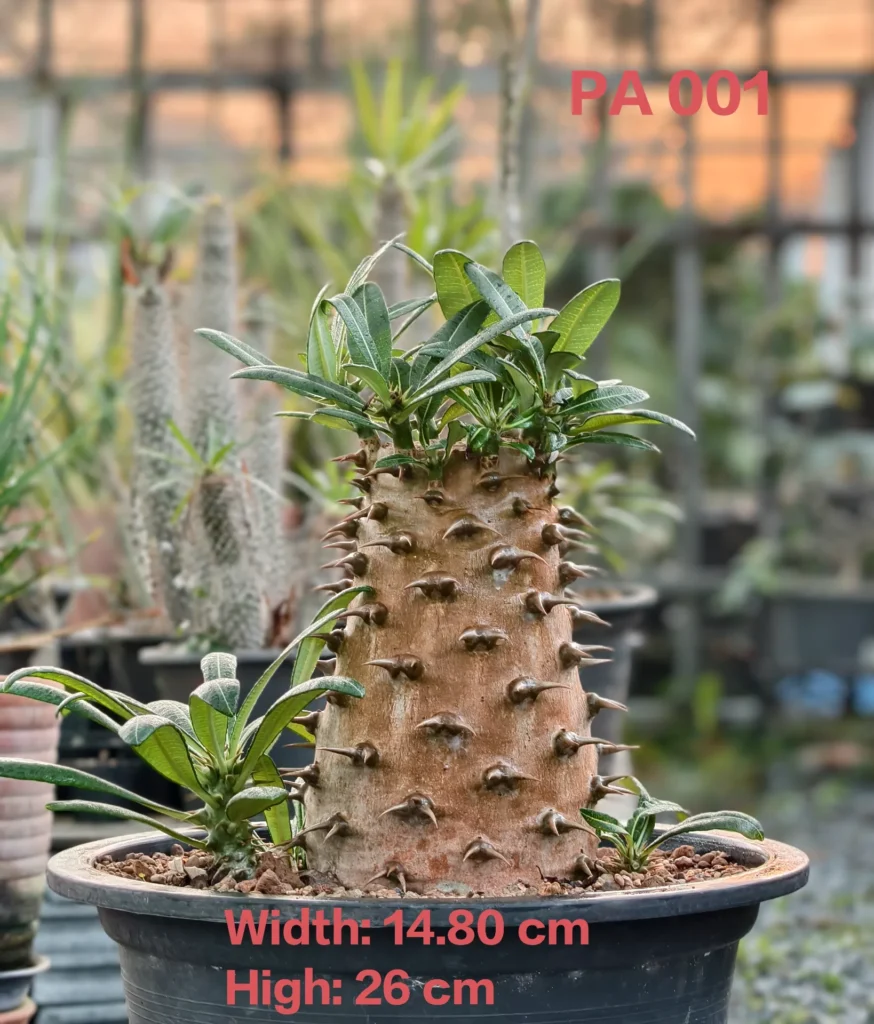
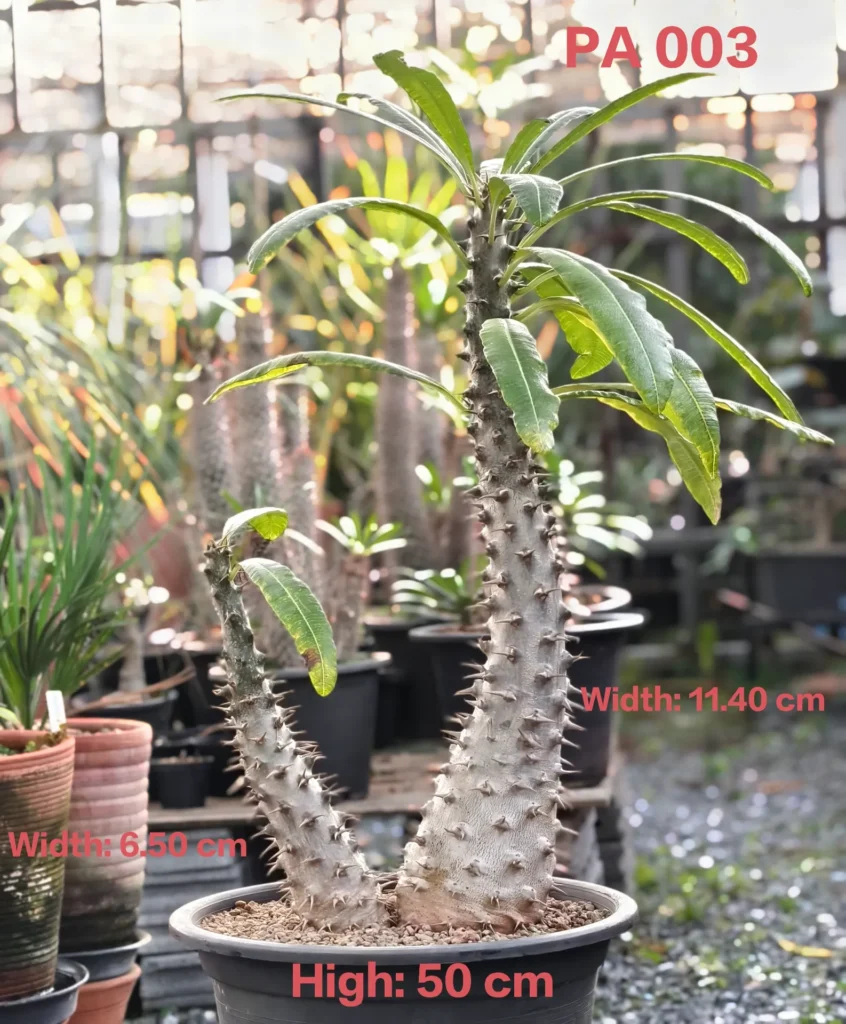
The most distinguishing feature of Pachypodium ambongense is its large caudex (swollen stem base), which is often bottle-shaped or resembles an elephant’s trunk. This caudex serves as a vital storage organ for water and nutrients, allowing the plant to survive in its arid environment.
| Feature | Description |
| Caudex (Trunk) | Bottle or elephant’s trunk shape, 10-40 cm in diameter. Smooth, grey-green bark. |
| Height | Typically 1 meter, but can grow up to 2 meters in its natural habitat. |
| Branches | Short and irregularly branched. |
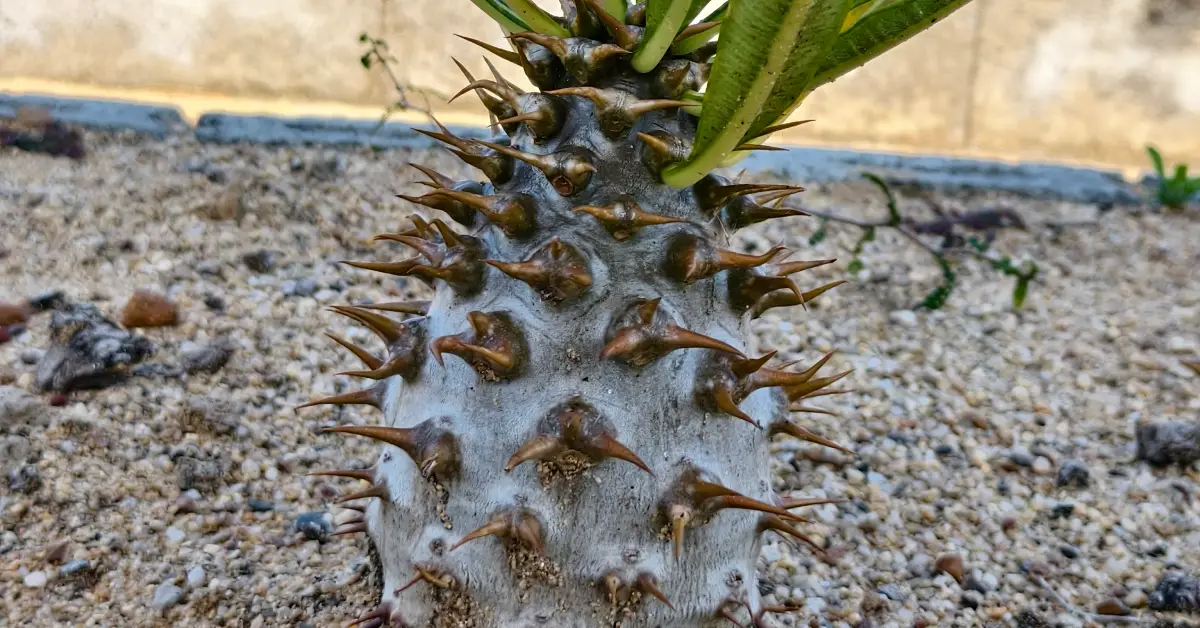
| Spines | Paired spines, 5-10 mm long. |
| Leaves | Obovate (reverse egg-shaped), clustered at the branch tips. Deciduous, often dropping in winter. |
| Flowers | Large, pure white flowers with a yellow center, up to 5.5 cm across. |
The pure white flowers of Pachypodium ambongense are another source of its appeal. They are large and contrast beautifully with the fresh green leaves.
3. Rarity and Collector’s Value
Pachypodium ambongense is classified as an extremely rare plant. It is also one of the most difficult Pachypodium species to propagate from seed.
“Even though it’s free flowering, Pachypodium ambongense is the most difficult species to make seed of. It will always be rare.”
This difficulty in propagation is what drives its high value in the collector’s market. Owning a Pachypodium ambongense is not just about acquiring a plant; it is about possessing a “living sculpture” with a rich history, symbolizing success in cultivating rare and challenging flora.
4. Essential Care Tips for the ‘Elephant’s Trunk’
While resilient to heat, Pachypodium ambongense requires a specific care regimen that differs from many other drought-tolerant Pachypodium species, particularly concerning water.
| Care Factor | Specific Recommendations for P. ambongense |
| Light | Full Sun or bright, direct sunlight is essential for compact growth. |
| Soil | Must be extremely well-drained (e.g., a cactus mix heavily amended with pumice, perlite, or grit). |
| Water (Growing Season) | Water moderately to heavily during the summer growing season. Do not let the soil remain dry for extended periods (unlike typical Pachypodium). |
| Water (Dormancy) | Drastically reduce watering in winter or when leaves drop to prevent rot. Water only when the caudex shows slight shriveling. |
| Temperature | Minimum safe temperature is 10°C (50°F). Protect from frost at all times. |
| Caution | Highly susceptible to fatal rot if the soil remains damp, especially in cool weather. Excellent drainage is paramount. |
Key Takeaway: Pachypodium ambongense originates from an area that may be slightly more humid than other Pachypodium habitats, thus requiring more water during the growing season. However, perfect drainage remains the absolute key to preventing rot.
Conclusion
Pachypodium ambongense is more than just a plant; it is a high-value, natural work of art. With its distinctive caudex shape, pure white flowers, and inherent rarity, it is a coveted species among succulent collectors worldwide. Investing in a Pachypodium ambongense is an investment in enduring beauty and a memorable story.
Talk about : Price, How to Buy?, Where to Buy?