Encephalartos horridus: The Blue-Toned King of Cycads and a True Collector’s Treasure
Among the world’s most sought-after collectible plants, Encephalartos horridus — widely known as the Eastern Cape Blue Cycad — stands as one of the most iconic and desirable species. With its prehistoric sculptural form and its critically limited wild population, this cycad is more than just an ornamental rarity; it is a symbol of refined taste, commitment, and prestige among serious collectors.


Striking Beauty: A Living Architectural Sculpture
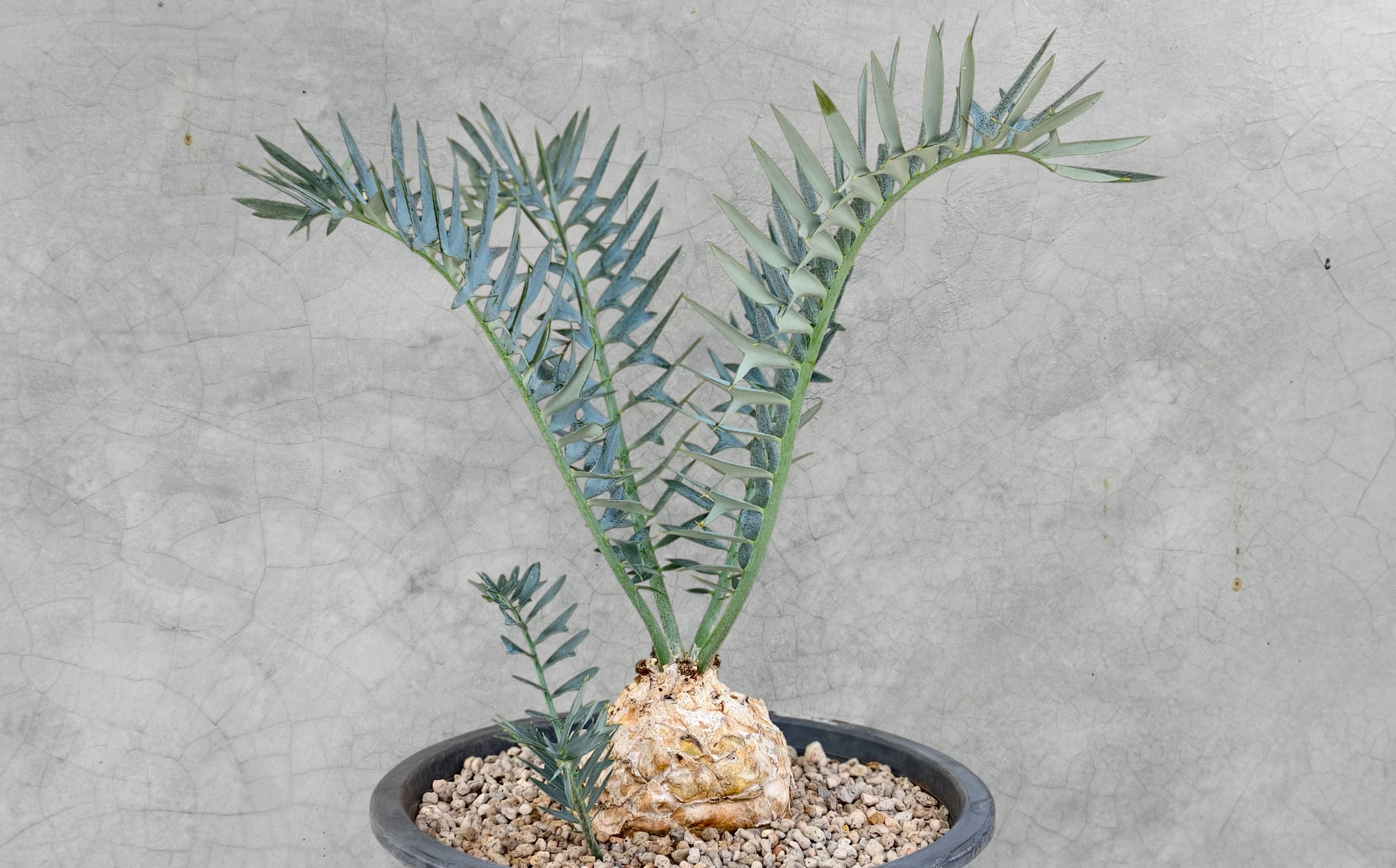
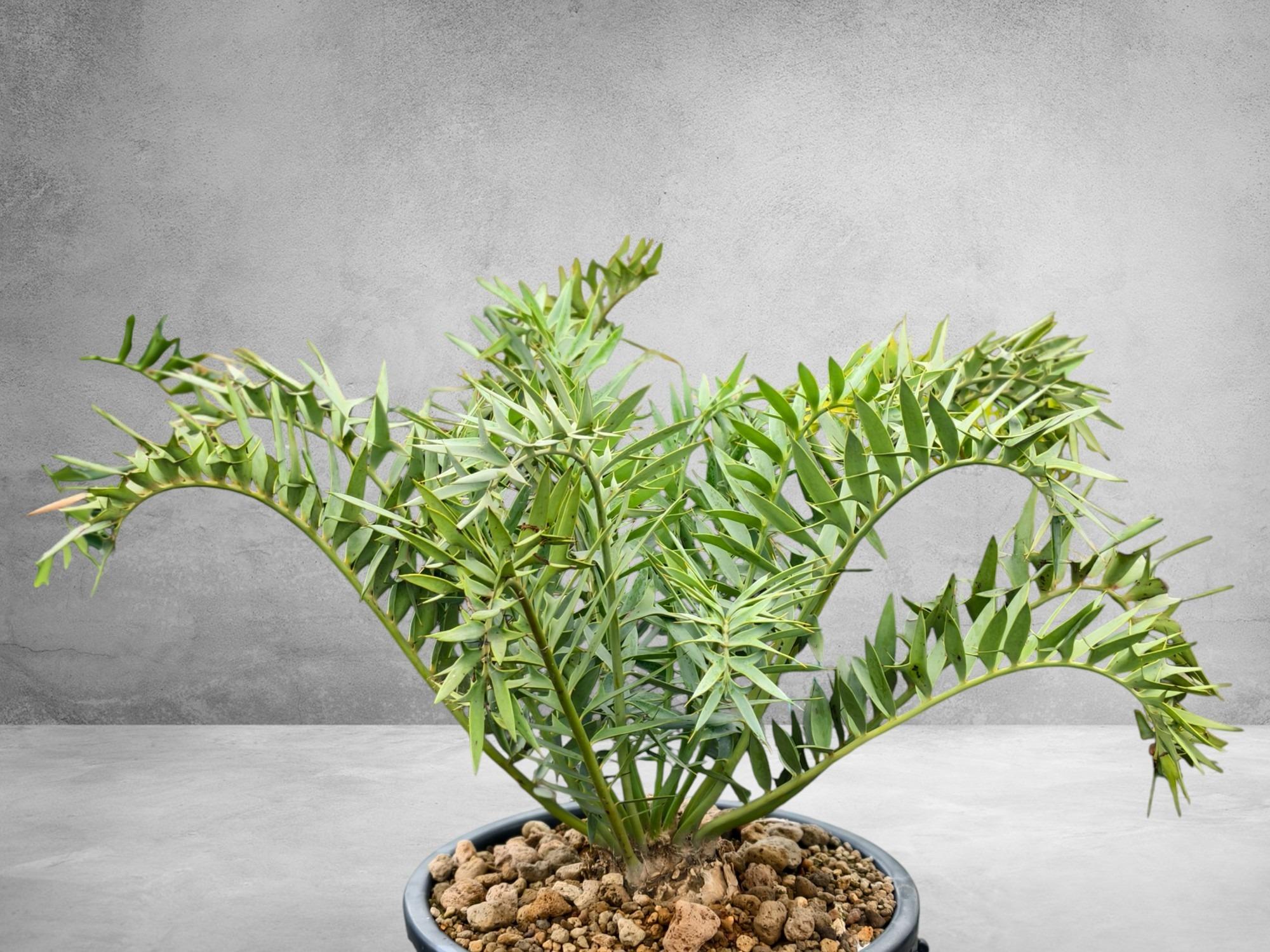
The species name horridus, derived from Latin meaning “bristly” or “thorny,” perfectly captures its fierce and distinctive appearance. E. horridus is a compact, slow-growing cycad with a sturdy caudex that can reach 0.5–1 meter in length.
But the feature that truly elevates this species into the realm of living art is its powdery blue-green foliage — a color so unique that it has become a hallmark of the species.
The leaves are pinnate and sharply armed with spines along the edges, especially in the upper third where the lobes twist and curve with remarkable intensity. Under strong sunlight, the plant’s frosty blue tones become even more vibrant, making E. horridus a showstopping centerpiece in any cycad collection.
A Rare Jewel: Status, Scarcity, and Rising Value
One of the core drivers behind the soaring value of E. horridus is its high conservation concern. Native to South Africa, this species is officially listed as Endangered on the IUCN Red List.
Wild populations have declined primarily due to habitat loss and excessive harvesting for the ornamental plant trade.
Because of this, all Encephalartos species are protected under CITES Appendix I — the highest level of international wildlife trade regulation. As a result, only legally propagated, nursery-grown specimens can be traded.
Owning a legally certified Encephalartos horridus is not only a mark of responsible conservation but also a long-term investment in a plant whose rarity, slow growth rate, and collector demand continue to push its value upward.
Quick Comparison: Key Characteristics of Encephalartos horridus
| Attribute | Description |
|---|---|
| IUCN Status | Endangered |
| CITES Classification | Appendix I (strict trade protection) |
| Growth Rate | Very slow-growing |
| Leaf Color | Powdery blue-green |
| Drought Tolerance | Excellent; highly adapted to arid environments |
Care Guide: A Reward for the Patient Collector
Caring for E. horridus is straightforward but requires an understanding of its natural desert-like ecology.
- Sunlight: Thrives under full, intense sunlight
- Soil: Requires extremely well-draining soil
- Watering: Highly drought tolerant — avoid overwatering to prevent caudex rot
- Growth: Slow, deliberate, and deeply rewarding
Its slow growth is precisely what makes this species so prized. Watching a new blue leaf unfurl—sometimes taking months—is an experience that true cycad enthusiasts cherish deeply.
Conclusion: More Than Just a Plant
Choosing to own Encephalartos horridus means joining a selective group of collectors who appreciate natural rarity, botanical history, and aesthetic perfection.
This blue cycad is destined to become one of the most distinguished natural heirlooms in any premium collection—a living artifact from the age of dinosaurs, continuing to grow with grace and grandeur.
A masterpiece of nature.
A symbol of patience.
A treasure for generations.