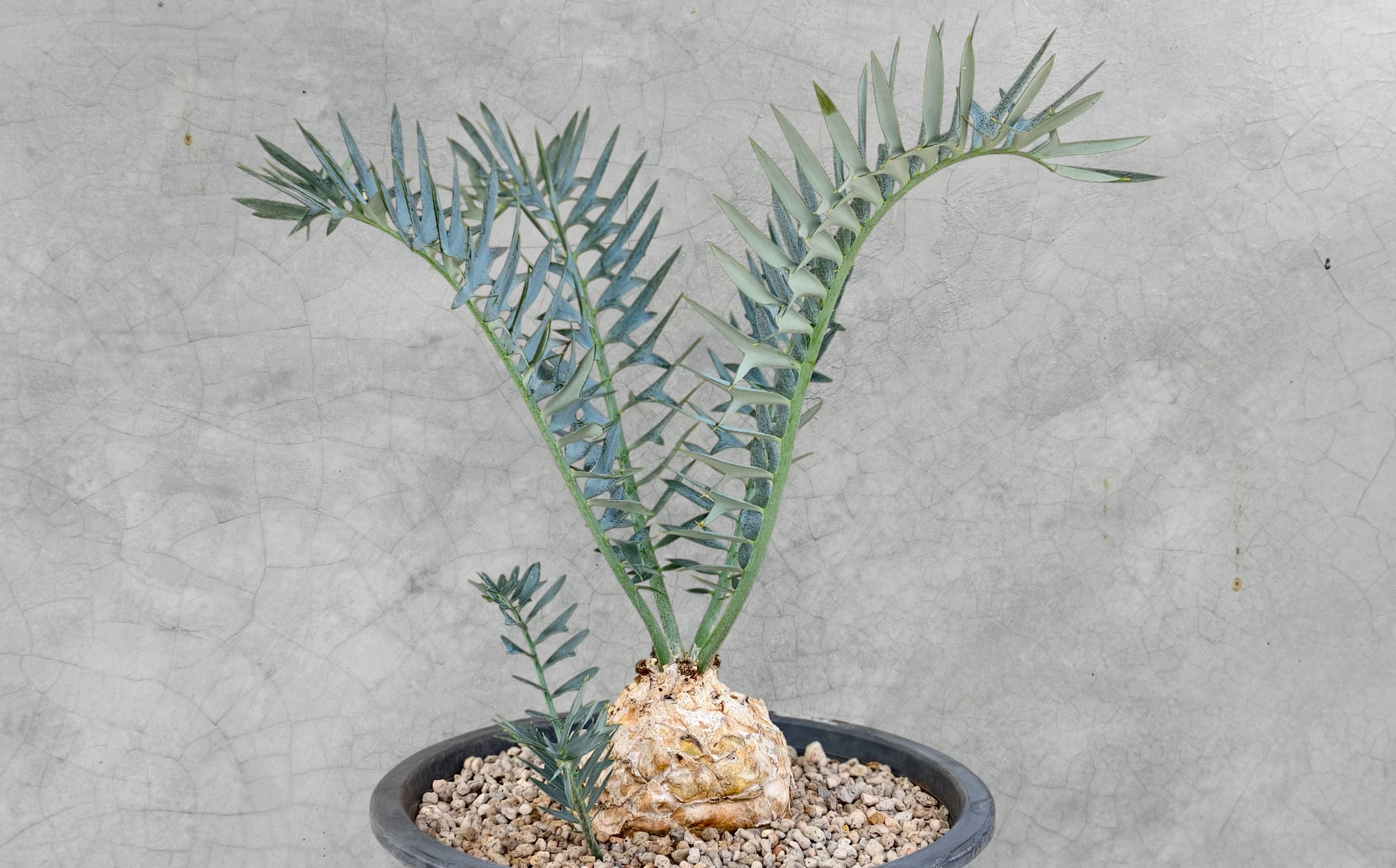

Encephalartos Horridus Dwarf: The Compact Jewel of Blue Cycads
Introduction
Among the diverse and ancient lineage of cycads, the Encephalartos horridus dwarf stands out as a particularly captivating specimen. This compact form of the renowned Eastern Cape Blue Cycad is a botanical marvel, highly prized by collectors and enthusiasts for its striking aesthetics and manageable size. Native to the rugged terrains of South Africa, this dwarf variety encapsulates the prehistoric allure of cycads in a more contained and versatile package. This article explores the distinctive features, inherent rarity, and significant appeal that make the Encephalartos horridus dwarf an exceptional addition to any discerning collection or landscape.
A Miniature Masterpiece: Unique Characteristics
The Encephalartos horridus dwarf shares many characteristics with its larger counterpart, Encephalartos horridus, but is notably distinguished by its shorter stem and leaf size, making it a more compact and low-growing plant . Typically, this dwarf form reaches up to 800 mm in length and 300 mm across, presenting a dense, bush-like appearance. Its trunks branch freely, often forming clusters of between 4 and 8 stems, creating an entangled mass of foliage that is both robust and visually appealing .
The most striking feature of the Encephalartos horridus dwarf is its intense blue-green foliage. Many enthusiasts consider its coloration to be unrivaled among blue-leaved cycads, offering a vibrant hue that adds a dramatic contrast to any setting. The leaves are rigid, often curling, and heavily armed with spines, giving the plant a formidable yet elegant prehistoric aesthetic. Both male and female plants produce cones, typically a single cone per crown (though males may occasionally produce two), which are also bluish-green. The seeds, when mature, are a distinctive pale red to carmine color .
Rarity and Conservation: A Prized Possession
The Encephalartos horridus species, including its dwarf form, is classified as Endangered by the Red List of South African plants . Its natural habitat is restricted to the Port Elizabeth and Uitenhage districts of the Eastern Cape in South Africa, where it thrives in various habitats from Karoo scrub to open rocky ridges. While the species has seen some pressure on wild populations due to over-collection in the past, nurseries now offer cultivated specimens, helping to alleviate this pressure .
The dwarf form, being a specific variation, is particularly sought after. Its inherent rarity, combined with its slow growth rate, contributes significantly to its high value and desirability among collectors. Owning an Encephalartos horridus dwarf is not only a testament to one’s appreciation for rare botanical specimens but also an investment in a living piece of natural history.
The Allure of Compactness: Selling Points and Value
For collectors and landscape designers, the Encephalartos horridus dwarf offers several compelling selling points:
• The Ultimate Blue Cycad: Its unparalleled intense blue coloration makes it a standout feature in any garden or collection, often considered the most popular blue-leaved cycad globally .
• Compact Size: Ideal for smaller gardens, rockeries, or as a prestigious pot plant, its dwarf stature allows for versatility in placement where larger cycads might be impractical.
• Collector’s Gem: The unique compact growth habit and profuse suckering make the dwarf form highly desirable for serious cycad enthusiasts.
• Prehistoric Aesthetic: The heavily armed, rigid, and curling leaves provide a bold, architectural form that evokes a sense of ancient landscapes.
• High Investment Value: As a rare and slow-growing species, mature dwarf specimens are highly prized assets, often commanding significant value in the horticultural market.
Cultivation and Care: Nurturing a Living Fossil
Cultivating the Encephalartos horridus dwarf requires attention to specific environmental conditions to ensure its health and vibrant coloration. It is a hardy and adaptable cycad, well-suited to temperate and subtropical regions .
• Sunlight: Full sun exposure is crucial for the Encephalartos horridus dwarf to develop its most intense blue coloration. While it can tolerate some shade, especially in desert climates, optimal color is achieved with ample direct sunlight .
• Soil: Excellent drainage is paramount. The plant prefers slightly acidic soil, ideally enriched with compost, to ensure proper aeration and prevent root rot .
• Watering: This species is drought-resistant and requires low to moderate watering. It is essential to avoid overwatering, as it does not tolerate excessive moisture . Allow the soil to dry out between waterings.
• Climate: It is tolerant of light to moderate frosts, making it adaptable to various climates. However, protection from severe cold is advisable .
• Propagation: Can be propagated from seed or suckers. Suckers, which readily form at the base of the parent plant, transplant easily .
Conclusion
The Encephalartos horridus dwarf is more than just a plant; it is a living sculpture, a testament to endurance, and a symbol of botanical exclusivity. Its striking blue foliage, compact size, and ancient lineage make it an irresistible acquisition for collectors and a magnificent focal point in any garden. By understanding and providing its specific care requirements, enthusiasts can ensure the longevity and continued splendor of this remarkable cycad, enriching their collections with a truly unique and valuable botanical treasure.
Talk about : Price, How to Buy?, Where to Buy?