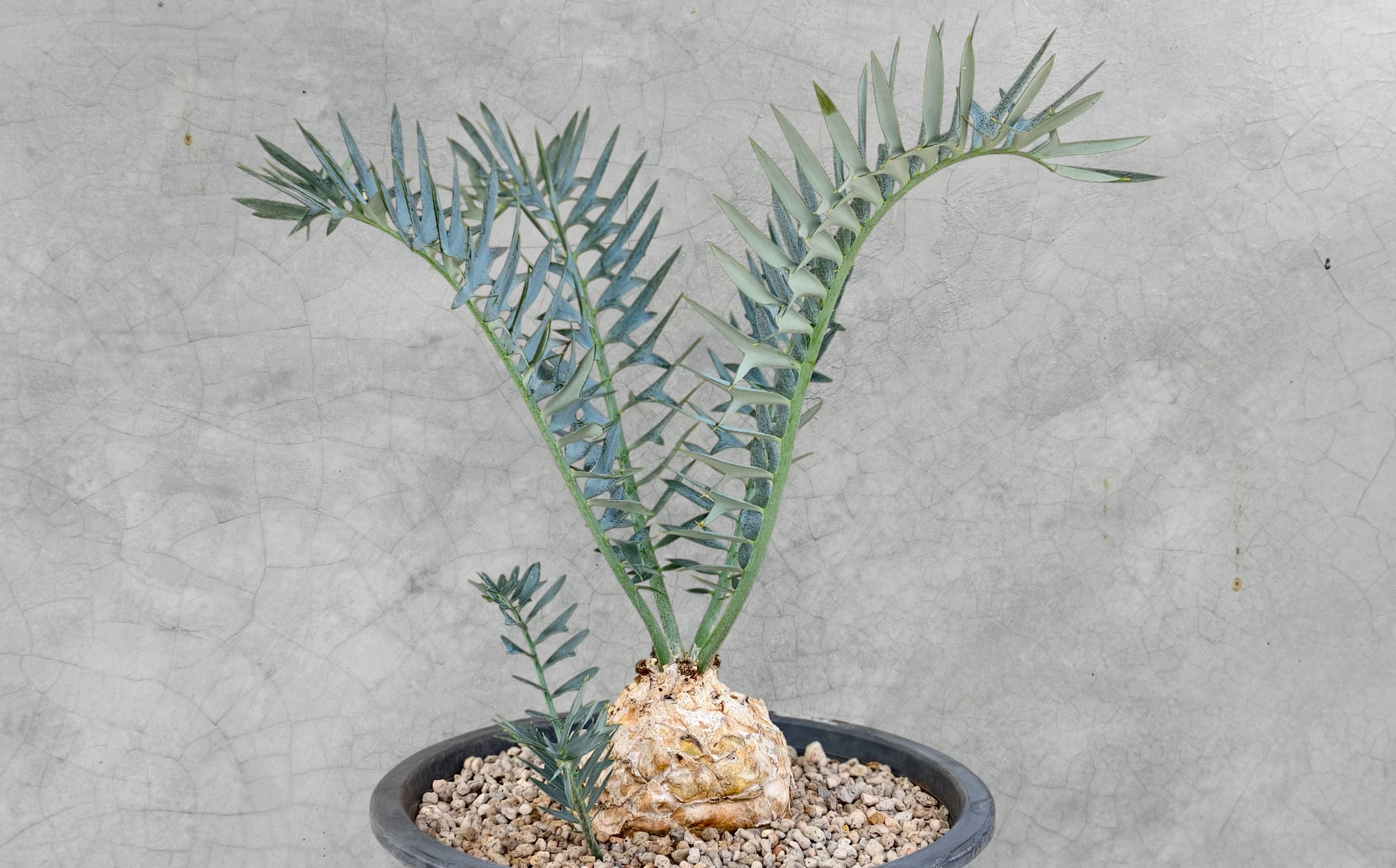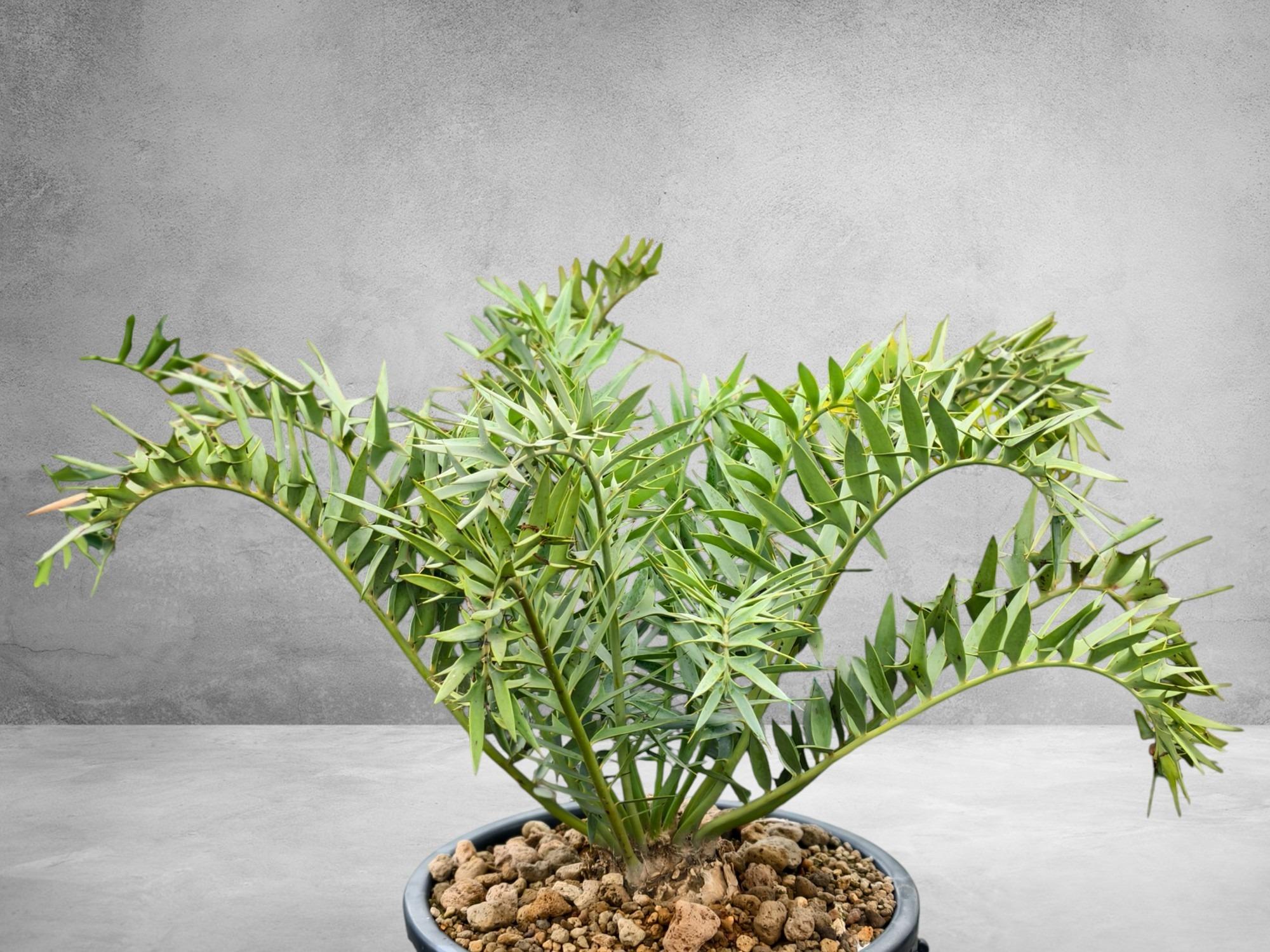
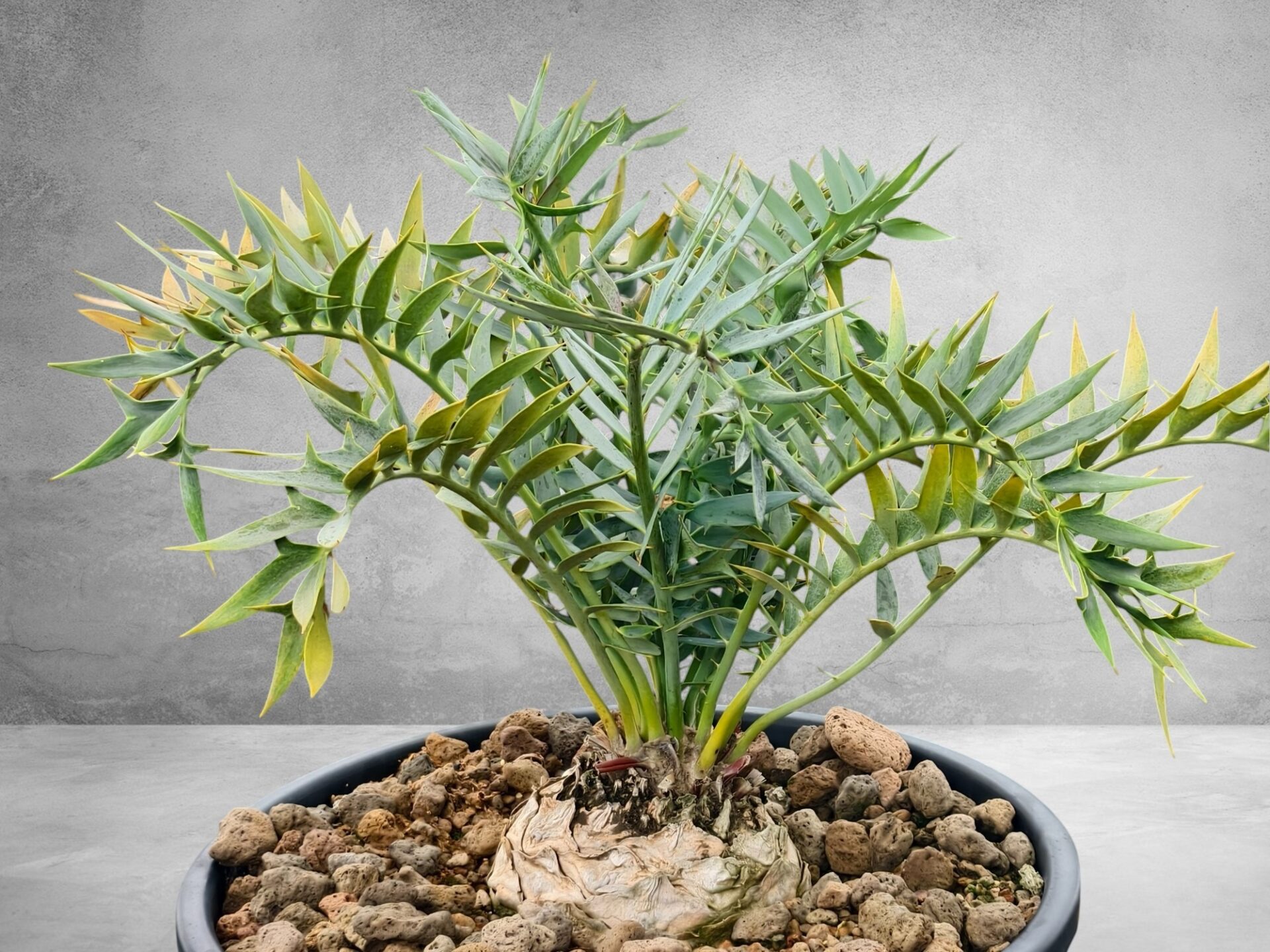
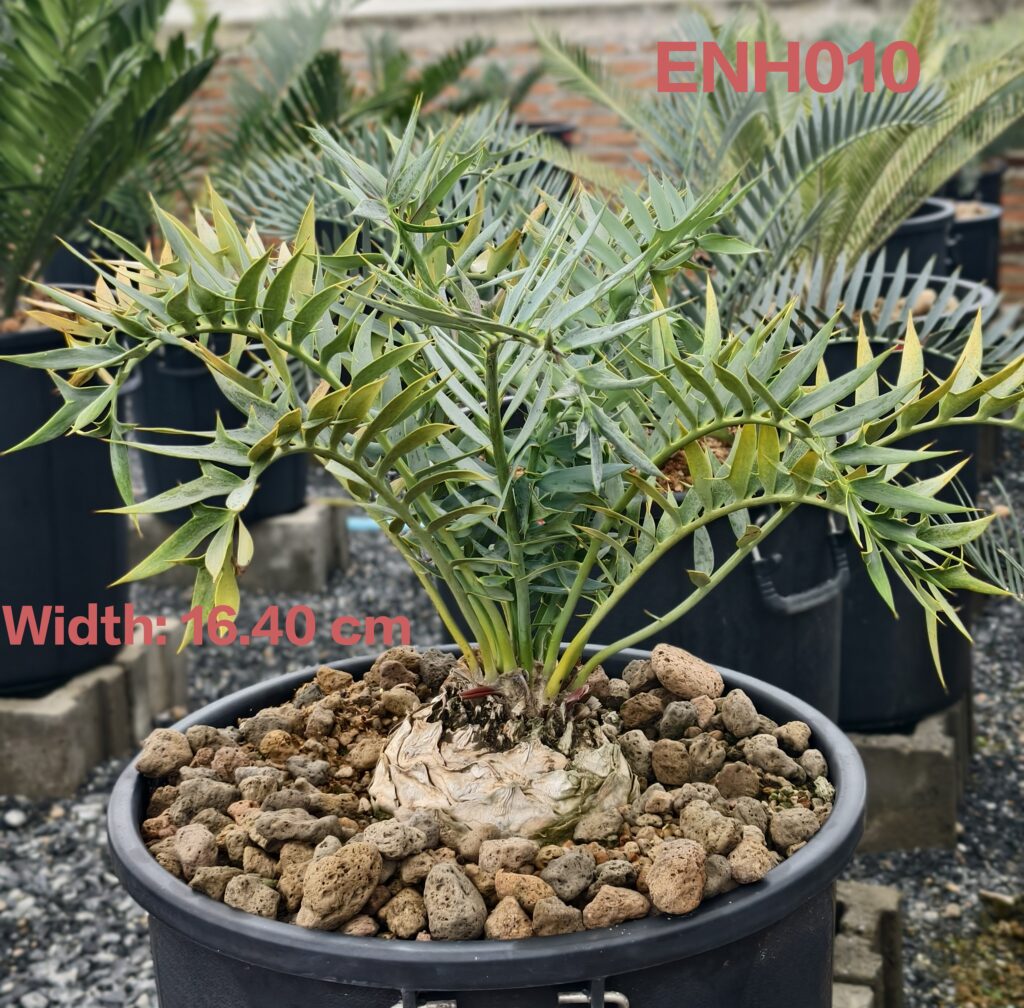
Encephalartos horridus (Eastern Cape Blue Cycad) – Specimen ENH010
Product Description: Specimen ENH010
A Living Fossil of Exceptional Rarity and Form
Presenting Specimen ENH010, a magnificent example of the Eastern Cape Blue Cycad (Encephalartos Horridus). This particular plant is a highly sought-after collector’s item, embodying millions of years of evolutionary history in a compact, sculptural form. Its striking aesthetic and critically limited wild population make it a prized acquisition for any serious enthusiast.
Key Features of ENH010:
| Feature | Detail | Value Proposition |
| Species | Encephalartos Horridus | One of the most desirable and rare blue cycads in the world. |
| Caudex Width | 16.40 cm | A substantial, well-formed caudex size, indicating a desirable level of maturity and establishment. |
| Foliage | Intense Glaucous Blue | The signature feature; rigid, spiky leaves covered in a beautiful, protective blue-white wax. |
| Form | Compact and Sculptural | Ideal for display in a prominent location, offering a dramatic, prehistoric focal point. |
| Rarity | Critically Limited | Owning this specimen is an investment in a living piece of natural history, with value appreciating due to its slow growth and protected status. |
This specimen is nursery-grown and fully established, ready to thrive in a collector’s environment. Don’t miss the opportunity to acquire this piece of botanical art.
Feature Article: The Ferocious Beauty of Encephalartos horridus
The genus Encephalartos represents some of the oldest and most fascinating plants on Earth, often referred to as “living fossils.” Among them, the Eastern Cape Blue Cycad, Encephalartos Horridus, stands out as a jewel for its unparalleled beauty, resilience, and profound rarity.
Unmistakable Aesthetic: The Blue and the Barbed
The species name horridus is derived from the Latin word for “prickly” or “horrid,” a fitting description for its intensely rigid and spiky leaves. However, this “ferocious” nature is contrasted by an exquisite beauty: the leaves are coated in a thick, glaucous, blue-white wax. This waxy layer is not merely ornamental; it is a vital adaptation that helps the plant conserve water in its arid native habitat of the Eastern Cape Province, South Africa.
Unlike many other cycads, E. horridus is a relatively small, low-growing species. Its trunk, or caudex, rarely exceeds two feet in height in cultivation. This compact growth habit, combined with the dramatic, stiffly-held blue leaves, gives the plant a powerful, sculptural presence that makes it a natural focal point in any collection or landscape.
A Collector’s Investment: Rarity and Slow Growth
The true value of Encephalartos Horridus lies in its scarcity. Its wild population is critically limited, making legally and ethically sourced, nursery-grown specimens highly prized. Furthermore, cycads are notoriously slow-growing. The substantial caudex width of a specimen like ENH010 (16.40 cm) represents many years of careful cultivation and patience.
Key Investment Highlights:
•Protected Status: Its endangered status ensures that well-documented, cultivated specimens retain and increase their market value over time.
•Longevity: As a plant that can live for centuries, it is a generational investment and a permanent feature of a botanical collection.
•Adaptability: Despite its exotic appearance, E. horridus is known to be a hardy and adaptable cycad, tolerating a range of conditions and making it a rewarding plant for both experienced and novice collectors 8. It thrives best in bright, direct sunlight and requires well-draining soil 9.
Conclusion
To own a specimen of Encephalartos Horridus is to possess a piece of botanical history. It is a statement of sophisticated taste, a testament to the enduring power of nature, and a tangible investment in a rare and beautiful life form. Specimen ENH010, with its established 16.40 cm caudex and stunning blue foliage, offers an immediate opportunity to integrate this prehistoric masterpiece into your collection.
Talk about : Price, How to Buy?, Where to Buy?