
Encephalartos Hirsutus: The Jewel of the Cycad World
Introduction
In the realm of botanical treasures, few plants command as much awe and reverence as the Encephalartos hirsutus, commonly known as the Venda Cycad. This magnificent species, native to the rugged landscapes of South Africa, is not merely a plant but a living relic, a testament to ancient botanical lineages. Its extreme rarity, coupled with its striking aesthetic appeal, positions it as a highly coveted specimen among collectors and enthusiasts worldwide. This article delves into the unique characteristics, profound rarity, and significant value that make the Encephalartos hirsutus an unparalleled addition to any discerning collection.
A Portrait of Distinction: Unique Characteristics
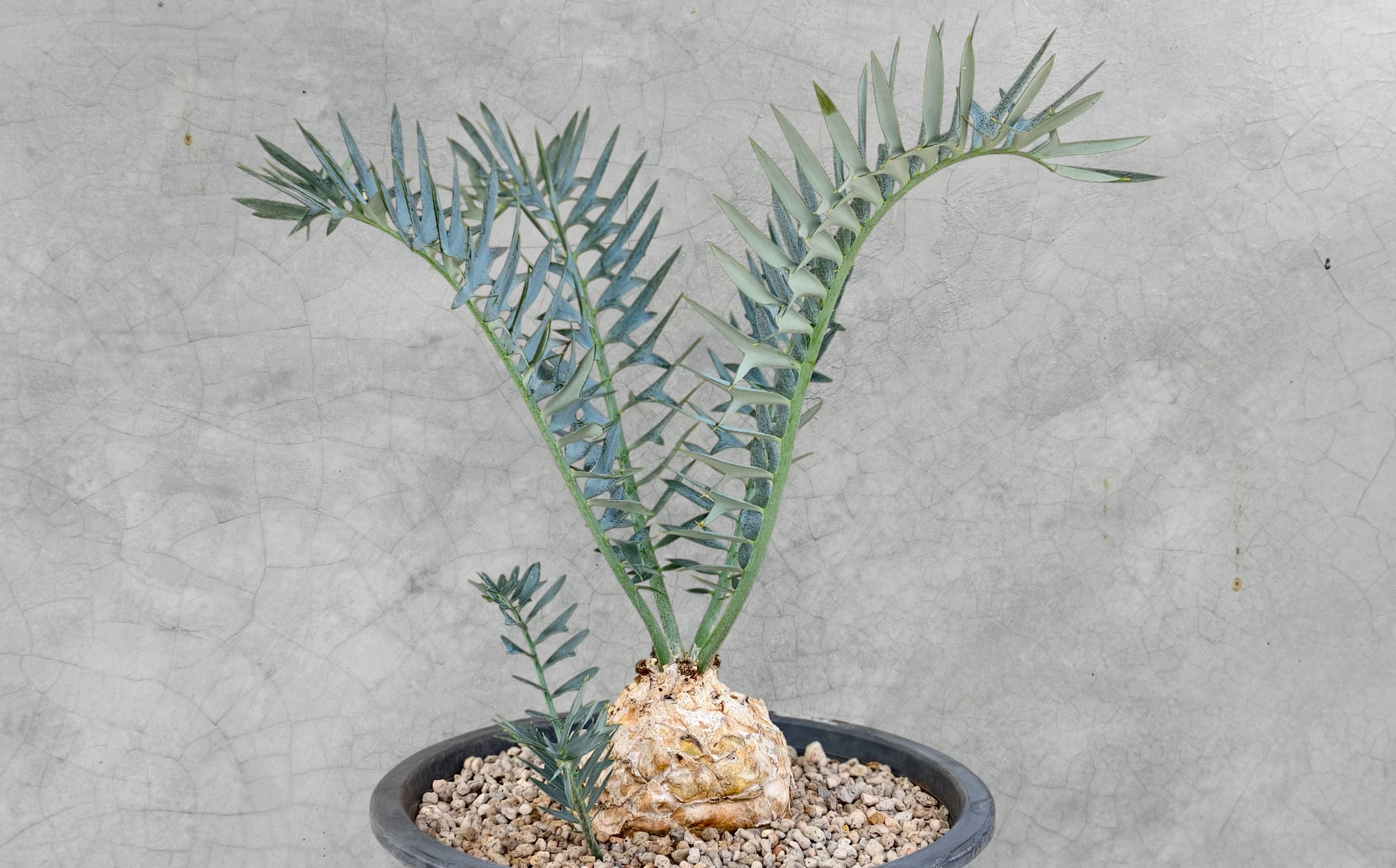
The Encephalartos hirsutus is distinguished by several remarkable features that set it apart within the diverse cycad family. It typically presents an aerial, unbranched stem that can reach impressive heights of up to 3-4 meters, occasionally extending to 4.2 meters, with a diameter of 350-400 mm. The stem, often erect but sometimes leaning with age, frequently suckers at its base, contributing to its robust appearance. A dense, brown, woolly layer often covers the stem apex crown, gradually turning greyish over time.
Its leaves are arranged in a dense, rigid crown, exhibiting a captivating bluish-green hue on the upper surface and a paler green underneath. These leaves can grow up to 1.3 meters long, with their apices slightly recurving. A defining characteristic, and the inspiration for its specific epithet ‘hirsutus’ (meaning hairy), is the persistent hairiness of its leaves throughout much of their life. The leaflets are incubously oriented, featuring prominent longitudinal ridges on their undersides—a trait unique among southern African cycads. Both male and female cones are a distinctive blue-green with a waxy, hairless surface, with male cones reaching up to 500 mm and female cones up to 400 mm in length. The seeds, when mature, are a vibrant orange-red.
Rarity and Conservation Status: A Priceless Heritage
The narrative of Encephalartos hirsutus is inextricably linked with its extreme rarity and precarious conservation status. It is classified by the IUCN (International Union for Conservation of Nature) as Critically Endangered (Possibly Extinct in the Wild) . This dire classification stems from its highly restricted natural habitat in the Limpopo Province of South Africa, specifically within three localities in the Soutpansberg region. Historically, the original population was estimated at 400–500 plants in 1996. However, by 2004, surveys found only 219 plants, with the majority concentrated in a single location. Tragically, by 2006, no plants could be definitively located in the wild, leading to the grim assessment of being possibly extinct in its natural habitat .
The primary driver of this catastrophic decline has been over-collecting for ornamental purposes, effectively extirpating the species in the wild. Its slow growth rate and historically limited abundance further exacerbated its vulnerability. The estimated number of mature individuals remaining in the wild is a stark 0-10, underscoring its status as one of the most imperiled plant species globally . This profound scarcity elevates the Encephalartos hirsutus beyond a mere plant; it is a living testament to the urgent need for conservation and a symbol of botanical heritage on the brink.
The Allure of Investment: Selling Points and Value
For the discerning collector, the Encephalartos hirsutus represents more than just a beautiful plant; it is often regarded as “the Holy Grail” of cycads. Its unparalleled rarity and the tragic story of its near-extinction in the wild contribute significantly to its immense value and desirability. Owning an Encephalartos hirsutus is not only a statement of botanical connoisseurship but also a tangible investment in a species that is, quite literally, priceless.
The distinctive bluish-green foliage, coupled with the unique persistent hairiness of its leaves, offers an aesthetic appeal that is both exotic and elegant. As a slow-growing species, mature specimens are particularly valuable, having endured years of careful cultivation. Its status as a critically endangered species, with virtually no wild populations remaining, ensures its continued position as one of the most expensive and prestigious cycads in the market. For those seeking to acquire a piece of living history and a symbol of botanical exclusivity, the Encephalartos hirsutus stands as an unrivaled choice.
Cultivation and Care: Nurturing a Legacy
Despite its exotic origins and rarity, Encephalartos hirsutus can be successfully cultivated with appropriate care, allowing enthusiasts to contribute to its preservation. It thrives in full sun conditions, requiring ample light to flourish. The ideal growing medium is well-drained soil, such as loam, to prevent waterlogging, which can be detrimental to cycads. This species is notably drought-resistant and requires low watering, making it suitable for xeriscaping or gardens with minimal irrigation. Furthermore, it exhibits frost tolerance, adapting to subtropical climates where temperatures may occasionally dip.
Its slow growth rate means that patience is a virtue for cultivators. Providing the right conditions—plenty of sunlight, excellent drainage, and conservative watering—will ensure the healthy development of this magnificent cycad. Cultivating Encephalartos hirsutus is not just gardening; it is participating in the safeguarding of a critically endangered species, ensuring its legacy for future generations.
Conclusion
The Encephalartos hirsutus is a species of extraordinary beauty, profound rarity, and significant historical and botanical importance. Its unique characteristics, from its imposing stem to its distinctive hairy, bluish-green leaves, make it a standout specimen. The tragic reality of its near-extinction in the wild only amplifies its status as a highly sought-after and valuable plant. For collectors and conservationists alike, the Venda Cycad represents a unique opportunity to possess a living piece of natural history and to contribute to the ongoing efforts to preserve one of the world’s most endangered botanical treasures. Its presence in a collection is a testament to an appreciation for the rare, the beautiful, and the enduring spirit of nature.
Talk about : Price, How to Buy?, Where to Buy?