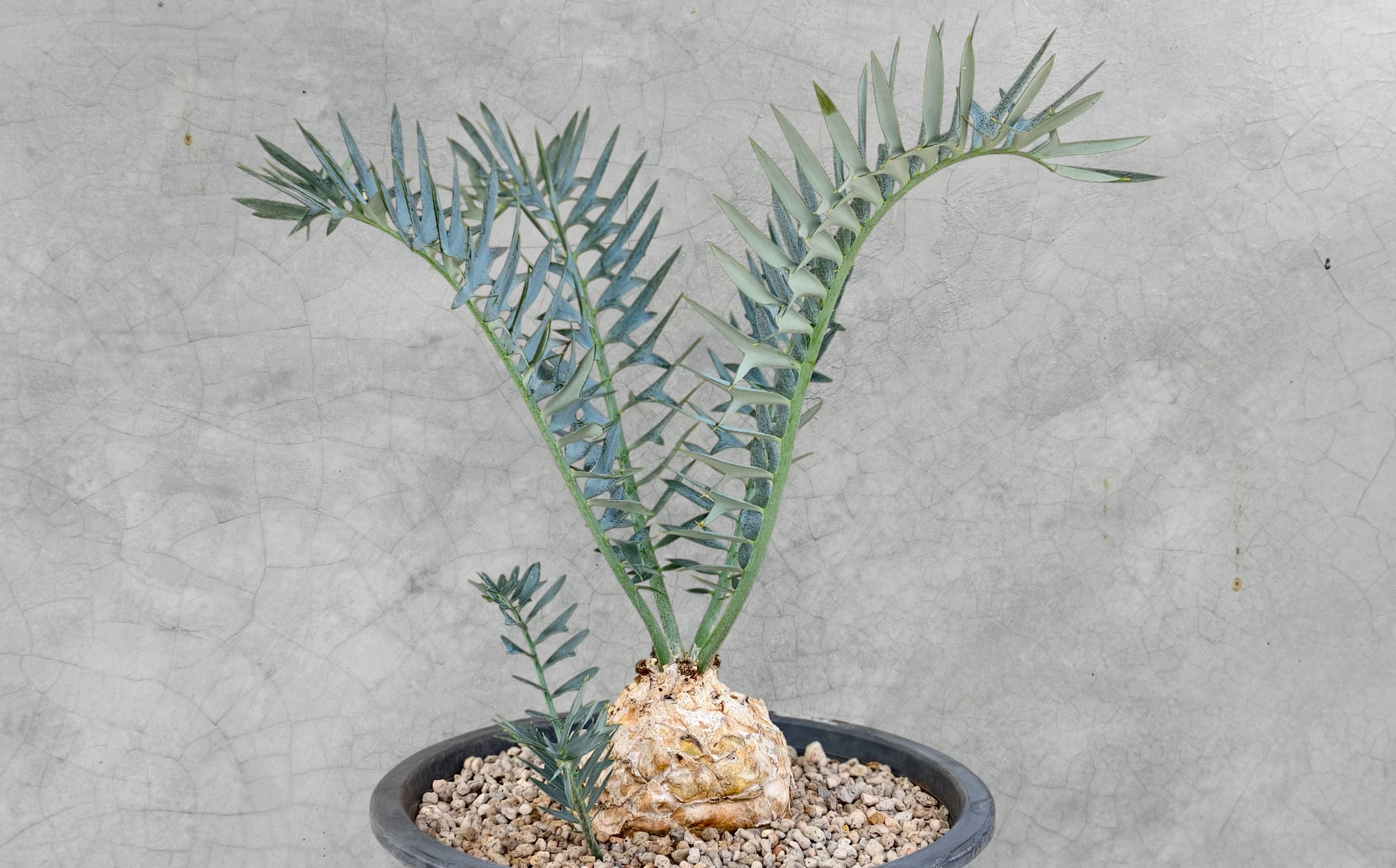
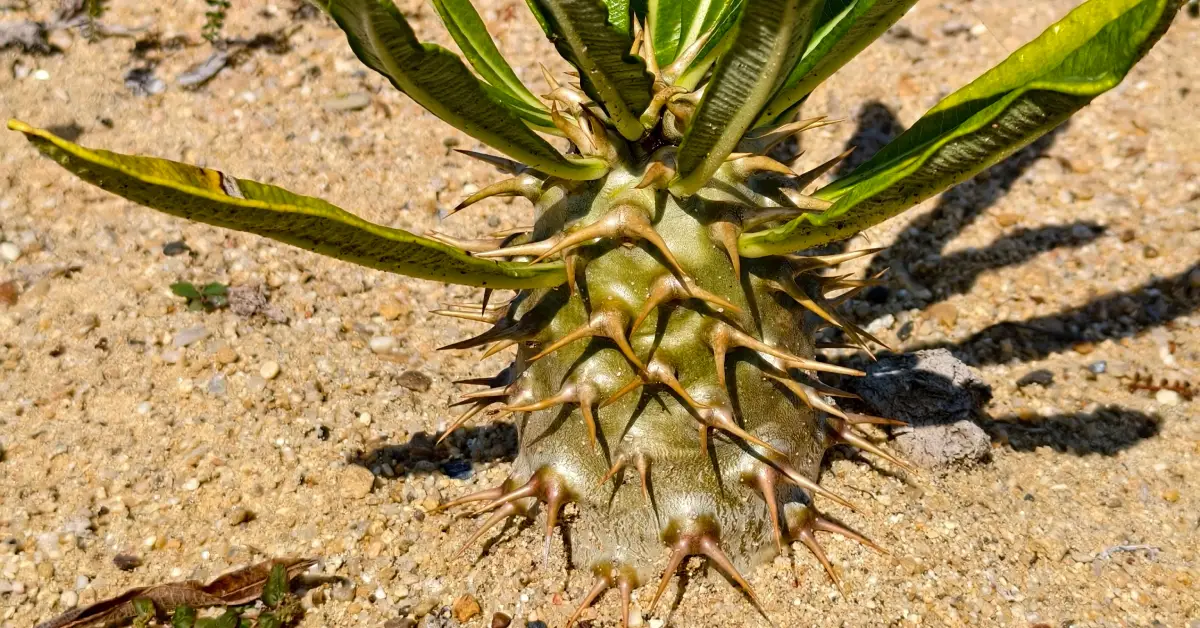
Pachypodium Ambongense Care Guide: Cultivating the Rare ‘Lost Pachypodium’ from Madagascar
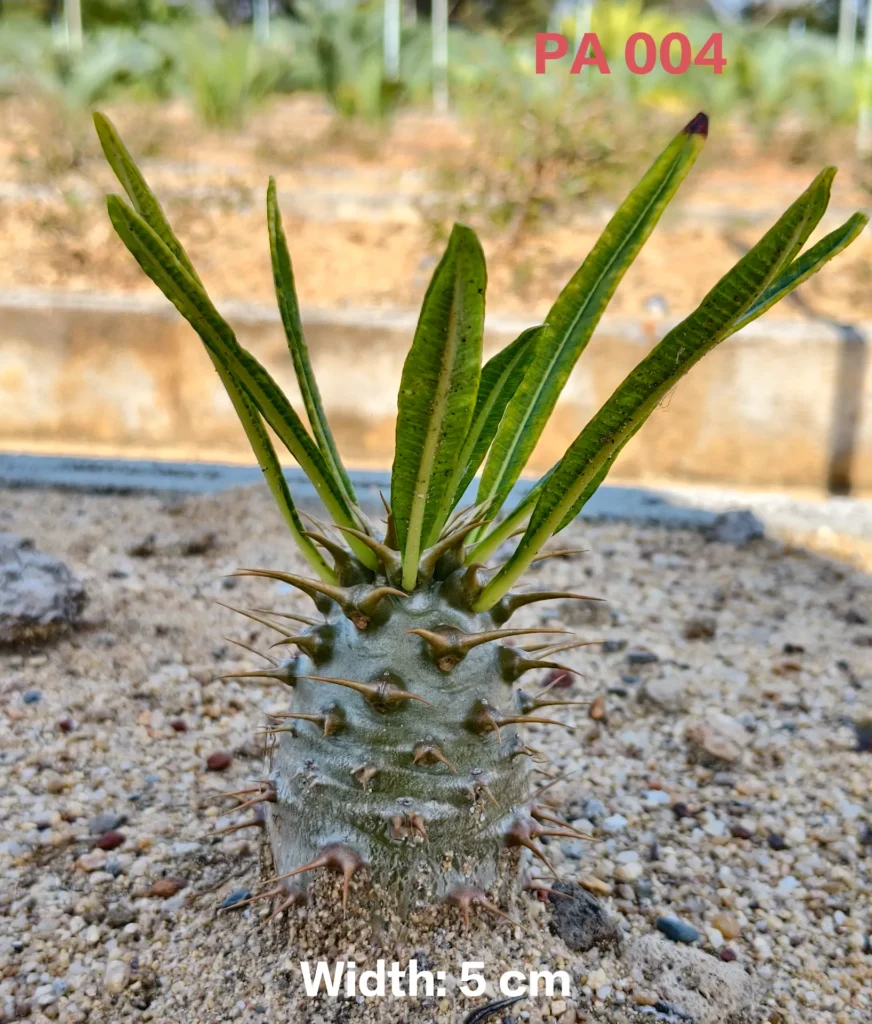
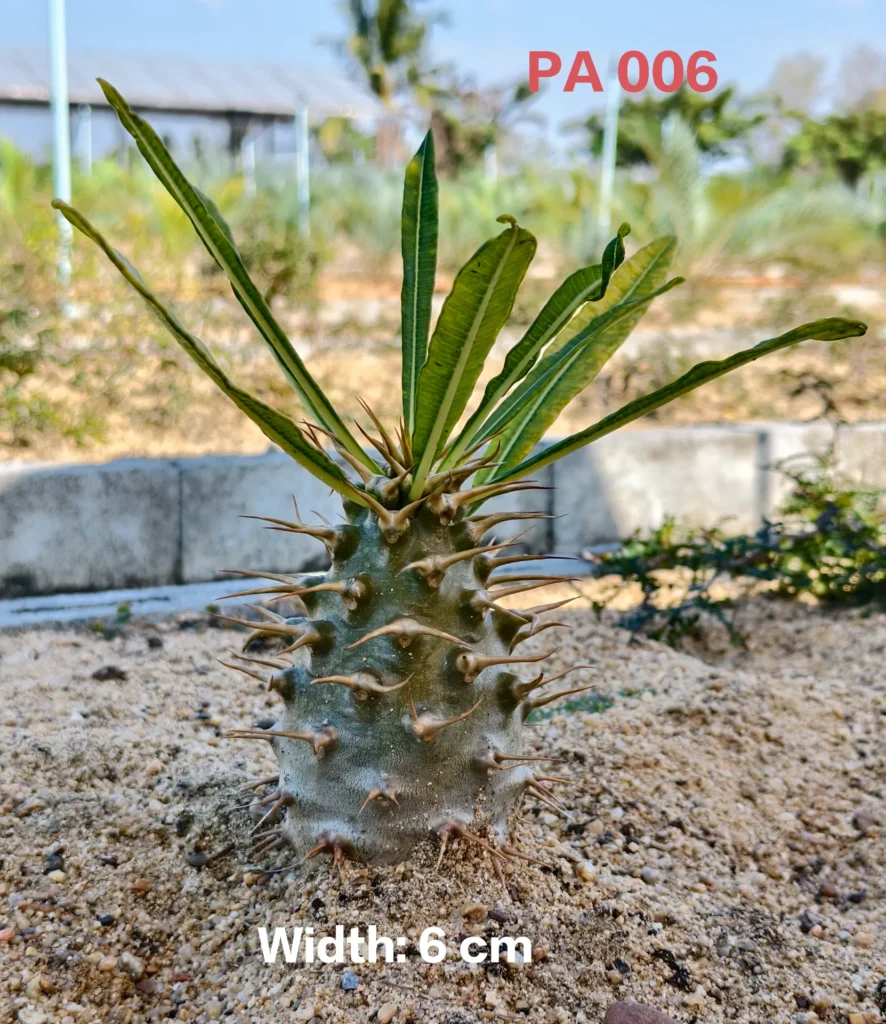
Pachypodium ambongense, often called “The Lost Pachypodium“, is a rare caudiciform plant that requires more specific care than other Pachypodium species. Originating from the unique Tsingy limestone formations in Madagascar, this guide provides all the essential information you need to successfully cultivate this jewel of a plant in your collection.
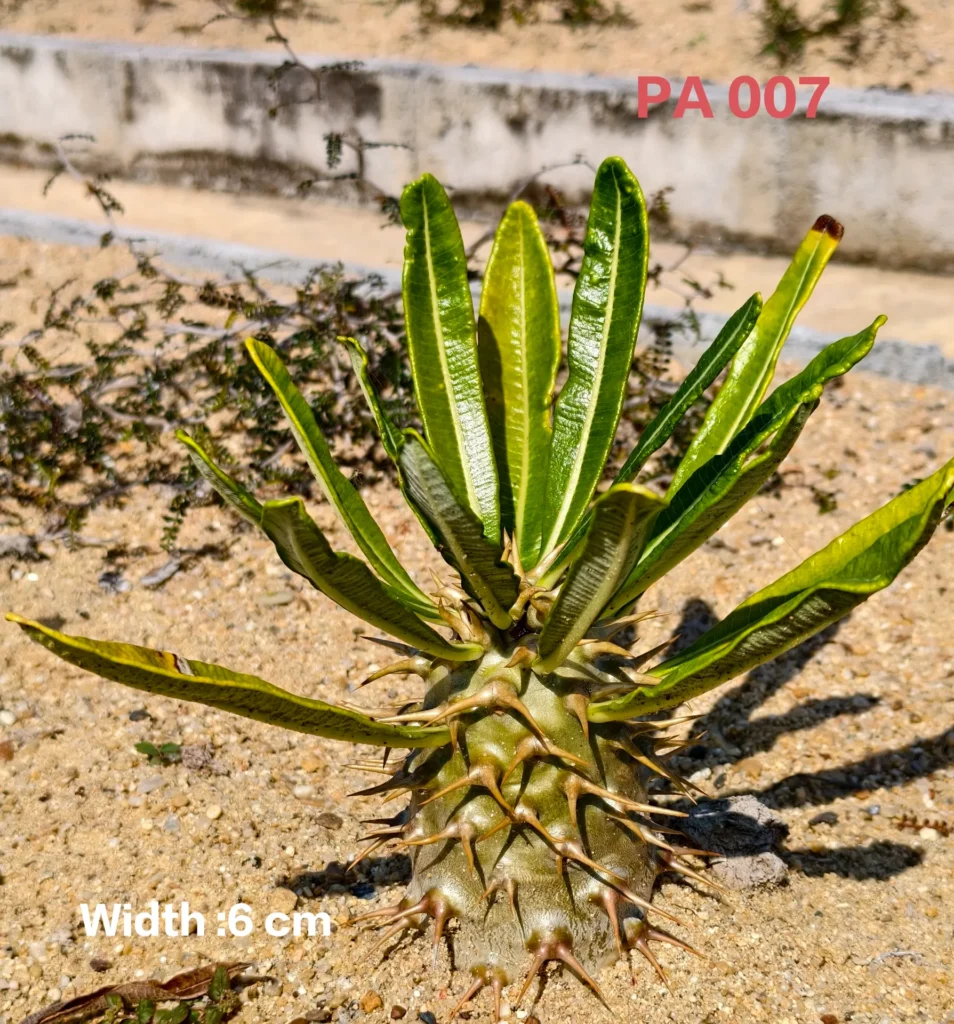
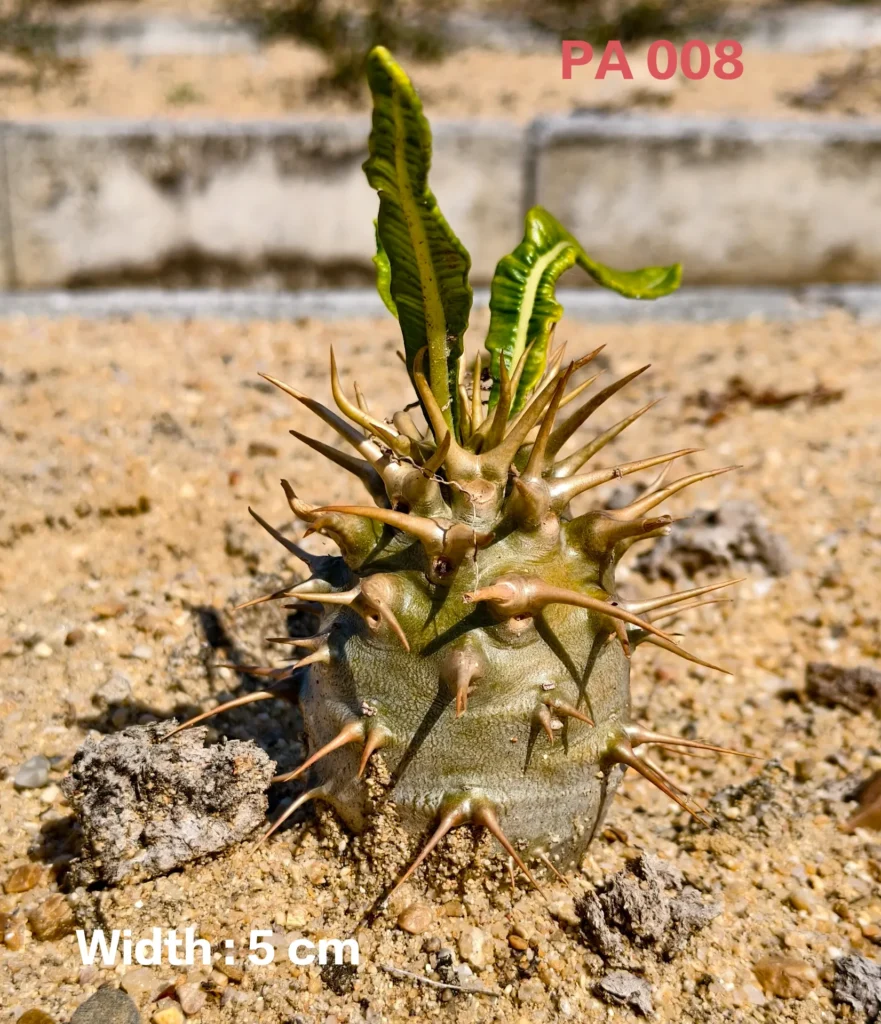
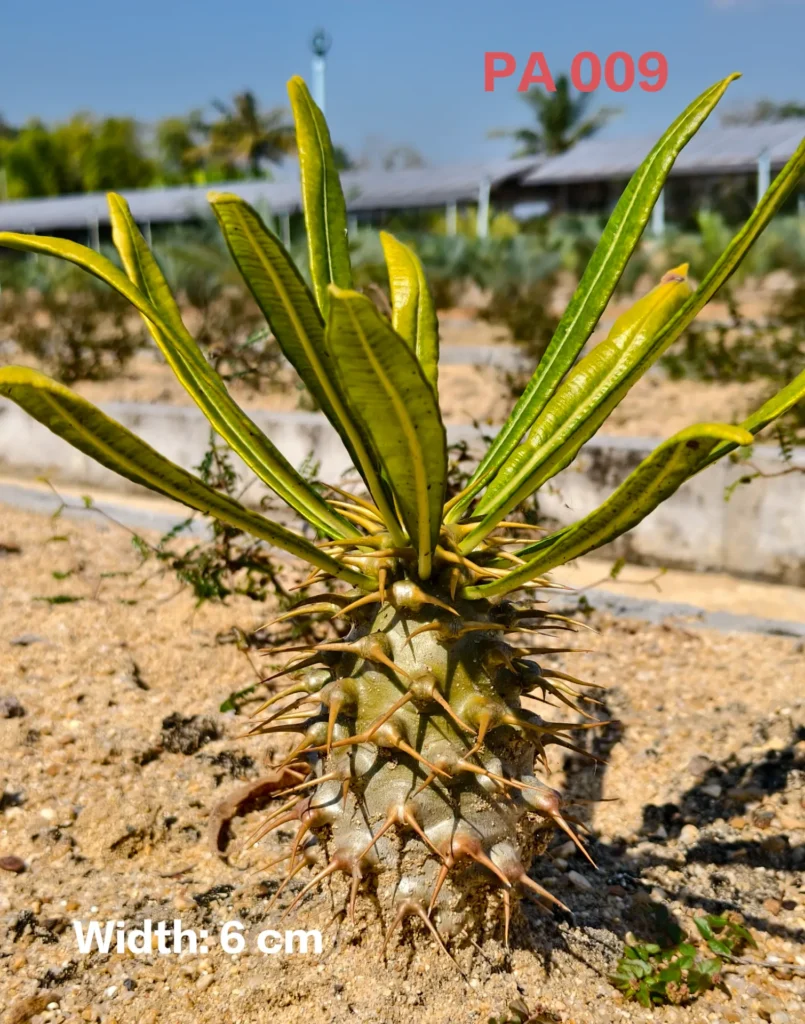
1. Basic Understanding: Seasons and Dormancy
Pachypodium ambongense is a deciduous plant, meaning it has distinct growing and dormant seasons. Understanding this cycle is the key to successful cultivation.
| Season | Approximate Timing | Plant Characteristics | Essential Care |
| Growing Season | Summer (April – October) | New leaf growth, caudex development, flowering | Water and fertilize regularly |
| Dormant Season | Winter (November – March) | Leaf drop, growth ceases | Drastically reduce watering, maintain warmth |
Key Note: Adapting your care routine to these seasons is crucial for preventing rot.
2. Essential Growing Factors
2.1 Light Requirements
Pachypodium ambongense requires intense light for optimal growth and to maintain a compact, healthy form.
• Requirement: Full Sun or bright, direct light.
• Recommendation: Place it in a location that receives at least 6-8 hours of direct sunlight daily. If growing indoors, position it near a south-facing window (in the Northern Hemisphere) or use a high-output grow light.
2.2 Soil and Medium
Given its native habitat on highly porous limestone, the potting mix must have similar, excellent drainage properties.
• Characteristics: Must be extremely well-draining and fast-drying.
• Recommended Mix: A small amount of standard cactus/succulent potting soil mixed with a high proportion of inorganic drainage materials such as pumice, perlite, or coarse grit. Aim for a ratio of 70-80% inorganic material.
• Importance: Excellent drainage is the single most important factor in preventing caudex rot.
2.3 Temperature
Pachypodium ambongense is a tropical plant that tolerates high heat but is sensitive to cold.
• Optimal Temperature: 25°C – 35°C (77°F – 95°F)
• Minimum Safe Temperature: Should not drop below 10°C (50°F).
• Recommendation: It must be protected from frost. If temperatures fall below 15°C (59°F), move the plant indoors or into a temperature-controlled greenhouse.
3. Watering: The Critical Difference
Watering Pachypodium ambongense differs from other, more drought-tolerant Pachypodium species.
| Season | Watering Frequency | Important Caution |
| Growing Season | Water regularly when the top 1-2 inches of soil are completely dry. | Do not let the soil remain dry for extended periods (unlike typical Pachypodium). |
| Dormant Season | Drastically reduce watering (once a month, or only when the caudex shows slight signs of shriveling). | If the soil is kept moist during dormancy, the risk of fatal root rot is extremely high. |
Technique: Use the “Soak and Dry” Method: water thoroughly until it drains from the bottom of the pot, then allow the soil to dry out completely before watering again.
4. Fertilization
• Timing: Fertilize only during the Growing Season (Summer).
• Fertilizer Type: Use a fertilizer high in phosphorus and potassium (high middle and end numbers, e.g., 10-30-30) to promote caudex growth and flowering.
• Frequency: Apply a diluted liquid fertilizer every 2-4 weeks.
5. Propagation and Pests
• Propagation: Primarily done by seed, which is a difficult and complex process as this species is one of the most challenging to set seed.
• Pests: Watch out for Mealybugs and Spider Mites, especially in leaf axils and under the caudex.
• Diseases: The most dangerous disease is Root Rot, caused by overwatering or poor drainage.
Summary
Pachypodium ambongense is a plant that demands special attention to its watering and drainage. If you can successfully mimic its native, well-drained, and sunny environment, you will be able to enjoy this rare “living sculpture” for many years to come.
Talk about : Price, How to Buy?, Where to Buy?