Pachypodium ambongense: The Robust and Ready “Lost Pachypodium” (Specimen PA 005)
The Pachypodium Ambongense is one of the most highly coveted and visually striking species within the Pachypodium genus. Endemic to the Ambong Mountains in northwestern Madagascar, this plant is celebrated by collectors for its unique, bottle-shaped trunk and its status as one of the rarest in cultivation . Often nicknamed the “Lost Pachypodium” due to its extremely localized and remote natural habitat, acquiring an established specimen like PA 005 is an excellent opportunity to add a vigorous, young plant to a serious caudiciform collection.
Specimen Spotlight: PA 005 – A Vigorous Young Specimen
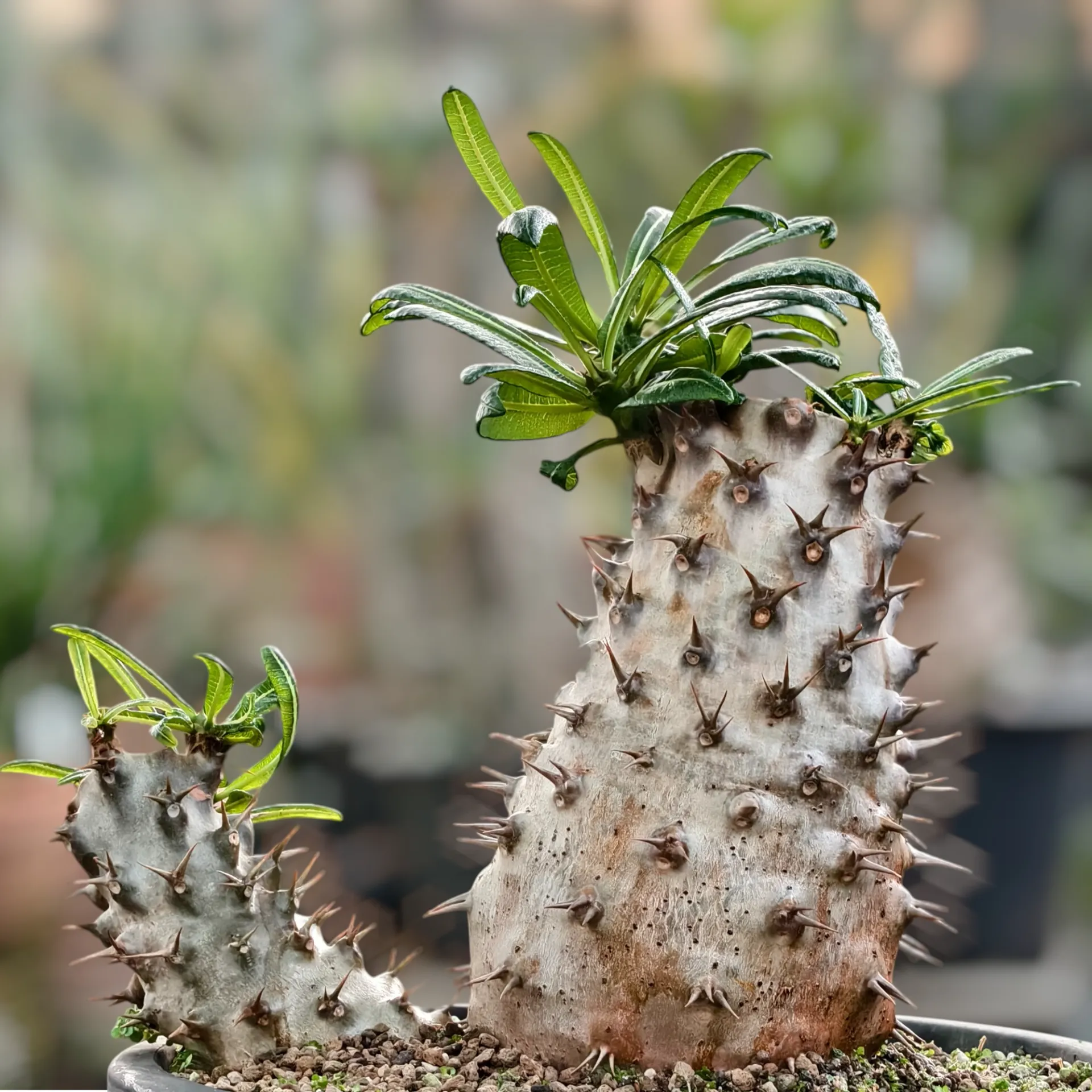
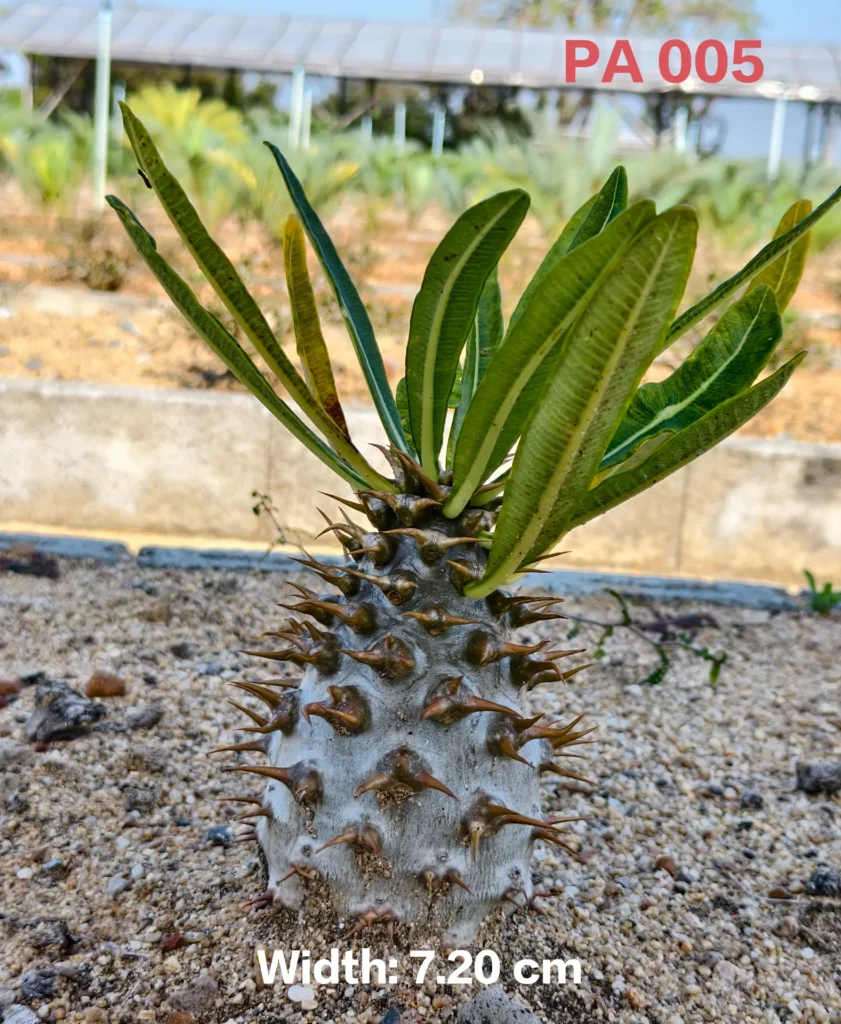
This particular specimen, identified as PA 005, is a superb example of a healthy, young Pachypodium Ambongense. It is slightly larger than PA 004, offering a more established root system and a head start on growth, making it an ideal candidate for rapid development into a mature specimen.
Key Characteristics of PA 005
| Feature | Description | Collector’s Value |
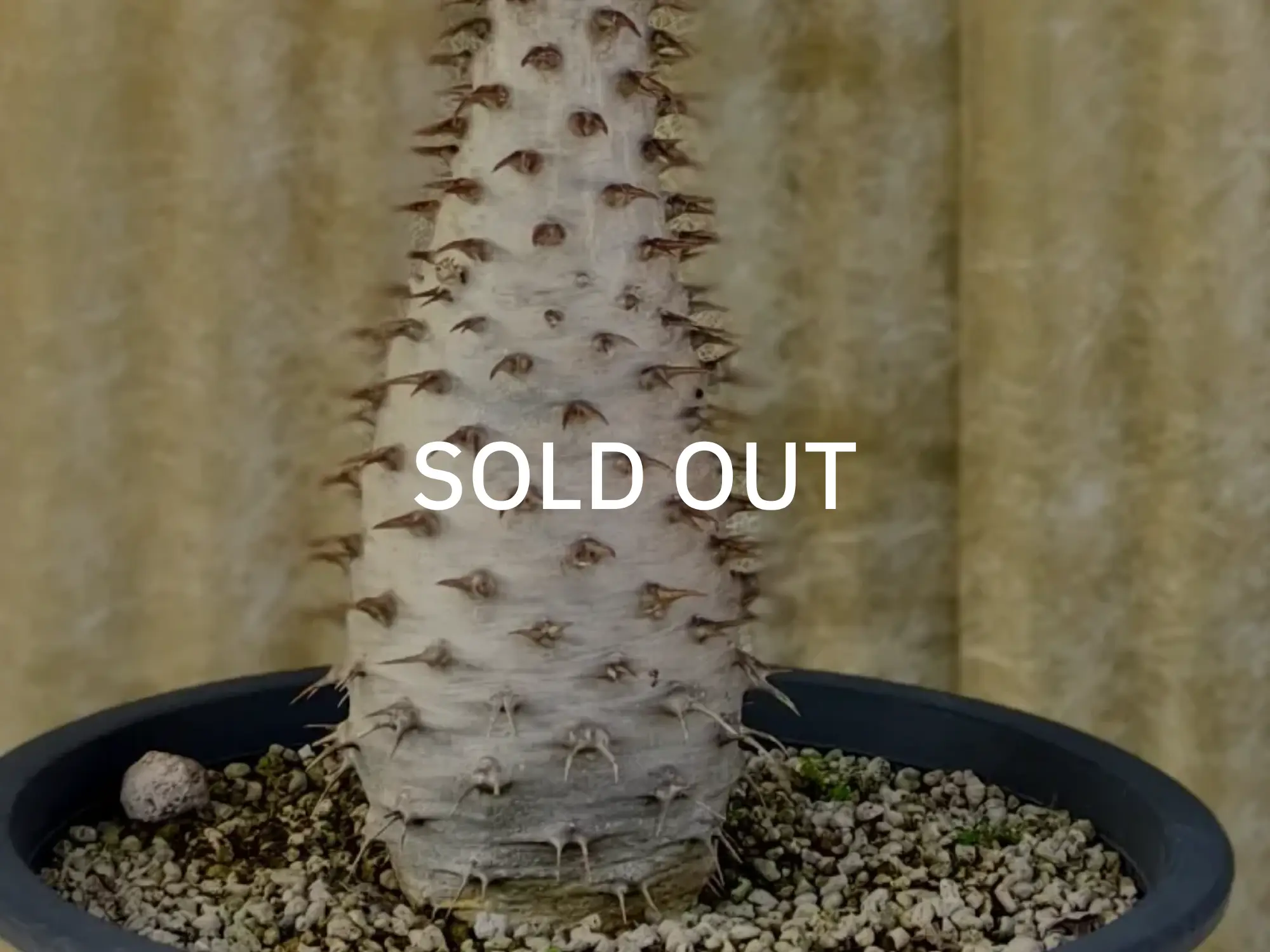
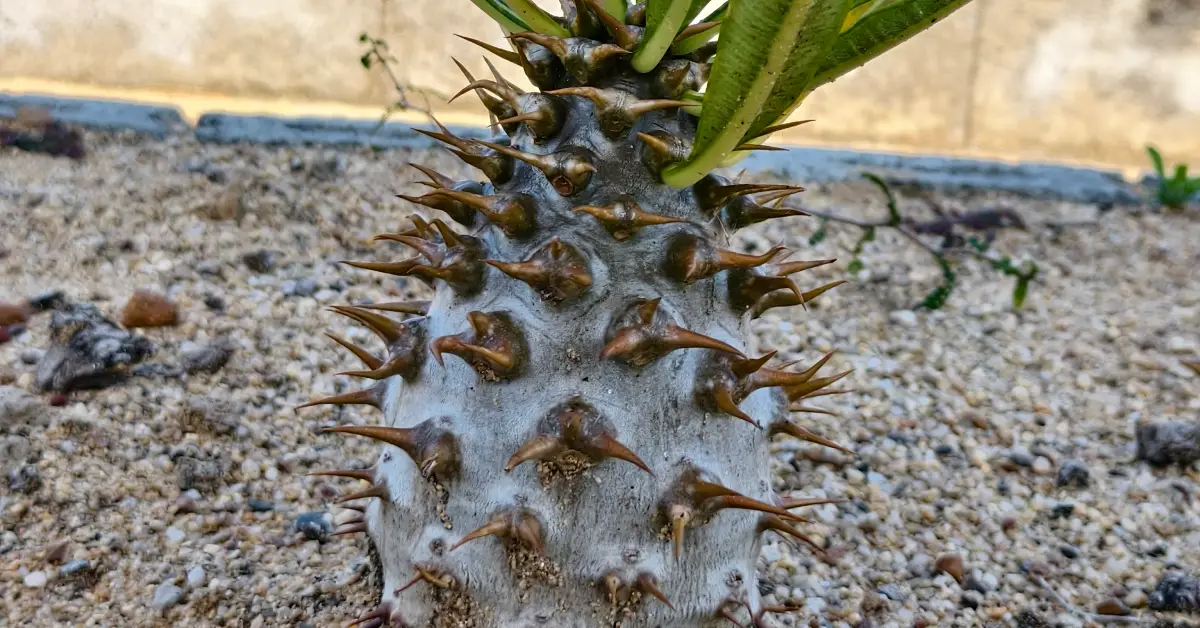
| Caudex (Trunk) | Thick and well-formed, with a classic cylindrical shape. The skin is a pale, almost white-gray, which beautifully highlights the dark, prominent, and sharp conical spines. | Excellent contrast and spine definition, indicating a high-quality specimen with strong genetic traits. |
| Size | Measures 7.20 cm in width. This size indicates a plant that has passed the most delicate seedling stage and is ready for accelerated growth. | A robust, established size, offering a significant head start for the collector. |
| Foliage | A dense crown of long, healthy, green leaves at the apex, showing strong signs of active growth. | Indicates a vigorous, actively growing plant, ready to thrive in a new collection. |
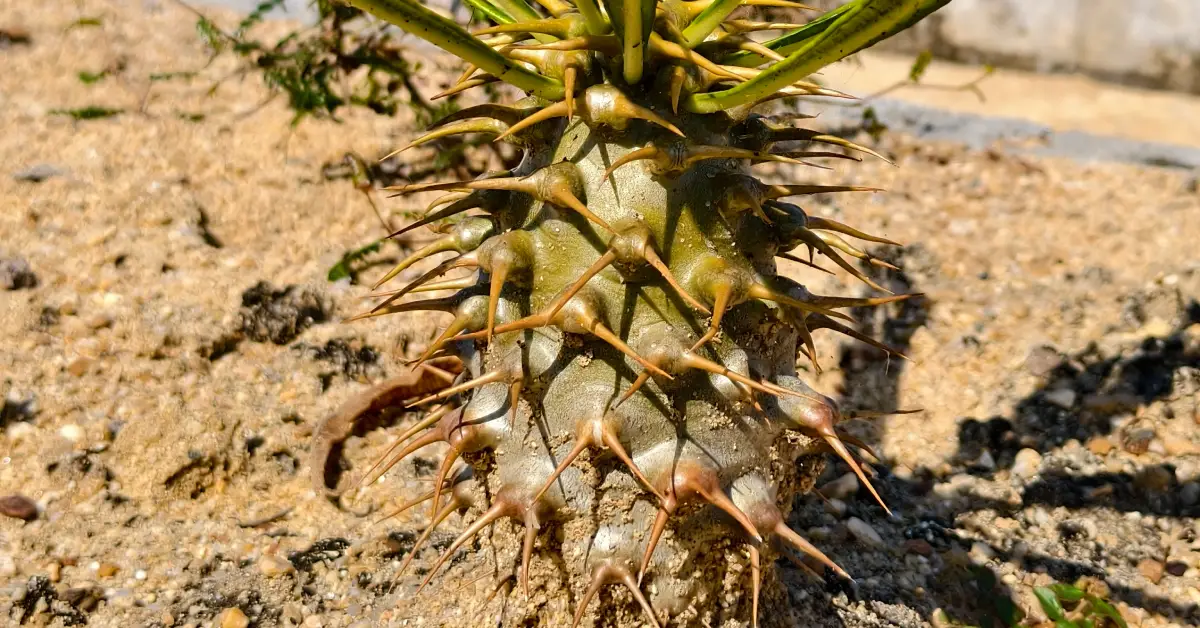
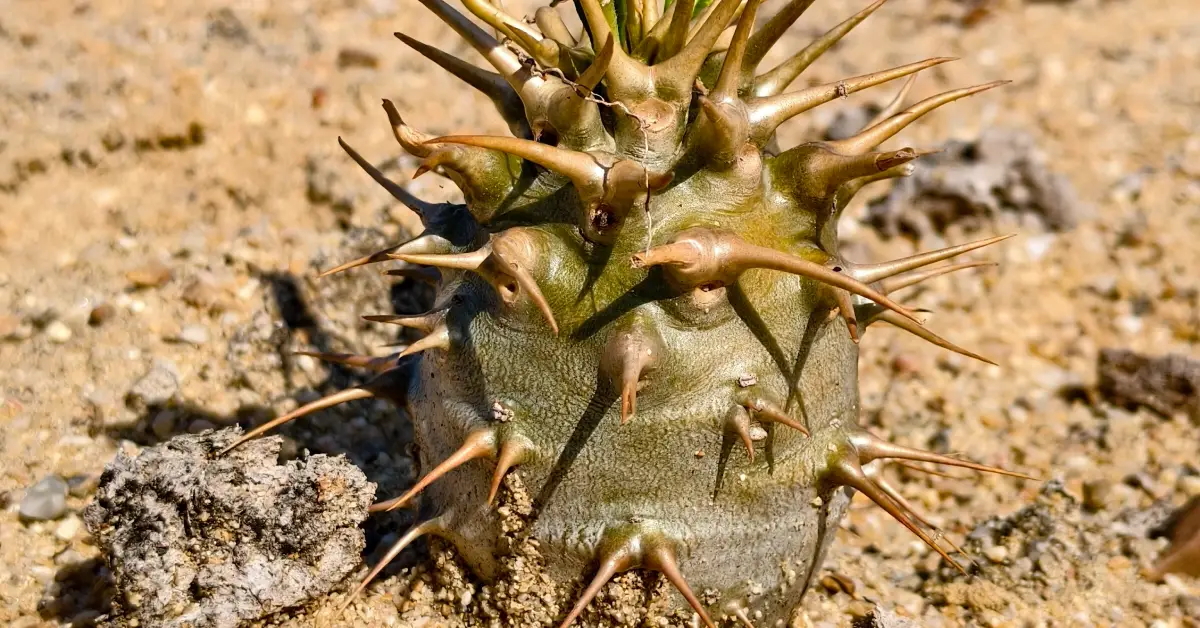
| Aesthetic | The plant is shown growing in a bright, sunny environment, emphasizing its need for high light and its resilience. | A visually appealing specimen with a clean, classic form. |
The Robust Form: A Head Start for Collectors
The trunk of Pachypodium Ambongense is its defining feature. Specimen PA 005 displays a particularly robust and thick caudex for its size, a clear indicator of excellent health and vigor. The pale, almost chalky-white color of the trunk, combined with the dark, well-defined spines, creates a stunning visual contrast that is highly sought after.
With a width of 7.20 cm, PA 005 is a highly desirable size. It is large enough to be considered well-established, reducing the risk associated with smaller seedlings, yet still young enough for the collector to shape and grow it into a magnificent, monumental specimen over the coming years.
Rarity and Conservation Status
Pachypodium Ambongense is one of the most geographically restricted species in the genus, found only in a small area of northwestern Madagascar . This extreme localization contributes to its high value and desirability. While the exact IUCN status of this specific species is often debated or under reassessment, the entire Pachypodium genus from Madagascar is listed under CITES Appendix I or II, underscoring its vulnerability and the importance of acquiring ethically sourced, cultivated specimens like PA 005 .
Cultivation and Care: Resilient and Rewarding
Despite its rarity, P. ambongense is known for being relatively easy to grow in cultivation, provided its specific needs are met.
•Light: Prefers full sun to light shade.
•Soil: Requires an extremely well-draining, fast-drying mineral mix to prevent rot, which is the biggest threat to the plant .
•Watering: Water thoroughly during the growing season (spring and summer) and keep completely dry during its winter dormancy period. It is highly drought-tolerant.
•Ideal for: Collectors seeking a well-established, young specimen with a robust caudex and excellent growth potential.
Image Description
Pachypodium Ambongense Specimen PA 005, a robust young Madagascan succulent with a thick, pale, spiny caudex measuring 7.20 cm wide. Ideal established plant for collectors.
PA 005: A vigorous, well-established Pachypodium Ambongense (The Lost Pachypodium). This specimen features a robust, pale caudex measuring 7.20 cm wide, offering a significant head start for the collector seeking a high-quality, rare succulent.
Talk about : Price, How to Buy?, Where to Buy?