Encephalartos Cerinus: The Waxen Cycad – A Rare Jewel for the Connoisseur
The Encephalartos Cerinus, commonly known as the Waxen Cycad, stands as a pinnacle of botanical rarity and elegance. Hailing from a highly restricted, rocky habitat in KwaZulu-Natal, South Africa, this species is a coveted treasure among cycad collectors worldwide. Its limited natural distribution and distinctive aesthetic qualities make it a valuable and never inexpensive addition to any serious collection.
Distinctive Features: The Waxen Elegance
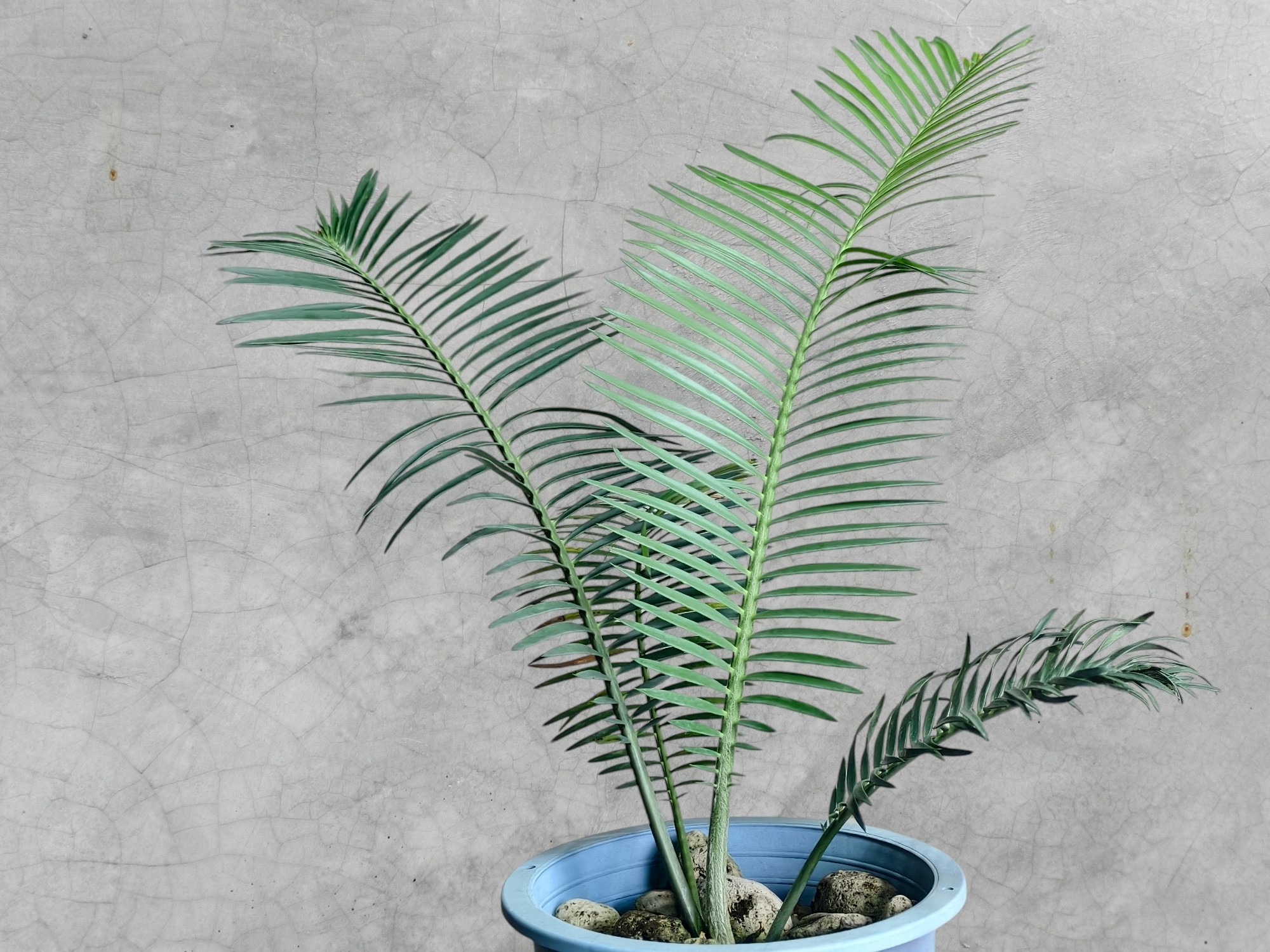
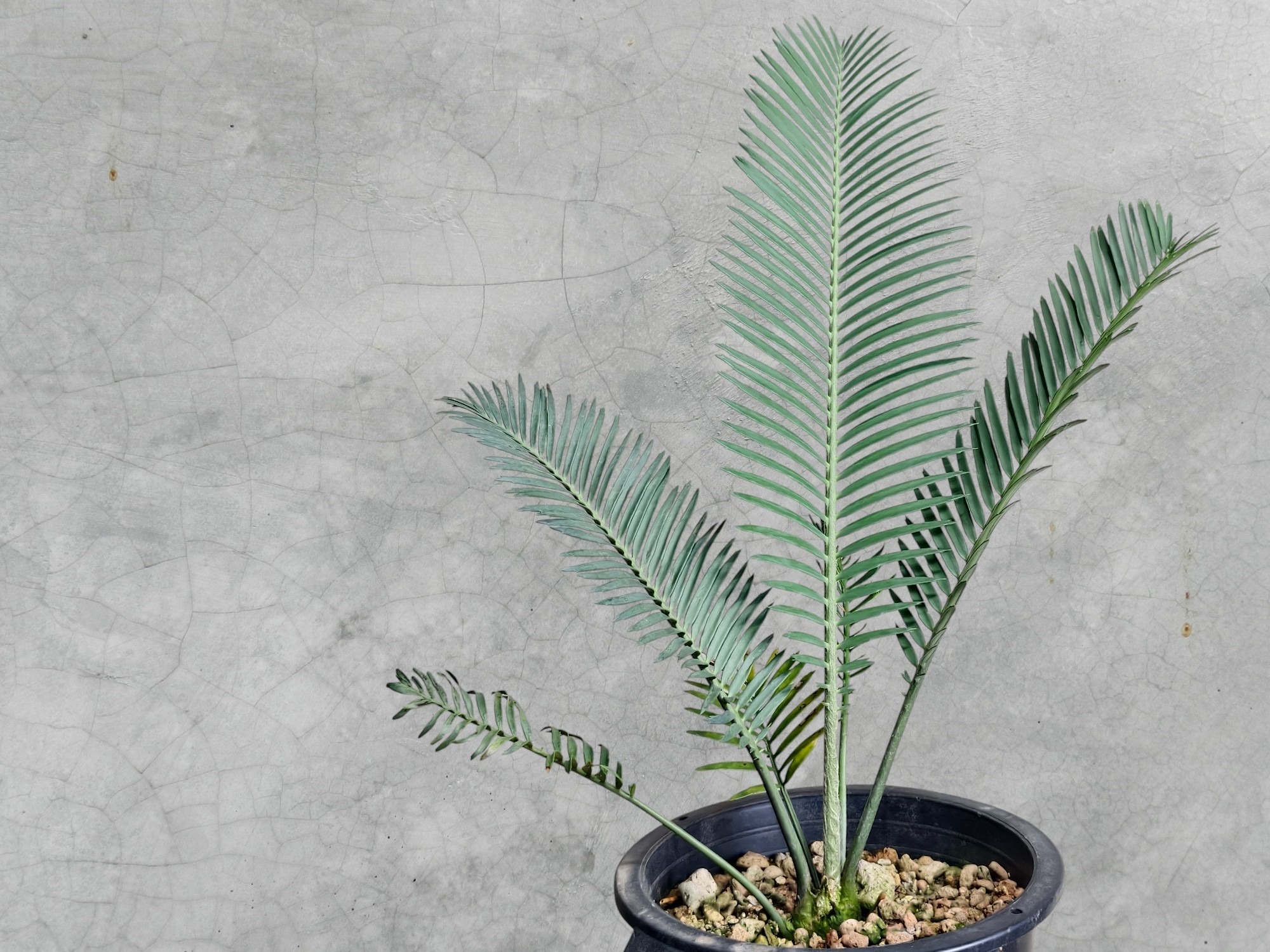
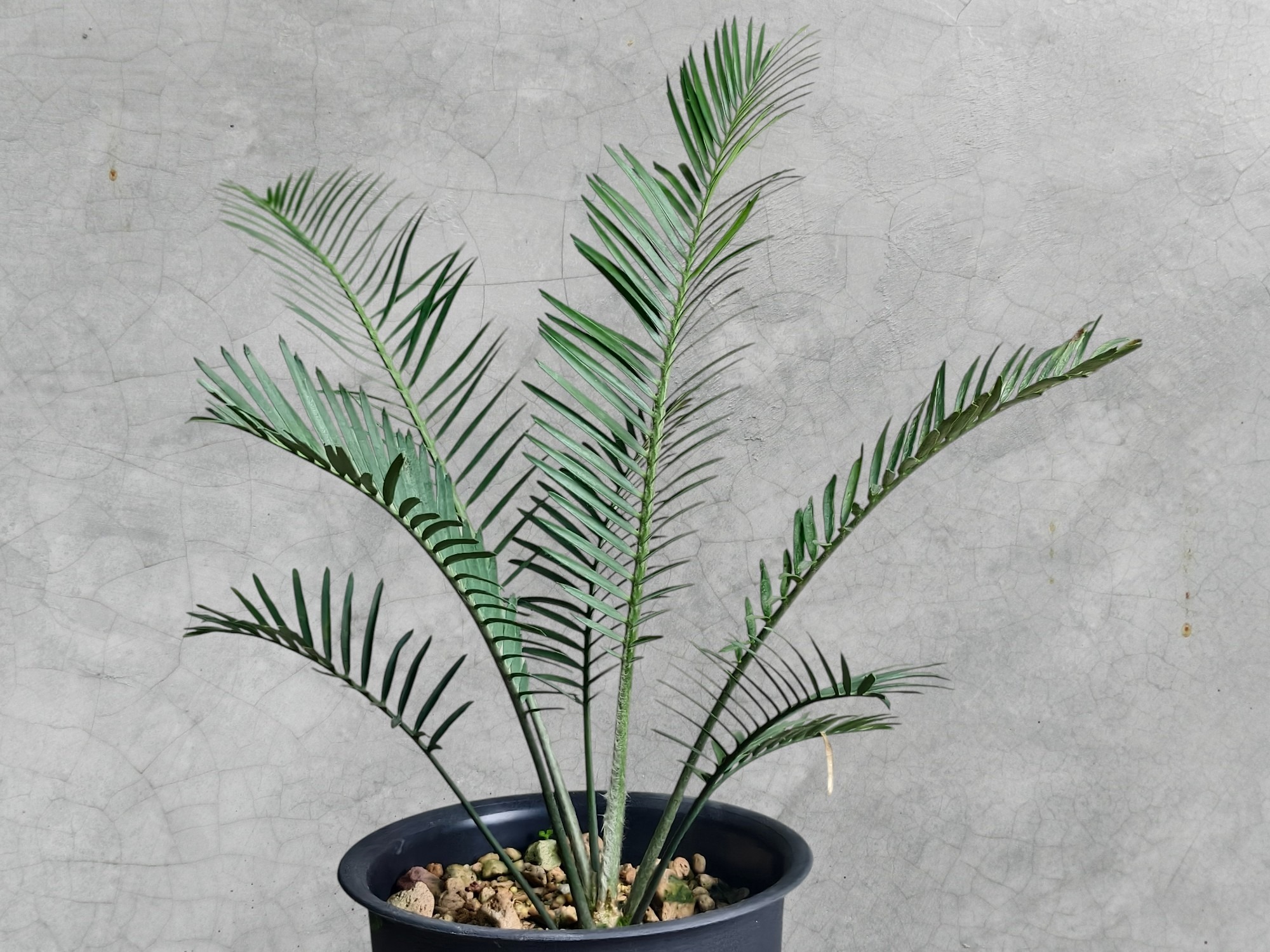
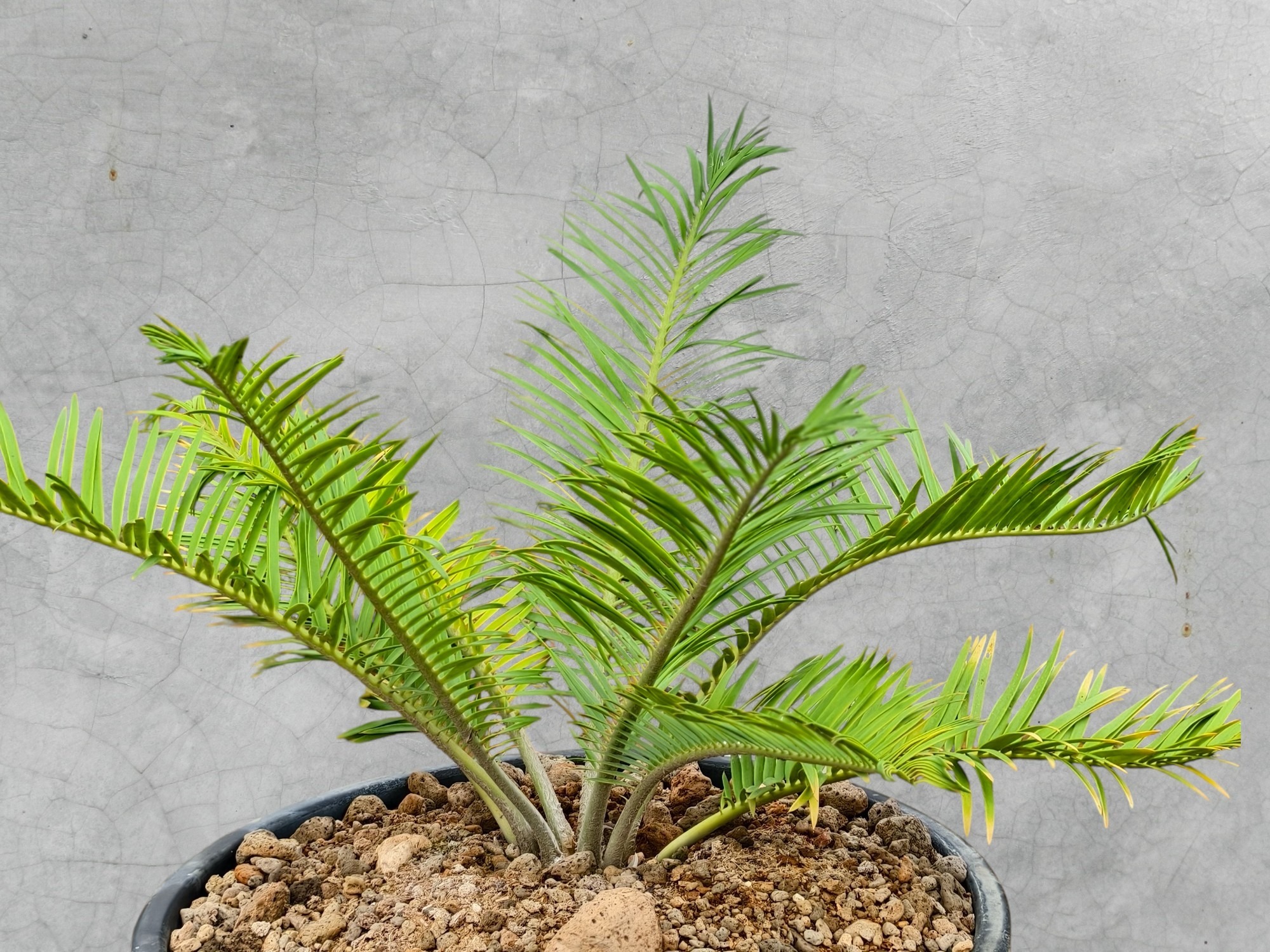
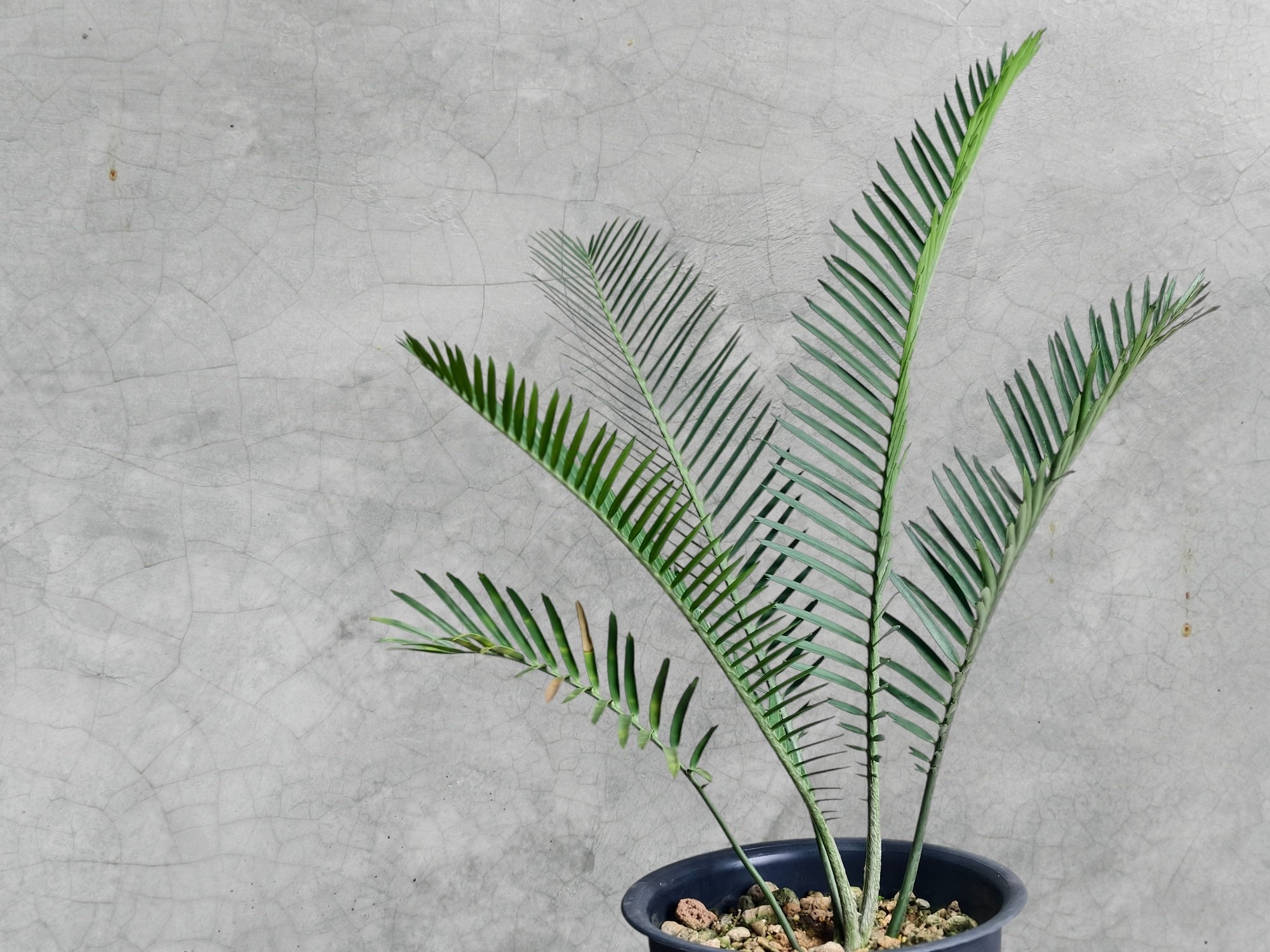
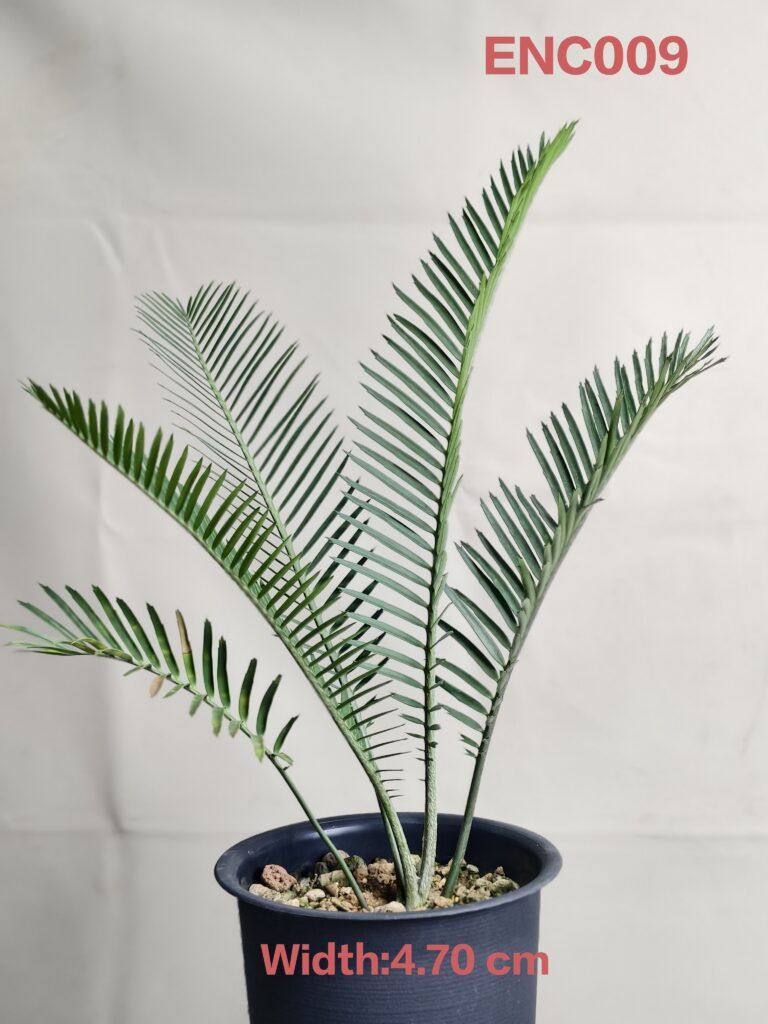
The defining characteristic of E. Cerinus is the striking heavy waxy grey-blue coating (known as farina) that covers its leaves and cones. This “waxen” layer not only gives the plant its common name but also provides a unique, frosted appearance that sets it apart from other cycads. The specimen ENC009 displays a beautiful balance of the species’ traits, with a prominent blue-grey hue on the mature leaves and a lighter green on the newer growth, indicating a healthy transition.
E. Cerinus is celebrated as a dwarf cycad, making it an ideal choice for container gardening, patios, or smaller garden spaces where larger species would be impractical. Its stem is often subterranean, contributing to its compact, manageable stature. The leaves themselves are noted for their graceful form and elegant curve, presenting a lush, yet architectural, display.
| Feature | Description | Value Proposition |
| Waxen Coating | Heavy grey-blue farina on leaves. | Unique, striking color and texture; high aesthetic appeal. |
| Dwarf Habit | Compact size, often with a subterranean stem. | Perfect for pots, small gardens, and indoor display; highly manageable. |
| Rarity | Endemic to a small, rocky area in South Africa. | High collector value; a sought-after, investment-grade plant. |
| Hardiness | Cold hardy to the low 20’s F (approx. -6°C). | Versatile for various climates and growing conditions. |
Investment-Grade Botany: Why ENC009 is Exceptional
The specimen labeled ENC009 represents a prime example of this sought-after species. With a measured width of 4.70 cm, this plant is a robust young collector’s item, showing excellent development. It exhibits a desirable blue-grey color on its established leaves, which is a clear indicator of its genetic quality. The plant’s overall symmetry and the health of its foliage make it a standout specimen ready for continued growth and display.
Purchasing an established E. Cerinus like ENC009 is not merely acquiring a plant; it is securing a piece of botanical history. Its rarity and the increasing demand from global collectors ensure that this cycad retains and often appreciates in value, making it a sound investment for the discerning enthusiast.
Cultivation and Care
Despite its exotic origins, the Waxen Cycad is relatively straightforward to cultivate, thriving in conditions that mimic its native rocky slopes.
• Light: Prefers full sun to partial shade.
• Soil: Excellent drainage is paramount. A coarse, gritty mix (like the one shown in the image) is essential to prevent stem rot.
• Water: Water deeply but infrequently, allowing the soil to dry out completely between waterings.
• Placement: Its dwarf nature makes it an excellent focal point in a decorative pot, complementing larger palms or cycads in a mixed display.
Secure this rare and beautiful Encephalartos Cerinus (ENC009) today and elevate your collection with a plant of unparalleled rarity and enduring beauty.
Talk about : Price, How to Buy?, Where to Buy?