Commiphora holtziana: The Exquisite Sweet Myrrh Caudex
Introduction
The Commiphora holtziana, often referred to as Sweet Myrrh or Opoponax, is a highly sought-after species within the Burseraceae family, which also includes Frankincense and Myrrh. Native to the dry, tropical regions of Northeast Africa, this plant is prized by collectors for its distinctive, often swollen trunk (caudex) and its historical significance as a source of aromatic resin. This article and the accompanying image description are designed to highlight the unique features and exceptional value of this particular specimen for sale.
Distinctive Characteristics and Selling Points
The appeal of Commiphora holtziana lies in a combination of its aesthetic qualities and its unique biological features.
1. Caudex and Bark (The “Aged Look”)
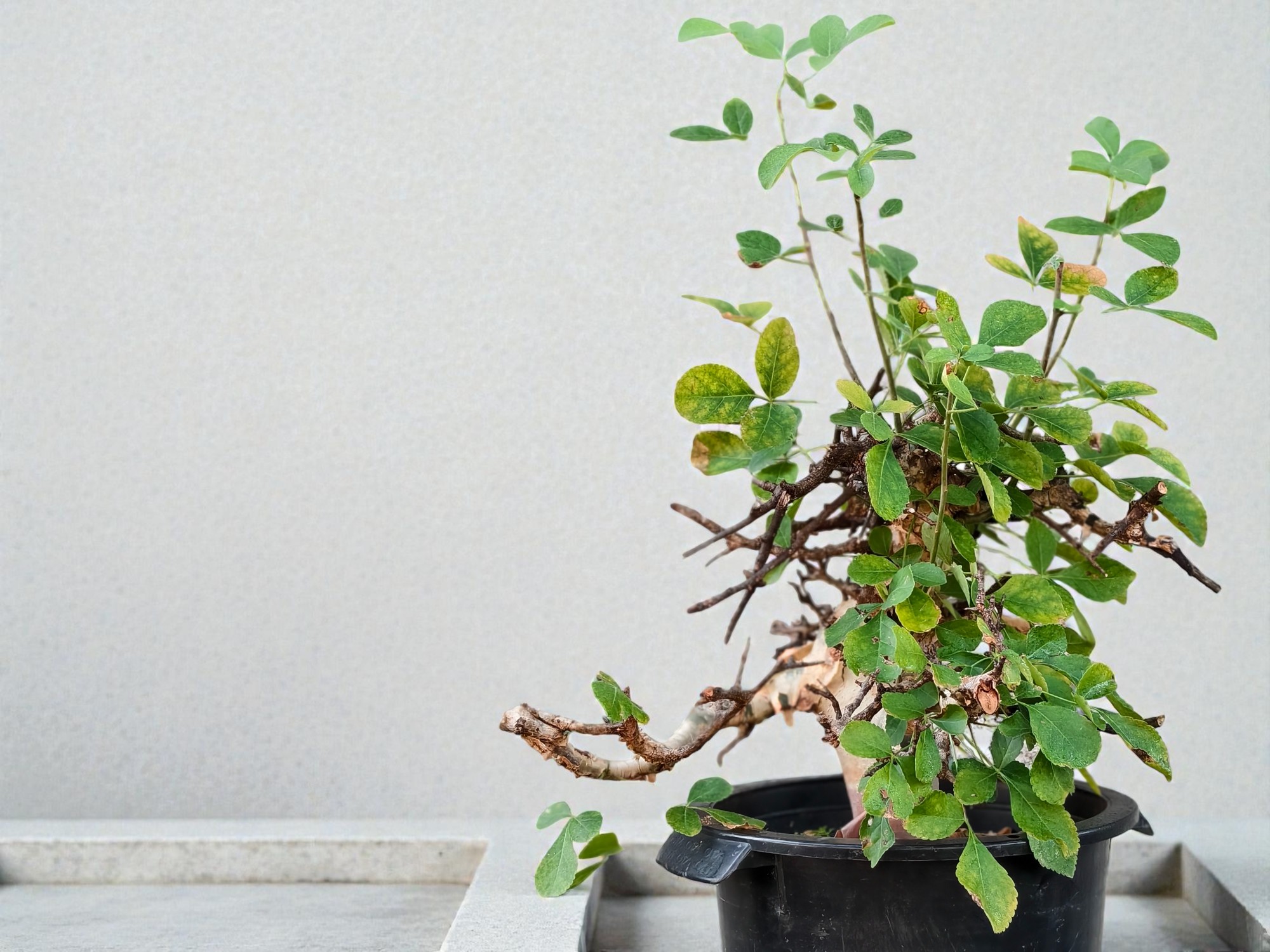
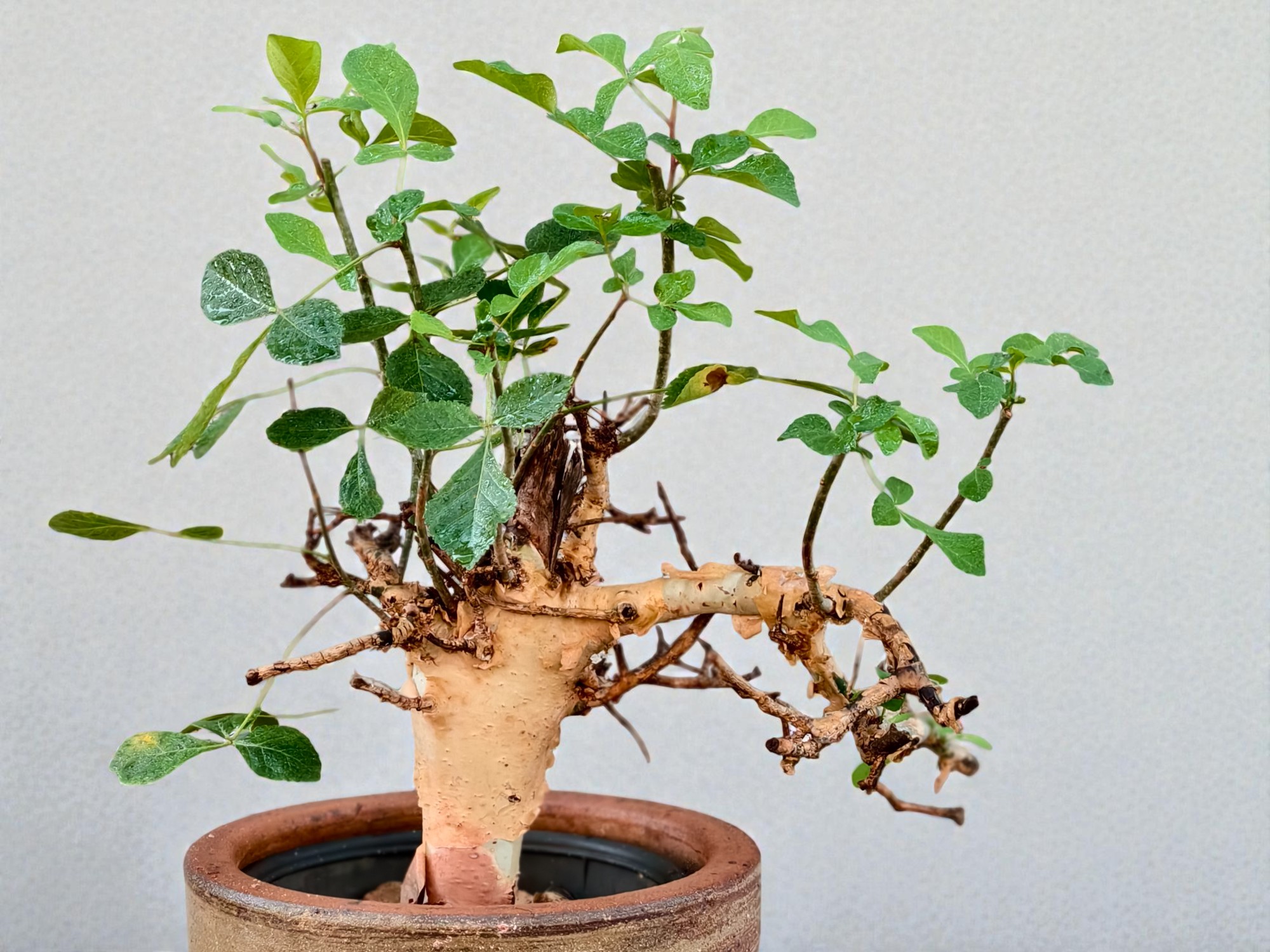
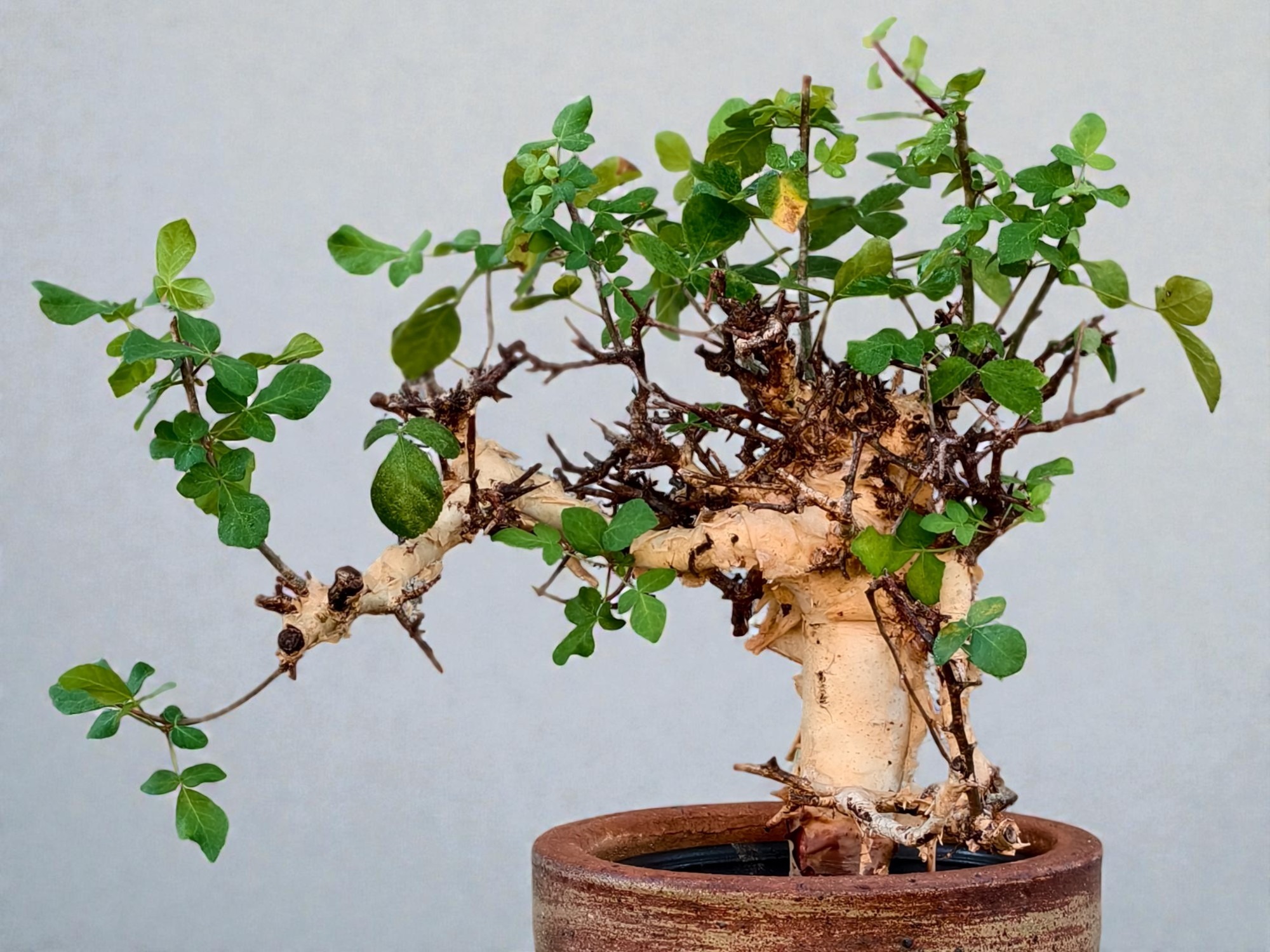
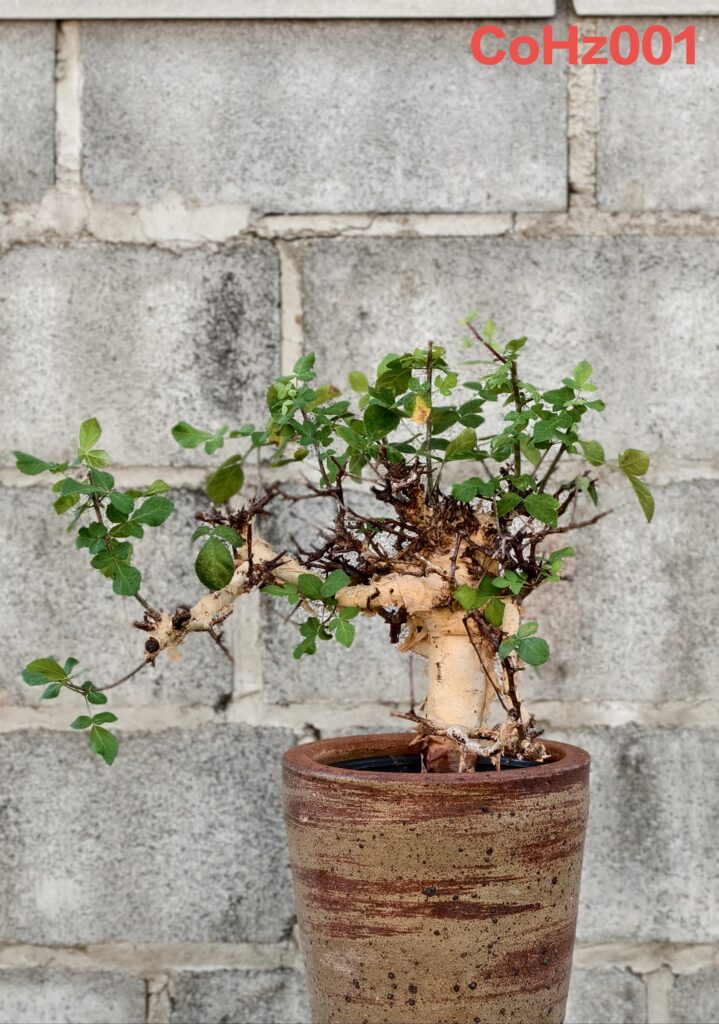
The most striking feature of this plant is its caudiciform trunk. The specimen shown in the image, with its pale, almost creamy-yellow trunk, displays the classic, desirable characteristic of the species. This thick, often gnarled base gives the plant an instant aged, bonsai-like appearance, even in a young specimen.
• Aesthetic Value: The smooth, light-colored bark contrasts beautifully with the dark, thorny branches and the fresh green foliage, making it a stunning focal point in any collection.
• Collector’s Appeal: Unlike many other caudiciform plants, C. holtziana develops this appealing, mature look relatively quickly, which is a significant draw for bonsai and succulent enthusiasts.
2. Aromatic Resin (Sweet Myrrh)
Historically, Commiphora holtziana is famous for producing a fragrant resin known as Opoponax or Sweet Myrrh 3. This resin is a valuable commodity in the fragrance and incense industries.
• Unique Property: The resin has a sweet, balsamic, and slightly spicy aroma, distinct from the more bitter scent of true Myrrh (Commiphora myrrha).
• Value Proposition: Owning this plant connects the collector to a lineage of ancient, aromatic botanicals. While a cultivated specimen may not be harvested for commercial resin, the potential and heritage of the “Sweet Myrrh” name adds immense value and intrigue.
3. Resilience and Cultivation
Commiphora holtziana is a remarkably resilient plant, making it an excellent choice for both novice and experienced collectors.
• Hardiness: As a native of arid regions, it is highly drought-tolerant and thrives in well-drained soil, requiring minimal watering.
• Bonsai Potential: The species is known for its ability to heal well from pruning, allowing for shaping and training into exquisite bonsai forms. This feature ensures that the plant can be a long-term project for the dedicated hobbyist.
Image Description: Specimen CoHz001
This specific specimen, labeled CoHz001, is an outstanding example of a well-cultivated Commiphora holtziana.
| Feature | Description | Selling Point |
| Caudex/Trunk | Thick, pale, creamy-yellow trunk with a smooth texture. The base is well-formed and robust. | Instant Maturity: Exhibits a highly desirable, aged look that is ready for display. |
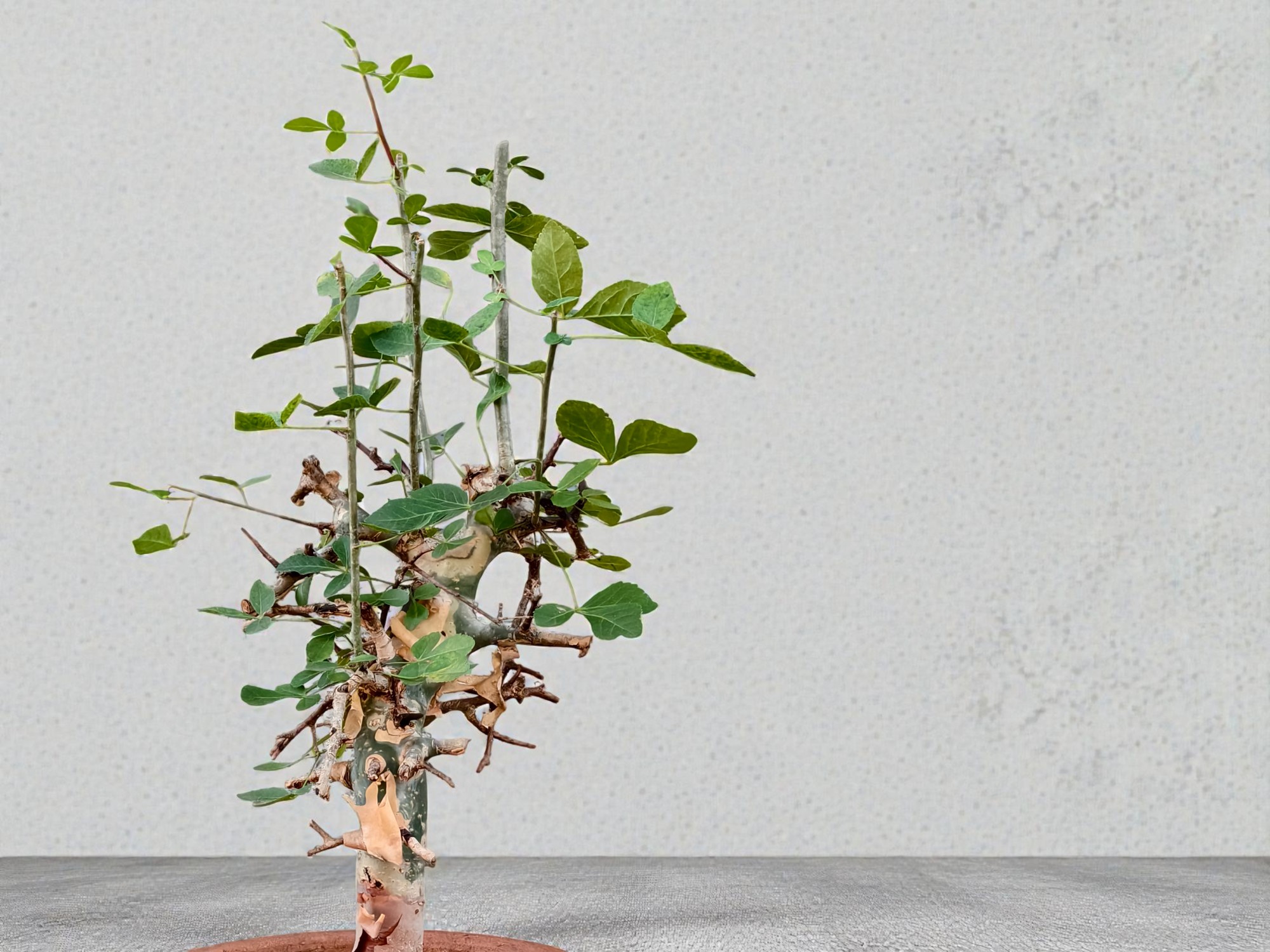
| Branching | Intricate, thorny, and dense branching structure, characteristic of the species. | Natural Bonsai Form: The complex branching provides a perfect framework for future shaping and leaf canopy development. |
| Foliage | Healthy, vibrant green, trifoliate leaves, indicating excellent health and active growth. | Vigorous Health: A sign of a well-established and thriving plant, ready to transition to a new home. |
| Potting | Planted in a rustic, textured, earth-toned ceramic pot. | Ready-to-Display: The pot complements the plant’s natural, rugged beauty, enhancing its overall presentation. |
Specimen CoHz001 is a prime example of the species, offering a robust caudex, healthy growth, and the inherent allure of the Sweet Myrrh tree. It is a perfect, low-maintenance addition for any collector seeking a plant with both historical significance and exceptional aesthetic appeal.
Talk about : Price, How to Buy?, Where to Buy?